Security | Threat Detection | Cyberattacks | DevSecOps | Compliance

What is the Difference between Masking & Truncation

PCI DSS Compliance is a payment card security standard that outlines stringent security requirements for protecting cardholder data. In the outlined 12 PCI Compliance Requirements, one of the Requirement 3.3 states that organizations need to “Mask PAN when displayed such that only personnel with a legitimate business need can see more than the first six/last four digits of the PAN. So, as a matter of best practice organizations adopt masking and truncation techniques for data security.

How Compliance Professionals Uses Egnyte

Chief Security Officer Kris Lahiri showcases how he uses Egnyte for compliance. This video shares how to assign data owners, monitor data governance, and manage content’s lifecycle. This video showcases how users can easily assign data owners to manage rules of engagement, retention policies, and monitor audits of the data. Whether utilizing content lifecycle management, setting engagement notifications, or monitoring usage, you can stay on top of tasks all within Egnyte.

Improving FedRAMP: Federal Procurement & Risk Management

The Federal Risk and Authorization Management Program (FedRAMP) has been in place for just over a decade (2011). Its purpose is to provide a “cost-effective, risk-based approach for the adoption and use of cloud services” by the federal government. This is to equip and enable federal agencies to utilize cloud technologies in a way that minimizes risk exposure through security and protection of federal information and processes.

CCPA Compliance Checklist

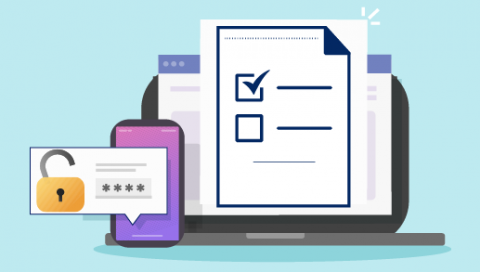
California Consumer Privacy Act is a data privacy regulation established in the US. Achieving and maintaining compliance with the regulation can be overwhelming for organizations. But with the right understanding of the CCPA Compliance regulation and adhering to the compliance requirements, achieving compliance can be easy. So, explaining the regulation in detail we have shared an informative checklist that organizations can refer to as steps to achieve CCPA compliance.

CMMC Town Hall With Michael McLaughlin, UMD ARLIS | 3/9/22 | NeoSystems

NeoSystems CMMC Town Hall Series: Join NeoSystems’ Chief Information Security Officer, Ed Bassett, for our weekly CMMC Town Hall designed for the Defense Industrial Base and GovCon community. Each session features special guests and offers an opportunity for attendees to ask questions regarding CMMC and cybersecurity. Topics covered include CMMC compliance requirements, how to prepare for CMMC certification, and the latest updates from the CMMC AB.

ISO 27002 2013 to 2022 mapping

On February 15th, the International Organization for Standardization (ISO), published the latest update to “ISO/IEC 27002 Information security, cybersecurity and privacy protection — Information security controls”. This latest standard is available for personal use from their site on ISO.org for CHF 198 (Swiss Francs) or, if you prefer, US dollars, $200, at the ANSI.org webstore. I’ll also simply refer to it as ISO 27002 as most people do.

What Is CPS 234 and Who Needs to Comply with It?

In November 2018, the Australian Prudential Regulation Authority (APRA) released the Prudential Standard CPS 234 in direct response to the escalating attack landscape in the financial sector. APRA has understood these threats to be the direct result of banking services moving to more complex and heavily used digital platforms. The new Standard emerged as an offshoot to the Notifiable Data Breach Scheme, which came into effect in early 2018.

Strategies For Vendor Third Party Risk Management

Vendor Third-Party Risk Management is an essential part of most regulatory and compliance programs. Tracking and monitoring vendor risk are important as it helps businesses make critical business decisions and mitigate risk from time to time. As organizations mostly outsource some parts of their operations to vendors or third-party service providers, it has become mandatory in certain standards and regulations to establish Vendor third-party risk management as a part of the compliance process.

Cybersecurity at the Tactical Level: The Importance of StateRAMP

Here in the United States, we often focus on the cybersecurity readiness of the federal government. The reality is that state and local government departments are just as, if not more vulnerable to cyber attacks. Nearly one quarter of their employees use personal devices for work, where security teams have little visibility, enabling threat actors to execute phishing and other malicious activities. These risks will only continue to grow as in-person services continue remotely.