Security | Threat Detection | Cyberattacks | DevSecOps | Compliance

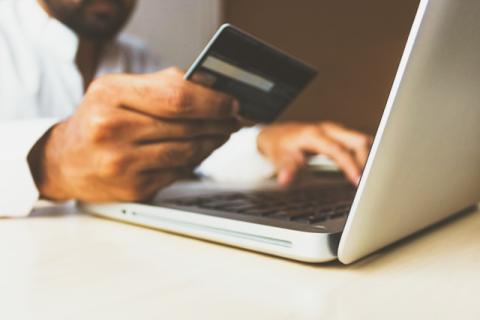
How To Know If An Online Transaction Is Secure Before You Pay

To determine whether an online transaction is secure, one must look for clear indicators such as a secure encrypted connection, a well-known payment gateway, and reliable payment options. This article will guide you through these essential signs to protect your personal information during online financial transactions.

What is Identity Theft Insurance? Is it Worth It?

When a data breach happens, criminals may instantly expose millions of personal, financial, and medical information. They can then use that compromised data to break into other systems, help commit consumer frauds schemes, or be sold to the highest bidder. If that compromised information also contains personally identifiable information (PII), those exposed may fall victim to identity theft.

Lessons Learned About Secrets Protection After the Sisense Breach

Sisense is a popular monitoring tool that enables users to monitor business metrics from multiple third-party sources in a single dashboard. On April 10, the company informed customers that the sensitive information they entrusted with Sisense may have been compromised and urged them to reset their password and rotate their secrets. According to KrebsOnSecurity, the attackers were allegedly able to access GitLab repositories hosted by Sisense, where hard-coded secrets may have been found.

TruffleHog vs. Gitleaks: A Detailed Comparison of Secret Scanning Tools

TruffleHog and Gitleaks are popular secrets scanning tools that can automatically surface hardcoded secrets such as API keys, passwords, and tokens. They can both be integrated into the Software Development Lifecycle (SDLC) to proactively scan repositories to identify and rectify potential issues before they can be exploited. The need for effective secret detection tools underscores a broader shift toward more secure software development practices.

Dell Data Breach: Personal Information of 49 Million Customers Compromised due to latest API Abuse

Dell recently issued a notice regarding a data breach that occurred on May 9, which has reportedly affected over 49 million customers across the globe. According to a report by BleepingComputer, Dell initiated the distribution of notifications cautioning its customers that their personally identifiable information (PII) had been compromised in a data breach.

What are Insurance Scams: Types and Examples

Insurance scams are deceptive activities that allow criminals to manipulate insurance systems to obtain an illegitimate claim. They can come from many sources and appear during the process of underwriting, selling, using, or buying insurance, and can come from many sources. As we’re concerned, insurance scams are those that fraudsters commit against an insurance provider using the authentic details of a patient.

The Meaning of Two-Factor Authentication (2FA): How to Turn On and Turn Off

Cyber attacks are a growing threat to all industries, nations, and people. They occur with increasing frequency, with the last year reporting 3,205 data compromises and over $12.5 billion in projected losses, according to the Federal Bureau of Investigation (FBI). The more often data breaches occur, the more at-risk individuals and organizations become. There are many ways to help prevent and defend against data compromises, but some of the most effective methods also hinder consumers.

Credit Card CVV Number: Meaning and Security

Inspect your credit card, and you’ll likely find interesting—and crucial—elements of the plastic rectangle. The front might display the provider’s name, a chip, some digits, or an entire card number; the back might hold much the same, along with a signature, when necessary, and a “valid thru ” date. All the information on a credit card is necessary to conceal, but when data breaches happen more often than ever, it’s a matter of time before every card is online.

What to Do if Your Credit Card is Lost or Stolen

Credit and debit cards have become the most prominent form of wealth access in the last decade. Once consumers pulled out thick wallets of cash—they now pull out thin clips of cards—if they bother using a card, not a watch or cellphone. Credit cards are necessary in modern life because they allow individuals to access their money instantly and because they can be better protected than physical money.