Security | Threat Detection | Cyberattacks | DevSecOps | Compliance

Planning Your Workload Identity Roadmap: Standards, Patterns, and the Path Ahead - Webinar

With 100x more non-human identities than human identities expected in 2025, the way we manage machine credentials is fundamentally broken. 83% of attacks involve compromised secrets, yet many organizations still rely on hardcoded keys, sprawling secrets, and scattered vault deployments.

Certificate permissions with CertKit Applications

When you’re managing a handful of certificates, one big list works fine. Add a few dozen more and things get messy. Add multiple teams or projects and you’ve got a problem. Who should have access to the production certificates? What about staging? Does the contractor working on the marketing site really need to see your internal infrastructure? CertKit now supports multiple applications from our roadmap to help you sort this out.

Best CNAPP for Kubernetes: Why Runtime Context Is the Only Criteria That Matters

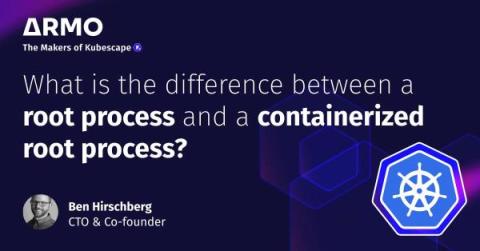
Your CNAPP dashboard shows 10,000 critical findings from last night’s scan. Your CSPM flags misconfigurations every hour. Yet when the SOC asks what actually happened during last week’s incident, you’re still stitching together logs from five different tools to build a timeline that makes sense. Sound familiar? We recently spoke with a platform security lead at a fintech company running 400+ microservices on Kubernetes. Their CNAPP generated 47,000 findings in Q3.

The term "AI Agent" is failing us. #cybersecurity #ai #technews

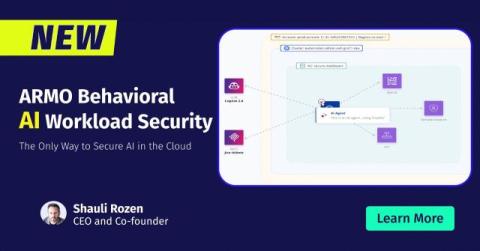
The term "AI Agent" is failing us. In Prediction, Ev warns that our vocabulary is lagging behind the technology. Calling everything an "AI Agent" is like calling everything "software." It’s too broad to be useful. A browser plugin has a completely different architecture than a microservice or a factory robot. They have different identities, different risks, and different security needs. You can't secure what you can't specifically identify.

Delegated DNS validation: proving domain ownership without exposing credentials

It seems like every service wants proof you control your domain. Certificate authorities need it to issue certificates. Email platforms need it to authorize sending. Analytics needs it to gather data. Just add this magic TXT record to your DNS, wait for propagation, click verify. It works fine when it’s a one-time setup, but certificate lifetimes are dropping to 47 days, and you won’t be able to keep up on that schedule.

Introducing Mend.io's AI Security Maturity Survey + Compliance Checklist available today

Today, we’re excited to launch two practical tools to help teams quickly understand their AI maturity, quantify AI risk, and gather the evidence executives will ask for in 2026: an interactive AI Security Maturity Survey (with a personalized score and mapped recommendations) and a companion AI Security Compliance Checklist. Both are aligned to industry standards and built to be immediately useful in discovery, audits, and planning.

What is Vibe Coding? #vibecoding #aisecurity #coding

Mend.io, formerly known as Whitesource, has over a decade of experience helping global organizations build world-class AppSec programs that reduce risk and accelerate development -– using tools built into the technologies that software and security teams already love. Our automated technology protects organizations from supply chain and malicious package attacks, vulnerabilities in open source and custom code, and open-source license risks.

Testing MiniMax M2.1 for AI Coding: The Results Might Surprise You

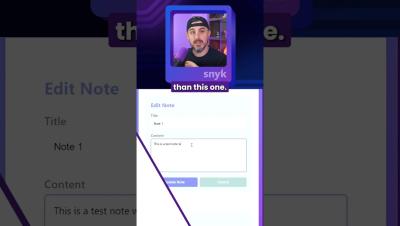
Can "lesser-known" AI models actually keep up with the giants like Google, OpenAI, and Anthropic? In today’s video, we put MiniMax M2.1 to the ultimate test: building a production-ready, secure Node.js note-taking application from a single prompt. We’ll explore how to access MiniMax natively in the Windsurf IDE, walk through the debugging process for common errors (like environment variables and OS-specific dependencies), and perform a deep-dive security audit using Snyk. Stick around until the end to learn how to integrate MiniMax M2.1 into VS Code using OpenRouter.