Security | Threat Detection | Cyberattacks | DevSecOps | Compliance

How Cato AI Security Keeps Up With Claude

Claude is moving quickly. Cato is innovating alongside it. With inference hooks, skills posture, and seamless deployment, teams can adopt new AI capabilities with security controls that are ready from day one. Claude’s rapid innovation is reshaping what everyday employees can do with AI. It is no longer just helping people write faster or summarize information; it is becoming a hands-on work companion that can research, reason, build, and take action across business workflows.

The Agentic AI Security Adoption Matrix: Autonomy Scales Where Control Exists

Agentic AI is crossing a threshold. It is no longer just generating content or answering questions. It is beginning to plan, decide, and execute actions across tools, systems, and workflows. That shift unlocks real efficiency, but it also changes the security equation. When an AI system can act, it becomes part of your operational attack surface. It can be influenced, misdirected, or exploited. It can make mistakes at machine speed. And if it has permissions, it can create real impact.

5 Things to Consider Before Using SSVC to Automate Vulnerability Prioritization

Security teams can’t remediate every vulnerability the moment it appears, so prioritization must separate urgent, business-critical risks from noise. This is complicated by the fact that traditional scoring methods like CVSS often lack the context needed to decide what should be fixed first. The Stakeholder-Specific Vulnerability Categorization (SSVC) framework is one option many organizations use to fill this gap as part of automating vulnerability prioritization.

8 Best Encrypted Email Services to Protect Yourself With In 2026

Most successful hacks and data breaches are perpetrated through email. In a perfect world, everyone would find safer methods for communication, but since email isn't going anywhere anytime soon, encrypted email is our best option. Since Internxt doesn't have its own encrypted email yet, we've assembled a list of the best encrypted email services you should use in the meantime.

What No-KYC Hosting Actually Means

No-KYC hosting generally refers to hosting providers that allow customers to open an account without submitting government-issued identification or other standard KYC documents. Depending on the provider, however, verification may still be triggered later by a payment issue, abuse report, or legal requirement. The term gets thrown around loosely, sometimes implying total anonymity, sometimes just meaning "no ID upload form," and the difference between those two things matters more than it first appears.

Can You Download Private Instagram Videos? The Honest Answer

Search for 'private Instagram downloader' and you'll find dozens of sites claiming to do it. Most of them can't - and the ones that claim otherwise are usually either misleading or asking for something you shouldn't give them (like your Instagram password). The honest answer depends on which specific situation you're in. Here's the full picture, without the misleading promises - and where a free instagram downloader actually works.

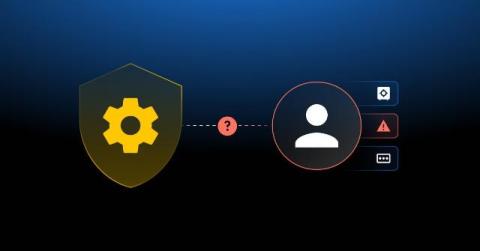
Who Authorized That Tool Call?

Veracode I have been going to Black Hat for more than 25 years, and I have spent many of those years on the Review Board. New technologies keep changing the shape of the systems we secure. The questions I find myself asking stay remarkably familiar. Where does untrusted data enter? What authority does a component have? Which boundary controls a sensitive operation? How do we know that control worked?

Why Autonomy Breaks Traditional Security Operations Workflows

Autonomy breaks traditional security operations workflows because AI agents can act continuously and independently inside approved environments. When activity is initiated and executed without a human in the loop, event-by-event review and short correlation windows fail to capture progression, intent, and accumulated risk.

AI Security vs. Traditional Data Security: Key Differences

Every security architecture review this year eventually lands on the same question: does the existing data security stack already cover AI, or does AI security need its own budget line? The instinct to treat this as one more tool to evaluate and buy is understandable. It is also the wrong framework for modern data security. Traditional data security and AI security answer different questions about the same data. One assumes data stays inside known applications and moves through known channels.

How to detect and govern shadow AI in your organization

To detect and govern shadow AI, organizations need to discover which AI tools employees are using, understand who is using them and why, then turn that visibility into an enforceable AI app policy. The goal is not only to find unsanctioned AI use, but to control which GenAI and AI-enabled apps are allowed, blocked or monitored across the organization.