Two things shipped this week. One is for the MSPs who manage certificates on behalf of other companies. The other lets you run the shorter 45-day renewal cycle today.
In previous Strategic CISOs sessions, I’ve spoken with security leaders from Andesite, IMO Health, and Cribl. They’ve built trusted programs where GRC functions as a business driver and customer assurance accelerates revenue. But every CISO I speak with is still fighting some version of the same fight. They have more obligations, more scrutiny, and more AI-related risk, but they do not have more people, more budget, or more hours in the day.
The security industry hasn’t been wrong about agentic AI risk. It’s been incomplete. There’s no shortage of single-signal solutions for the problem: tools that analyze prompts for malicious content, platforms that monitor data access patterns, capabilities that assess model behavior for signs of manipulation. Each captures something real. None is sufficient on its own.
Security budgets have never been higher. The average enterprise now runs 50 security tools, and most teams added more last year than the year before. And yet, alert fatigue is at the breaking point. Coverage gaps in mobile and API environments continue to widen. The exploitability problem at the center of most AppSec programs remains unsolved. Breaches keep happening. Risk scores don't move.
For years, application security ran on a simple assumption: software moves through a lifecycle, and security inspects the artifacts as they travel from development to production. Developers plan, write code, commit it, test it, scan it, and ship it. Every control built, including pull request reviews, CI/CD gates, and post-commit scanning, assumed a human was sitting between each step, making decisions a tool could later check.
If Gen AI adoption were a drinking game, most companies would be three rounds in and still adding shots. I mean, with a new LLM-powered feature every sprint, agents wired into internal APIs, RAG pipelines indexing everything from Confluence to the HR drive, i.e., fast, exciting, and almost nobody checking what happens when someone hands the model a sentence or a txt.file it wasn’t supposed to receive.
If you run engineering, security, or compliance at an Indian tech company, DPDP compliance is knocking at your door fresh and clean in less than a year. Our aim is not to present scary statistics but to help you recognize the urgency of the matter and become DPDP compliant at the earliest. Since this law safeguards a nation’s data, the DPBI can thus stack penalties across multiple contraventions in a single incident. So stop debating whether the law applies to you; it almost certainly does.
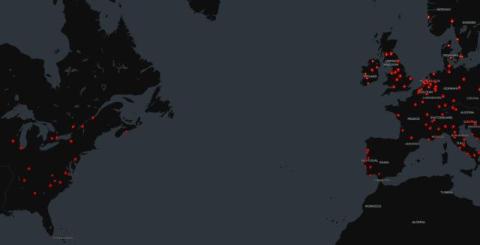
According to Bitsight Threat Intelligence, NoName057(16) remains one of the most visible pro-Russian hacktivist groups conducting distributed denial-of-service (DDoS) attacks against countries and organizations perceived as supporting Ukraine. This matters because the risk can extend beyond direct business ties to Ukraine, and the group may also target organizations that do business with vendors, suppliers, partners, or service providers perceived as supporting Ukraine.
Every company has a version of the same thing. Sometimes it’s a security wiki. Sometimes it’s a Confluence page. Sometimes it’s a PDF nobody wants to update.
I recently wrote about how today’s cyber risk is defined less by breakthrough innovation and more by the industrialization of existing weaknesses. Given this, I wanted to dig a little deeper. Over a weekend I conducted some analysis on a longitudinal Aggregate Cyber Risk Index that scores six core threat vectors daily for 1,000 days on a 0–100 scale, drawing on six macro categories.