Security | Threat Detection | Cyberattacks | DevSecOps | Compliance

How to Stop Data Leaks Using DLP and OCR?

Data leaks are no longer rare incidents. They have become a constant concern for organizations of all sizes. A single exposed file can lead to compliance violations, financial penalties, and long-term damage to brand reputation. In many cases, the impact builds over time as sensitive data spreads beyond control. At the same time, the nature of data has changed. Important information is no longer limited to structured formats like databases or spreadsheets.

Privileged User Behavior Analytics (PUBA): How It Detects Insider Threats?

Privileged accounts are the most powerful and most vulnerable identities in any organization. System administrators, DevOps engineers, and IT teams have access to core systems, sensitive data, and critical infrastructure. This level of access is essential for daily operations, but it also makes these accounts highly attractive targets for attackers. The real challenge is not just tracking activity, but understanding whether that activity is normal or not.

Point-in-time GRC is obsolete. What's replacing it? It isn't AI alone

The last generation of Governance, Risk and Compliance (GRC) software built a multi-billion dollar ecosystem by becoming systems of record for risk. ServiceNow became the system of IT workflows. Archer for audits. Diligent for policy management. Own the control framework, own the workflow, own the audit trail. It worked: for a world where risk moved slowly enough to be captured annually. That world is gone. Point in time attestations are obsolete. The Apple Watch didn’t replace the annual checkup.

How Lean Security Teams Stay Ahead of AI-Powered Attacks

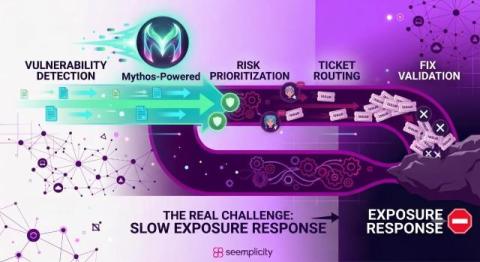
In “Terminator 2“, the T-800 does not win because humans worked harder. It wins because the same machine capability that made it dangerous was reprogrammed to fight for the defenders. Project Glasswing is exactly that. Claude Mythos Preview is Anthropic’s most powerful AI model and the one they refused to release publicly because it autonomously found thousands of zero-day vulnerabilities across every major operating system and browser. Flaws that decades of expert review never caught.

SOC 2 Type II + HIPAA Attestation: Trust You Can Audit, Not Just Accept

There’s a little neighborhood coffee shop I love that runs like a Swiss watch. Every night, the owner doesn’t just flip the sign to “Closed.” They run a checklist: count the till, lock the back door, log fridge temps, sanitize the espresso wand, test the alarm, and write it all down. Not because they expect trouble, but because consistency is foundational to security. The shop earns trust the boring way: by doing the right things, repeatedly, even when nobody’s watching.

What Makes AI Agents Different from Traditional Automation Tools?

With the growing buzz around artificial intelligence, many businesses still struggle to separate hype from reality. Everywhere you look, tools are labeled as "AI-powered," yet a large portion of them are simply upgraded versions of traditional automation. This creates confusion for decision-makers who are trying to understand whether they truly need AI or if their existing systems are already sufficient.

You Can't Trust What You Can't Trace

Picture this: Your security team finishes an AI vendor evaluation. The offering looks ironclad, with content filtering, output guardrails, and a stellar red-teaming report. Everyone leaves the meeting satisfied, and another governance box is checked. Six months later, a production incident hits. An AI agent, powered by a model your team “vetted,” starts executing unauthorized deletions in your CRM.

Emerging Threat: (CVE-2026-23869) React Server Components Denial of Service

CVE-2026-23869 is a denial of service vulnerability in React Server Components, caused by improper handling of cyclic data structures during deserialization of incoming HTTP requests. The vulnerability resides in the React Flight protocol's server-side reply handling, specifically in the createMap, createSet, and extractIterator functions within ReactFlightReplyServer.js. The vulnerability carries a CVSS v3.1 base score of 7.5 (High). Exploitation requires no authentication and no user interaction.

How Government Agencies Can Enforce Zero-Trust Security with Keeper

Zero trust is a cybersecurity framework built on the principle of “never trust, always verify,” meaning every user, device and session must be continuously verified for access to be granted and maintained. In federal environments, zero trust is especially critical because privileged accounts can provide access to sensitive systems, infrastructure and data.

Agents Need Boundaries. The Market Is Starting to Agree.

Gartner published the inaugural Hype Cycle for Agentic AI last week (and yes, we’re included in two subcategories - Agentic AI Security and Guardian Agent). A few things worth noting. It's inaugural, Gartner publishes over 130 Hype Cycles a year, and standing up a new one signals that a space has earned its own map. And it dropped in April, months ahead of the June - August window when these things usually appear.