Security | Threat Detection | Cyberattacks | DevSecOps | Compliance

SOC 2 Type II + HIPAA Attestation: Trust You Can Audit, Not Just Accept

There’s a little neighborhood coffee shop I love that runs like a Swiss watch. Every night, the owner doesn’t just flip the sign to “Closed.” They run a checklist: count the till, lock the back door, log fridge temps, sanitize the espresso wand, test the alarm, and write it all down. Not because they expect trouble, but because consistency is foundational to security. The shop earns trust the boring way: by doing the right things, repeatedly, even when nobody’s watching.

The Mythos Moment: Why Architecture and Advanced Models Matter for Cyber Defense

What began as reports about Anthropic’s Mythos model has now moved into a gated research preview called Mythos Preview. For cybersecurity, that immediately raises an important question: what happens when advanced AI can accelerate offensive workflows such as vulnerability analysis, exploit development, and attack planning? In a recent Cato blog post, we addressed the broader strategic shift this represents.

The Platform Economy Is Rewriting the Rules for IT

There’s a fundamental shift happening in enterprise IT. It’s not about another feature or another product category. It’s about economics. We call it the Platform Economy, and it defines a new operating reality for IT teams. For years, enterprises have operated in what’s described as the portfolio economy: multiple products, sometimes from the same vendor, packaged together and presented as a suite. On paper, it looks consolidated.

The firewall appliance is part of the problem. The legacy stack is all of it.

When static perimeters were a thing, networking and security vendors sold organizations products to fix an IT need or problem. That fix would expose a gap somewhere else, so the market named the gap, built a category around it, and organizations were sold another product to plug it. That model didn’t age well as environments changed.

Zero Trust for the East/West Battleground

Most major breaches do not spiral out of control because attackers get in. They spiral because attackers are free to move once they are inside. After gaining an initial foothold through compromised credentials, a misconfigured cloud workload, a remote device, or a third-party connection, sophisticated attackers pivot. They scan the network, escalate privileges, and move laterally across the LAN and datacenter until they reach critical systems.

The Evolution of Cato SASE: Welcome to the New Platform Economy

For decades, enterprise IT has been shaped by point solutions and stitched-together architectures. Many so-called platforms are product portfolios in disguise, made up of separately built or acquired solutions that run on disparate architectures and are loosely connected at best. Today, there’s a fundamental shift happening in enterprise IT. It’s not about another feature or another product category. It’s about economics.

Mythos and Beyond: Cato Addresses the Generational Shift in Cyber Threats with Agentic Security Researchers

Anthropic’s upcoming Mythos model points to something far more consequential than another leap in artificial intelligence. It signals a shift that could redefine the balance between attackers and defenders in cyberspace.

TeamPCP: Supply Chain Attack Targets Trivy, KICS GitHub Action, and LiteLLM

Security vendors have linked recent incidents involving trusted software components to a supply chain attack campaign by TeamPCP, a cloud-focused threat actor group. The reported activity involved three widely used types of development components, which include.

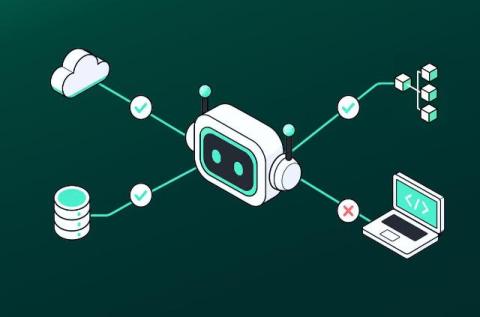
Securing Agentic AI: Why Visibility, Behavior, and Guardrails Matter

Agentic AI is quickly transitioning from experimentation to production. Enterprises are deploying AI agents to interpret goals, decide what actions to take, interact with business tools and APIs, and execute those actions autonomously, with limited or no human oversight. The promise is speed and efficiency, but the proverbial “blast radius” is bigger and fundamentally different from anything security teams have managed before.