Super Speed with Phantom Slash Commands
Are you the type of person who loves the command-line? Is tab-complete your friend? Do you move faster on a keyboard than with a mouse? Then Phantom Slash Commands are for you!


Are you the type of person who loves the command-line? Is tab-complete your friend? Do you move faster on a keyboard than with a mouse? Then Phantom Slash Commands are for you!
Five worthy reads is a regular column on five noteworthy items we’ve discovered while researching trending and timeless topics. In light of rising concerns over cloud cybersecurity, this week we explore the concept of confidential computing. The past year has seen strong adoption of cloud technologies due to accelerated digital transformation and a cloud-first approach in business.
In 2021, digital transformation has accelerated. At the tail end of the COVID pandemic, with companies remaining remote, the demand for cloud services in the enterprise is the highest It’s ever been. Healthcare organizations, which more directly encountered the acute challenges posed by the pandemic, were among the first to be shaped by the current wave of digital transformation.
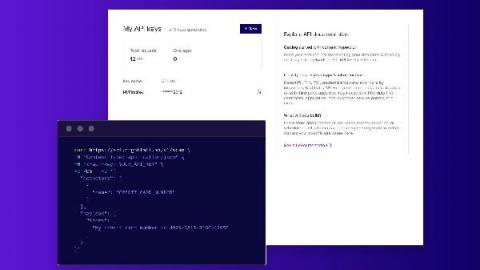
As a cloud-native data loss prevention solution, Nightfall DLP can natively integrate with some of the most popular SaaS applications in order to protect against the proliferation of sensitive data in these environments. With our native integrations, Nightfall helps keep client data safe on apps including Slack, GitHub, Google Drive, Confluence, and Jira. But did you know that Nightfall also exists as a standalone DLP API?
The Linux/UNIX process model creates a new process by cloning the currently running one using the fork() system call. Subsequently, exec()—or one of its variants—loads a new program image into the newly cloned child process. There are a variety of issues that stem from using this approach in modern systems. There are also various widely used techniques and APIs aiming to alleviate the issues in different ways with different degrees of success and quirks.
It is increasingly common to hear about cyber threats to energy and utility industries. These are malicious acts by adversaries that target our data, intellectual property, or other digital assets. All too often it seems as though energy and utility companies are put in a defensive position to battle it out with these cyber intruders. How can the industry switch to a more offensive position when it comes to understanding these threats?
As supply chain attacks continue to dominate headlines, software development teams are beginning to realize that package management can’t be taken lightly — the threats hidden under the hood are real. In this installment of The Source, we want to talk about the practices and tools that developers need to adopt in order to protect against supply chain attacks.
This is part 2 in a mini-series about the current paradigm shift in security towards a continuous security approach. Richard Carlsson, Detectify CEO, was on Enterprise Security Weekly to shed light on it and this article delves into the need for velocity to activate this strategy.
President Biden’s cybersecurity executive order from last month should cause little surprise for anyone following news headlines over the past year. The order is the U.S. Federal Government’s important response to a long list of incidents, starting with the SolarWinds attack and ending with a recent ransomware attack against Colonial Pipeline —- the largest known attack against a US energy firm.
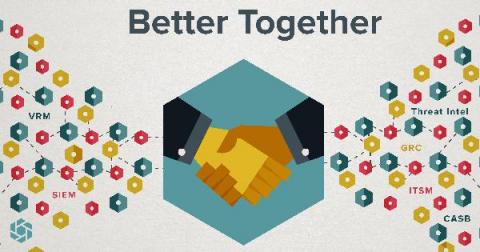
The old saying “it takes a village” applies to many things in life, including securing your organization. Security is a team sport that requires a variety of solutions and providers — such as a firewall, endpoint protection, security information and event management (SIEM), threat intelligence provider, IT service management (ITSM), governance, risk, and compliance solution (GRC), and cloud access security broker (CASB) — to name a few.