Security | Threat Detection | Cyberattacks | DevSecOps | Compliance

The First Step to Achieving DevSecOps Is Shifting Security Culture Left

To achieve DevSecOps you need to shift security left. Sounds simple, right? Well, it’s easier said than done. A recent survey conducted by SANS Institute found that 74 percent of organizations are deploying software changes more than once per month – an increase in velocity of nearly 14 percent over the past four years. To release software monthly, weekly, or even daily, security has to be integrated into the development process, not tacked on at the end.

The impact of credential stuffing on credit unions

According to Netacea’s latest research ‘The Bot Management Review: the challenge of high awareness and limited understanding’, 95% of financial services surveyed stated that they had experienced a bot attack over the past two years. Since financial services often store highly sensitive and personal information, it is essential that the security measures that they have in place can detect even the most sophisticated of bots.

How often should you perform vulnerability scanning? Best practices shared

To understand how often vulnerability scanning should be performed, it’s important to delve into the drivers behind this objective. Vulnerability management includes the treatment of risks identified during the vulnerability assessments. This is a vital element of the risk management regime for any organisation. Without making informed choices around risk appetite, an organisation may not get the best out of a vulnerability management programme.

What I Wish I Knew About U2F and Other Hardware MFA Protocols

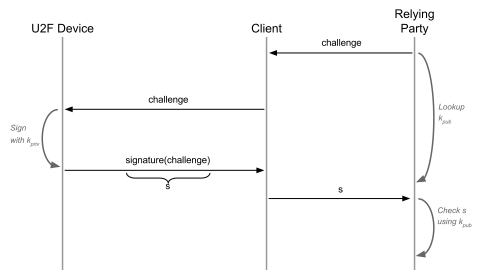
Teleport has supported multi-factor authentication (MFA) for a while now, via Authenticator Apps (TOTP) and Hardware Tokens (U2F) such as YubiKeys. But this support was pretty limited: you could only choose one MFA protocol and users could only register one device. If a user lost their device, they would be locked out and need an account reset by the administrator. So, for Teleport 6.0, we’ve reimplemented the MFA support to make it more flexible.

The Zero Trust lesson behind mobile phishing against Australian officials

Australia recently confirmed that a series of mobile phishing attacks were successfully executed on senior officials. According to The Sydney Morning Herald, the targets – which included Australia’s finance minister, health minister and ambassador to the U.S. – were sent messages asking them to validate new WhatsApp or Telegram accounts.

White House launches plan to protect US critical infrastructure against cyber attacks

The White House is reportedly moving swiftly forward with a plan to harden the security of the US power grid against hacking attacks. According to Bloomberg, the Biden administration has a plan to dramatically improve how power utilities defend themselves against attacks from countries considered to be adversaries in cyberspace – such as Russia, Iran, North Korea, and China.

A quick round up of privacy highlights for Q1 of 2021

As expected, the start of 2021 has seen unprecedented movement in the U.S. with 22 states introducing comprehensive privacy legislation and even more introducing specific-use legislation. To date, hundreds of privacy bills were introduced across the states; to give some perspective, more than 50 privacy bills were introduced in New York alone. Undoubtedly a hot topic, it seemed anyone with an idea for a privacy bill put it in writing and introduced it to their legislature.

6 Data Cleansing Strategies For Your Organization

The success of data-driven initiatives for enterprise organizations depends largely on the quality of data available for analysis. This axiom can be summarized simply as garbage in, garbage out: low-quality data that is inaccurate, inconsistent, or incomplete often results in low-validity data analytics that can lead to poor business decision-making.