

Security | Threat Detection | Cyberattacks | DevSecOps | Compliance

What Is DSAR? Understanding Data Subject Access Requests Under the DPDP Act

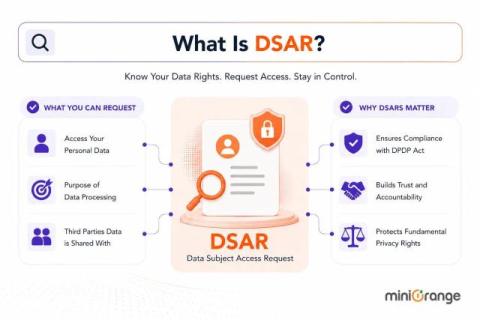
A Data Subject Access Request (DSAR) gives individuals the right to ask these questions and gain greater visibility into how their personal data is being used. Under privacy laws such as India's Digital Personal Data Protection (DPDP) Act, Data Principals can request access to their information and exercise other privacy rights. Every time you shop online, sign up for a service, or submit your details on a website, organizations collect and process personal data about you.

Java Source Code Scanning that Works the Way You Do

Many tools fail to adapt to diverse developer use cases, leading to workflow interruptions in IDEs and CI pipelines. Managing dependencies for multi-module projects can be complex and time-consuming, often causing delays. And developers frequently work across varied environments – whether it’s IDEs, CI pipelines, or repositories, each with unique requirements. These challenges create friction and slow down the development process, making it harder to deliver secure applications on time.

NGAV vs EDR vs XDR vs MDR: how to choose the right detection and response approach

NGAV (next-generation antivirus), EDR (endpoint detection and response), XDR (extended detection and response), and MDR (managed detection and response) are not four separate products bought independently — they are overlapping capabilities and delivery models. NGAV is a prevention capability, normally built into an endpoint protection platform or an EDR solution, that uses AI and behavioral analysis to block known and unknown threats.

From standard sales user to AWS root in 5 minutes: An AigentX Case Study - Agentic AI Penetration Testing

A recent grey-box Salesforce assessment began with a low-privileged standard user account. From that starting point, AigentX mapped native Salesforce APIs and custom objects, identified cloud credentials exposed through misconfigured Field-Level Security, and demonstrated a path beyond Salesforce into the organization’s connected cloud infrastructure.

What Is the Cyber Kill Chain: A 2026 Guide

You open an inbox and spot the kind of email every SOC team knows too well, a message that looks routine, lands with a harmless subject line, and asks someone to click, open, or approve something they shouldn't. That's where what is the cyber kill chain stops being an abstract term and starts being a practical way to think about intrusion, because the attack usually isn't one event, it's a sequence of choices an adversary makes before the damage shows up.

The Invisible Expansion of the Attack Surface: Shadow AI, MCP, and Third-Party Risk

AI adoption is moving faster than most of us anticipated and, more importantly, faster than most organizations can govern it. Organizations are implementing the use of AI-enabled applications, browser extensions, coding assistants, and automated agents to enable employees to work faster. In many cases, these tools are adopted without security review, procurement approval, or a clear understanding of where organizational data is being sent.

Choosing an API Discovery Tool? Here's the Unmanaged API Gap Most Vendors Miss

If you’re evaluating API discovery tools right now, you’ve probably already seen a handful of demos that look nearly identical: a clean dashboard, an inventory count, maybe a risk score. What’s harder to see in a 30-minute demo is whether that inventory reflects what’s actually running in production, or just what the vendor’s connectors happened to catch on setup day.

What Is CSPM? Cloud Security Posture Management

The shift to cloud-native infra has broken the traditional perimeter security model. Modern cloud environments are dynamic, heavily distributed, and identity-driven, creating security challenges that conventional security tools were never built to address. Traditional SIEM and vulnerability management tools lack native capabilities to detect issues in IAM policies, S3 bucket ACLs, or the blast radius of a misconfigured Kubernetes node pool.

NIST AI RMF vs ISO 42001: Choosing Your AI Governance Framework

NIST AI RMF and ISO/IEC 42001 answer different questions, so the choice is rarely about which one is better. One gives you a risk process your engineering teams can run. The other gives you a management system an auditor can certify. Organizations that treat them as rival options usually pick the wrong one for the problem in front of them. ‍

Reporting AI Risk to the Board: What Directors Want to See

Directors ask for AI risk reporting because oversight failure is personally actionable. Under the Caremark line of cases, a board that cannot demonstrate it monitored a material risk carries exposure of its own, and AI has moved into that category for most enterprises. The request is rarely curiosity about the technology. ‍ The framing determines what belongs in the pack.

