Security | Threat Detection | Cyberattacks | DevSecOps | Compliance

The latest News and Information on Security Incident and Event Management.

Introducing Graylog 6.2: A SIEM Without Compromise

What does it really mean to have a SIEM Without Compromise? For too long, security teams have been stuck in a no-win game—forced to choose between visibility and cost, detection breadth and team capacity, automation, and control. Every decision felt like a trade-off, with real-world consequences: dropped logs, missed alerts, and inconsistent response when it mattered most. With the Spring ’25 release of Graylog Security 6.2, we’re eliminating those compromises.

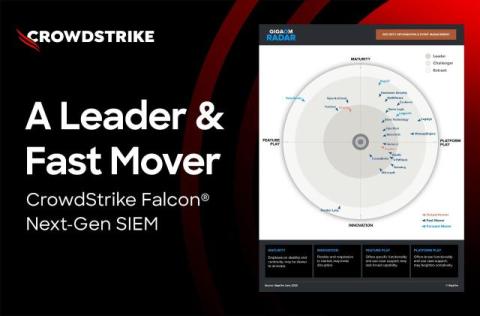
CrowdStrike Advances Next-Gen SIEM with Threat Hunting Across Data Sources, AI-Driven UEBA

CrowdStrike is launching new innovations to power the AI-native security operations center (SOC) and help teams hunt and resolve threats with speed and accuracy. A new solution, CrowdStrike Falcon Adversary OverWatch Next-Gen SIEM, will bring managed threat hunting to available third-party data and extend the visibility of CrowdStrike’s elite threat hunters into unmanaged attack surfaces.

Intelligent security operations: The future of threat defense with Sumo Logic

Security operations and large-scale conferences have more in common than you'd think: too much noise, too many tools, and insufficient clarity. Both can leave you overwhelmed with information as you sort through one acronym or bold claim after another, only to end up with more questions than answers. RSA Conference is no exception. Booths are packed with AI promises and buzzwords, but there’s little visibility into how anything works.

How to achieve full-spectrum financial risk detection with AI and unified data

Financial services can’t rely on manual review alone. Discover how unified data and explainable AI are helping firms detect risk, reduce cost, and stay ahead of evolving regulations. Financial services organizations are drowning in data. From emails and Bloomberg chats to WhatsApp messages and calls, the need to review communications data to detect potential misconduct and financial crime by employees and third parties is a mandated regulatory requirement for compliance and risk teams in 2025.

Your Network Evidence, Your SIEM, your way: Corelight's open SIEM strategy empowers SOCs with a unified experience

Security operations centers (SOCs) are under constant pressure to keep their organizations secure, while battling alert fatigue, tool sprawl, and ever-rising demands for speed and precision. Analysts today face an overwhelming landscape where context is thin, telemetry is inconsistent, and critical signals are buried in noise. At Corelight, we’re focused on one simple idea: Your network evidence should work wherever your SOC team does.

Elastic Security Labs provides an under-the-hood look at its detection engineering processes

The 2025 State of Detection Engineering at Elastic explores how we create, maintain, and assess our SIEM and EDR rulesets. Today, Elastic Security Labs is releasing the 2025 State of Detection Engineering at Elastic! This brand new report is the first of its kind — we’re pulling back the curtain on our Detection Engineering practices, going beyond the traditional survey-style State of Detection Engineering report.

Zero trust for public sector organizations

The “never trust, always verify” premise of Zero Trust requires a significant shift in how agencies evaluate security risks. Every transaction demands a risk assessment across every Zero Trust pillar — a tough task when the key data is locked in different systems and tools. But a unified data platform can essentially serve as the glue that connects all your systems, making them more integrated, accurate, and trustable.

Less noise, more signal: How Elastic Defend slashed event volume

When an EDR tool generates too much endpoint telemetry, security teams quickly run into problems. Mountains of process events, network connections, and file operations can overwhelm analysts, making it harder to spot real threats in the noise. High data volumes drive up storage costs, slow down searches, and contribute to alert fatigue — leading to longer investigation times and potential blind spots.