Security | Threat Detection | Cyberattacks | DevSecOps | Compliance

Top Tools Used to Bypass Cloudflare for Web Scraping: A Security Perspective

Cloudflare protects more than 20% of all websites on the internet, according to W3Techs infrastructure data. Its layered security model combines IP reputation filtering, TLS fingerprinting, JavaScript challenges and behavioural analysis to block automated traffic before it reaches the origin server.

Patch management best practices: An enterprise guide

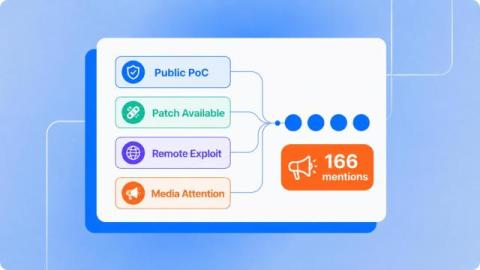
Effective patch management requires a structured process of inventorying assets, prioritizing vulnerabilities by risk, testing fixes before broad deployment, and automating rollout: steps that collectively help narrow the window between a vendor's patch release and active exploitation across enterprise systems.

How to Prevent Prompt Injection

A prompt injection occurs when an attacker manipulates input to your AI system, overriding its instructions. To prevent prompt injection, you need a layered approach: separate system instructions from user input, validate user input before it reaches the model, monitor model outputs for anomalies, enforce least-privilege access for AI agents, and protect the data layer so sensitive information never reaches the model in a readable form. No single fix is enough.

How to Evaluate Security Tools for the Software Supply Chain

Engineering teams today face a dual mandate: ship high-quality features faster while keeping the underlying infrastructure secure. As development velocity increases, so does the complexity of the tools, libraries, and third-party components that make up your applications. The challenge? Your application’s security is now tied to a vast supply chain of code you didn’t write.

Most Critical Infrastructure is Held Together by Sticky Tape

The fear is not only what advanced AI can do, it is what it can do to brittle systems already running on neglect and compromise. When critical infrastructure is patched together with ageing controls and restricted tools land in a few powerful hands, the imbalance gets worse fast.

If You're Worried About Mythos, Your Security is Broken #infosec #alert

This episode looks at what happens when AI starts finding vulnerabilities at scale, restricted access creates market imbalance, and security teams struggle to keep pace. It covers fragile infrastructure, bug brokers, overloaded analysts, CISO fear, and the growing sense that cyber defence is entering a faster and harsher era.

How a Hacker Used Standard AI to Dismantle a Government

The real shock is not a restricted model with scary branding, it is what standard public AI tools already make possible. A prolonged attack against government systems, tax records and voter data shows the threat comes from scale and persistence, not only from the newest frontier release.

Ep 40: What to expect when you are expecting an audit

On this episode of Masters of Data, we brought back GRC expert Cassandra Mooseburger to pull back the curtain on audits, and spoiler: it is far less scary than the IRS knocking on your door. We break down what actually separates a certification from an attestation from a report, how to run a prep process that does not send your engineering team running for the hills, and why the social capital you build across the business is just as important as the evidence you collect. If you have ever wondered how compliance work translates into closed deals and customer trust, this one connects those dots.

Bugs & Betrayal - Vect Analysis

Vect is a newly observed RaaS operation that emerged in December of 2025, with affiliate recruitment and victim postings following shortly after in January 2026. Following the 19th of March 2026 Trivy/LiteLLM supply chain attack conducted by TeamPCP, in which ~340 GB uncompressed data was stolen, Vect announced on the dark web forum “Breached” that they would be partnering with TeamPCP.

Observability is security (We just pretended it wasn't)

For years, we’ve drawn this artificial line that equates observability with uptime, performance, and SRE dashboards, while security is about threats, alerts, SIEMs, and “bad things.” While that separation was always convenient, it was never real. The same logs that tell you your service is slow are the same ones that tell you it’s compromised. We just routed them to different teams, different tools, and different budgets, then acted surprised when neither side had the full picture.