Security | Threat Detection | Cyberattacks | DevSecOps | Compliance




Vulnerability Causing Deletion of All Users in CrushFTP Admin Area
During a recent penetration test, Trustwave SpiderLabs researchers discovered a weak input validation vulnerability in the CrushFTP application which caused the deletion of all users. CrushFTP is a secure high- speed file transfer server that runs on almost any OS. It handles a wide array of protocols, and security options. CrushFTP stores details of registered users within the filesystem in the users/MainUsers directory.
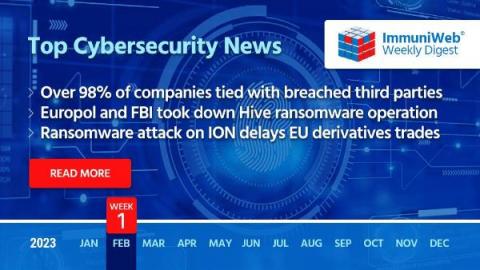
Almost All Firms Are Working With Breached Third Parties
Read also: Financial firm ION hit with a cyber-attack, Hive ransomware disrupted in a global cyber operation, and more.

Global Actions to Simplify Whitelisting/ Blacklisting Your IPs
Security gaps in a Managed Kubernetes Environment

Should your team really run DAST in staging environments?
TL;DR: There is a common belief that when it comes to uncovering bugs in the DevSecOps cycle, catching things early on is often better. While this approach certainly works well for Software Composition Analysis (SCA) and Static Application Security Testing (SAST), it doesn’t really apply to Dynamic Application Security Testing (DAST) in modern environments.

Hive Ransomware Technical Analysis and Initial Access Discovery
Hive has been seized by law enforcement, but were likely to still see these initial access methods and tactics used across other threat actor groups.
How CISOs Can Transform their SOC: Technological and Economic Considerations
Our SOC Performance Report found that it takes an average of seven months to fill open SOC positions, and 55% of those doing the hiring are struggling to find qualified staff. As a result, SOC resources are strained, putting the team at risk for fatigue and burnout, which can cause them to miss critical alerts. Research has shown this is a widespread issue, too, as most SOCs waste an average of 10,000 hours annually validating unreliable and incorrect alerts.

The Ultimate Guide to Cyber Security Certifications: What You Need To Know
Advanced Security in your Software Supply Chain - Part 1
Containerised deployment is widely becoming a standard in every industry, ensuring these containers are protected at every level with a high level of accuracy is one of the most important tasks. Some industry vendors rely solely on the manifest files to provide them with a list of components, others have to manually convert the container image to a TAR archive before scanning, and even then they may only work on the application layer instead of evaluating the entire filesystem.