Security | Threat Detection | Cyberattacks | DevSecOps | Compliance

Featured Post

From Spend to Impact: Fixing the Disconnect in U.K. Supply Chain Security

In today's hyperconnected economy, supply chains are no longer just operational backbones; they are strategic lifelines, shaping resilience, competitiveness, and innovation across industries. Yet for many U.K. organisations, these lifelines are becoming increasingly fragile. The most recent iteration of our global supply chain defence research indicates that - despite pouring significant resources into third party risk management (TPRM) programs and embracing new technologies to shore up their supply chain defences - U.K. businesses continue to face a high rate of supply chain breaches.

Why Traditional Threat Detection Is Failing Security Teams

As attack surfaces continue to expand, many security teams are finding that traditional detection methods can’t keep up. In this clip, the discussion centers on why legacy security tools struggle in modern environments — from the growing complexity of networks to the sheer volume of alerts teams are expected to investigate. When alerts are handled manually and without sufficient context, it becomes difficult to understand which threats are most critical and how quickly to respond.

Exploiting Monsta FTP: Technical Analysis of CVE-2025-34299

CVE-2025-34299 is a critical vulnerability in Monsta FTP, a web-based file transfer tool, unauthenticated arbitrary file write via remote download leading to remote code execution (RCE). Affecting versions 2.11 and earlier, it enables attackers to upload malicious files via a crafted SFTP or FTP connection, compromising servers without credentials. This flaw has seen active exploitation through opportunistic scans. By January 2026, Vulnerable instances remain exposed.

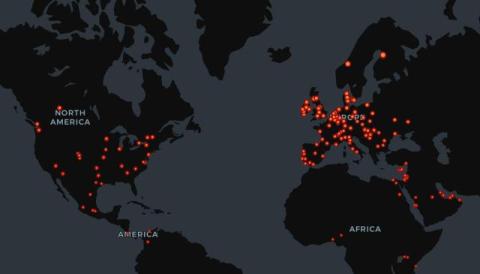
Cyber Threat Intelligence Report: Top 4 Malware Targeting Finance

The finance sector continues to face sustained and evolving cyber threats driven by the high value of financial data, credentials, and transactional access. Malware remains one of the most common and effective mechanisms used to compromise financial institutions, payment platforms, and end users, enabling fraud, data theft, and operational disruption.

Best Kubernetes & Container Security Dashboards: Top 8 Tools for 2026

What is a Kubernetes security dashboard? A visual interface showing your clusters’ security state—what’s vulnerable, what’s under attack, and what to fix first. Different from general dashboards like Lens or Rancher, which focus on cluster management rather than threat detection. Why do most security dashboards fail? They create more work. Alerts are siloed across tools, forcing hours of manual correlation.