Security | Threat Detection | Cyberattacks | DevSecOps | Compliance

Higher Education TPRM in 2026: New Research Maps the Vendor Visibility Gap

Higher education institutions are the most targeted sector for cyberattacks. Yet the teams responsible for managing that risk often face a structural disadvantage: they’re accountable for a vendor ecosystem they can’t fully see. Academic autonomy and the scale of university operations mean that vendors enter the institution through departments, research groups, and administrative teams before InfoSec has full visibility. This challenge is built into how higher education operates.

Best TPRM Software for Higher Education: What to Look For

Higher education institutions don’t run on a single vendor ecosystem. They run on dozens of overlapping ones. Teaching, research, identity, payments, student services, cloud infrastructure, alumni engagement, and campus operations all rely on different third-party vendors. These often enter the institution through departments and administrative teams before InfoSec becomes aware of them. This is the operational reality that higher education TPRM software addresses.

Why Data Governance Matters When Adopting AI-Driven Student Enrollment Solutions

Schools, colleges, and universities are under constant pressure to make enrollment faster, simpler, and more accurate. This is why so many institutions are now turning to student enrollment solutions powered by artificial intelligence. These tools can predict applicant behavior, automate paperwork, flag incomplete forms, and even help admissions teams identify which students are likely to enroll. The appeal is obvious. But there is a part of this shift that often gets overlooked in the excitement around automation, and that is data governance.

How Research Universities Can Prepare for CMMC Level 2 Compliance

The Cybersecurity Maturity Model Certification (CMMC) is a Department of Defense (DoD) framework made to ensure organizations handling federal information maintain adequate cybersecurity controls. While CMMC is often associated with government agencies and defense contractors, research universities involved in DoD-funded projects may also need to protect Controlled Unclassified Information (CUI) like research data and technical specifications.

K-12 Cybersecurity in 2026: What Districts Need to Watch, Plan For, and Prove

Cybersecurity is now part of day-to-day school operations. It affects classroom access, payroll, transportation, communications, student privacy, vendor relationships, and the ability of a district to recover when something goes wrong. For K-12 leaders, the challenge in 2026 is not just knowing that threats exist. The harder work is understanding what is actually connected to the district environment, which controls are working, where gaps have developed, and what needs attention first.

Best Higher Education CRM Platforms in 2026

Recruiting, enrolling, and retaining students has become significantly more complex over the past decade. Prospective students expect personalized communication, institutions face increasing competition for enrollments, and administrative teams are under pressure to do more with limited resources.

What an Online Bachelor's in Cybersecurity Prepares You For In 2026

Cybersecurity sounds exciting from the outside. Hackers, breaches, investigations, digital evidence, red teams, blue teams, threat intelligence. Some of that is real. Most of the work isn't. Security professionals spend their days reviewing access logs, patching systems, writing reports, testing backups, explaining risks to people who don't want to hear them, and figuring out why a process broke down before pointing fingers. It's technical, often repetitive, occasionally urgent, and genuinely satisfying when you're good at it.

AI in Australian schools: Managing emerging risks while building a safer learning environment

AI is everywhere in Australian schools. Students are using AI-powered tools to support learning, teachers are leveraging AI to improve productivity and lesson planning, and school administrators are exploring new ways to simplify operations. But while AI holds a lot of promise, it also introduces new cybersecurity challenges. Australian schools increasingly find themselves balancing innovation with the need to protect students and staff.

Can a Digital Yearbook Include Photos, Videos, and Student Messages?

If you have ever managed a school yearbook committee, you know the drill. You spend months chasing down photos, formatting spreads, and arguing over page counts because every extra piece of paper drives up the printing cost. The print budget dictates everything. But when a school decides to move away from print, the entire rulebook changes.

Ensuring Student Safety: Modern Approaches to Campus Protection

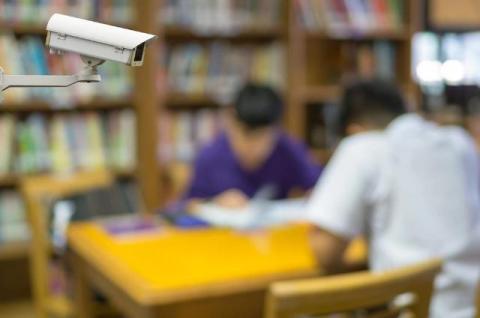
University today has changed drastically, and you will see how much it has changed. Campuses are more open than they used to be. Students move between physical and digital spaces. Events, visitors, and third-party vendors are part of daily operations. All of this creates opportunity. It also introduces risk. Maintaining safety at university in such an environment requires more than cameras or guards. It needs a system built with intention. One which is mindful of how a campus actually functions, not how it looks on paper.