Online Scams Targeting Individuals Double in a Single Quarter as Global Risk Rises
New analysis of the second quarter of this year makes it clear that individuals and organizations alike are at an increasing risk of web- and email-based scams.


New analysis of the second quarter of this year makes it clear that individuals and organizations alike are at an increasing risk of web- and email-based scams.
In cybersecurity, knowledge is everything. From APT intelligence to zero-day vulnerabilities, relevant and timely information can be the difference between a thwarted attack and a total disaster. With Business Email Compromise (BEC) attacks at their zenith, there has never been a better time for a comprehensive BEC report. As such, Fortra has released its 2023 BEC Trends, Targets, and Changes in Techniques Report.
We previously reported independently on PDF-based phishing attacks skyrocketing and the rise of SEO attacks. A recent research study found that the combination of both is quite common. Most worryingly, PDF-based SEO attacks are poorly detected by common defense mechanisms such as blocklists, ad blockers or even crowdsourced antivirus services VirusTotal. PDF-based attacks can be anything from a website embedded in a PDF file to an email.
From February to July 2023, Netskope Threat Labs has been tracking a staggering 61-fold increase in traffic to phishing pages hosted in Cloudflare R2. The majority of the phishing campaigns target Microsoft login credentials, although there are some pages targeting Adobe, Dropbox, and other cloud apps. The attacks have been targeting victims mainly in North America and Asia, across different segments, led by the technology, financial services, and banking sectors.
The latest data from Comcast Business’ analysis of over 23.5 billion cyber attacks on their business customers shows the importance and role of phishing in attacks. Over the years there has been a consistent mantra, where everyone agrees that “90-something” percent of cyber attacks start with phishing. There have been plenty of sources that corroborate this using percentages in the 90th percentile, but the overall message is phishing is your greatest Initial Access tactic.
Cybercriminals used the legitimacy of Salesforce’s email gateway to bypass security scanners and target Meta customers in an effort to steal Facebook credentials. One of the initial challenges any phishing attack has is to make it past security measures designed to scan and identify malicious emails. One such way is to misuse a legitimate well-known platform’s outbound sending of emails.
At Black Hat USA 2023, a session led by a team of security researchers, including Fredrik Heiding, Bruce Schneier, Arun Vishwanath, and Jeremy Bernstein, unveiled an intriguing experiment. They tested large language models (LLMs) to see how they performed in both writing convincing phishing emails and detecting them. This is the PDF technical paper.
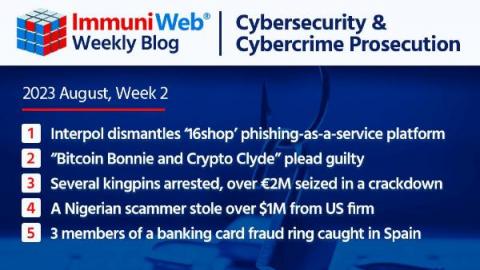
Read also: A Bitfinex hacker pleads guilty, over €2M seized in a major crackdown on West African crime groups, and more.