The rise of fintech has pushed traditional financial institutions to provide online-based services and launch fintech applications. But these services must be secure and meet certain regulatory requirements, such as the Payment Card Industry Data Security Standard (PCI DSS), the General Data Protection Regulation (GDPR), or SOC 2.
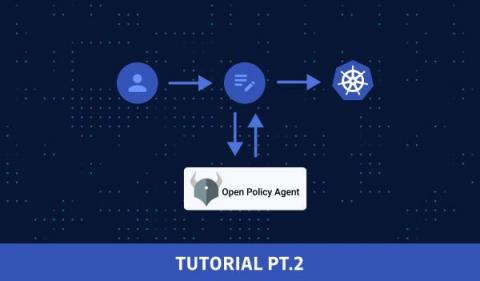
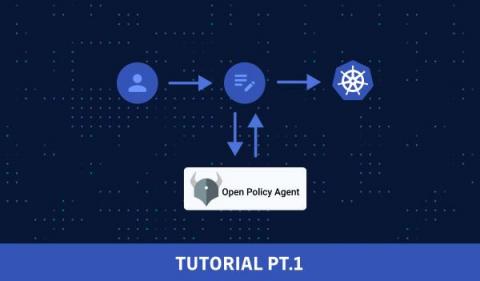
This time, we will see how to get a deeper integration between OPA and Kubernetes with Gatekeeper and native CRD-based policies.
Containers are a great way to package applications, with minimal libraries required. It guarantees that you will have the same deployment experience, regardless of where the containers are deployed. Container orchestration software pushes this further by preparing the necessary foundation to create containers at scale. Linux and Windows support containerized applications and can participate in a container orchestration solution.
Let's get our hands dirty with policy as code and write our first OPA policies for a Kubernetes environment.
Companies often see seasonal business spikes with periods of increased on-line demand or activity. To meet the changing application demands, Kubernetes has become the platform of choice to automatically scale web applications and infrastructure up and down. Autoscaling in Kubernetes adjusts the resources that are available to run the application or service, while minimizing the cost of those resources.
Controlling and filtering traffic when containerizing a workload within Kubernetes Pods is just as crucial as a firewall in a more traditional network setup. The difference is that, in this scenario, those capabilities are provided by the Kubernetes NetworkPolicy API. This article will explore Kubernetes NetworkPolicy by creating an example network policy and examining its core parameters. Then, we’ll look at some common NetworkPolicy use cases and learn how to monitor them using kubectl.
Sysdig is a premier Google Cloud Platform (GCP) partner and has been working with Google towards the common goal of supporting our customers and securing their cloud journey for the last seven years. Sysdig is focused on securing and monitoring workloads running on Google Cloud – including Google Kubernetes Engine (GKE), Autopilot, Anthos, and more. All these various elements of GCP can be protected using Google Security Command Center. Learn more about how to enhance your GCP security.
As the need for a new security strategy grows, we use cloud-native security platforms (CNSP). Cloud services like containers, serverless security, platform as a service (PaaS), and microservices are the building blocks of cloud-native architectures. Because these services are loosely coupled- that is, they are not hardwired to any infrastructure components developers can frequently make changes without harming other parts of the application or other team members’ projects.
Docker is the primary tool used for containerizing workloads. If your company wants to build containers with quality, then you’ll need access to your Docker container logs for debugging, validation and optimization. While engineering teams can view container logs through straightforward CLI tools (think docker logs), these tools don’t provide a mechanism for storing or indexing logs over time. A central, remote location for gathering logs from Docker containers is necessary.