Keeping a lid on container security
Prof. Avishai Wool, AlgoSec co-founder and CTO, shares his insights on how teams can best deploy container security measures using the latest technlogy tools.


Snyk Ambassadors are passionate about sharing their security expertise. Become one today by signing up! In the shipping industry, the container format follows ISO 668, a standard format that regulates the safe stacking of containers. Imagine your applications with multiple containers, running different applications, serving different purposes for people all over the world.
Attackers use container escape techniques when they manage to control a container so the impact they can cause is much greater. This’s why it is a recurring topic in infosec and why it is so important to have tools like Falco to detect it. Container technologies rely on various features such as namespaces, cgroups, SecComp filters, and capabilities to isolate services running on the same host and apply the least privileges principle.
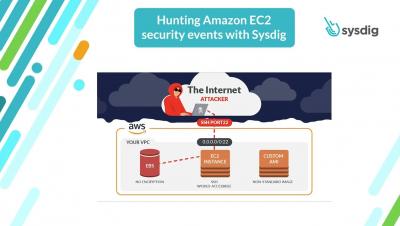
Every compliance audit will ask you to secure SSH, and every time a scanner checks the configuration or CSPM of your cloud account you’ll be warned for it. For example, if you don’t secure SSH on EC2, you’ll certainly get a critical alert stating that one of your Security Groups has its SSH port (22) open to the world. When this happens, you may think: Have I been pwned?
As organizations transition from monolithic services in traditional data centers to microservices architecture in a public cloud, security becomes a bottleneck and causes delays in achieving business goals. Traditional security paradigms based on perimeter-driven firewalls do not scale for communication between workloads within the cluster and 3rd-party APIs outside the cluster.