Stranger Danger: Why Developers Should Care About Container Security
Snyk helps software-driven businesses develop fast and stay secure. Continuously find and fix vulnerabilities for npm, Maven, NuGet, RubyGems, PyPI and more.


Welcome to another iteration of What’s New in Sysdig in 2022! Before starting, once again Happy Easter, Happy Passover, Happy Rama Navami, and Ramadan Mubarak! In general, happy spring break, and we hope you recovered from the chocolate egg drop.
Unless you have experience as a Kubernetes operator or administrator, admission controllers may be a new feature for you. These controllers work mostly in the background and many are available as compiled-in plugins, but they can powerfully contribute to a deployment’s security. Admission controllers intercept API requests before they pass to the API server and can prohibit or modify them.
The recent cryptocurrency boom has driven crypto prices through the roof in the last couple of years. As a result, cryptomining activities have increased significantly as attackers are looking to get immediate monetary compensation. According to the Google Threat Horizon report published Nov. 29, 2021, 86% of compromised Google Cloud instances were used to perform cryptocurrency mining.
Kubernetes supports several authorization methods, but the best-known and one of the most versatile is RBAC. Role-based access control implements a mechanism for restricting and controlling user access to resources of a system by using roles attached to users.
Vulnerabilities are software bugs or weaknesses that could be used by an attacker. They could be present in the operating system, application code, and third-party code dependencies, such as libraries, frameworks, programming scripts, and so on. By taking a secure DevOps approach and identifying vulnerabilities early in development, you avoid frustrating developers with delays when an application is ready for production.
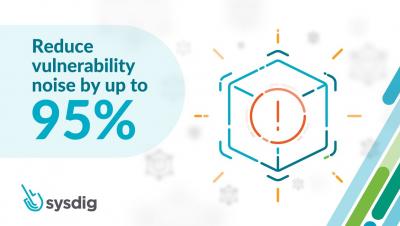
Is your team drowning in container vulnerability noise? Are you spending a lot of time figuring out where to focus resources on and still missing dangerous vulnerabilities? Know that you are not alone. Container environments revolutionized app development by enabling unprecedented velocity, but not without a price. The use of readily available container images of third-party and open-source code enabled much faster cycles, but also facilitated the introduction of vulnerabilities in the application.
Vulnerabilities are everywhere. Vetting, mitigating, and remediating them at scale is exhausting for security practitioners. Let’s keep in mind that no organization has the capacity to find and fix all vulnerabilities. The key is to understand what a vulnerability is, interpret the meanings of the CVSS score, and prioritize and effectively use resources within constrained time limits or delivery windows. Since 2016, new vulnerabilities reported each year have nearly tripled.