Security | Threat Detection | Cyberattacks | DevSecOps | Compliance

Spotting Log4j traffic in Kubernetes environments

Editor’s note: This is the latest in a series of posts we have planned over the next several weeks where we explore topics such as network monitoring in Kubernetes, using sidecars to sniff and tunnel traffic, show a real-world example of detecting malicious traffic between containers, and more! Please subscribe to the blog, or come back for more each week.

How to get a shell in a Kubernetes Pod

Containers are used for packaging software and all its dependencies before deployment. Before the era of containers, software developers had to deal with compatibility issues during deployment. These could occur when software functions properly during the development phase but fails to function due to dependency issues in the production environment. With containers, however, all the software dependencies used for development can be shipped and used in the production environment.

Get Peace of Mind about Security When Deploying Containers from Docker Desktop

Have you ever deployed Docker containers and hoped they delivered safe software? Would you like to get peace of mind that the contents of your containers are secure and clear of vulnerabilities? With JFrog Xray’s new integration with Docker Desktop Extensions, you will be able to do just that. By scanning for vulnerabilities locally before pushing to your remote repositories, your deployed software will inherently be more secure.

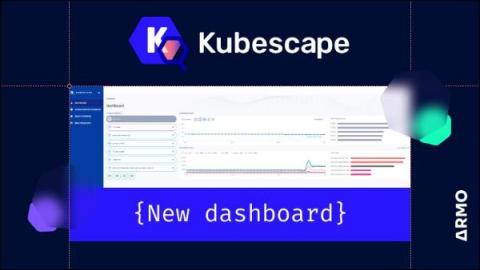
Kubernetes security multidimensional single pane of glass experience

One of the most used buzzwords in our industry is "single pane of glass". But what does it really mean? In most cases, it means a single dimension – either cross-infrastructure or cross-functionality or cross-organization. It usually never AND. Most likely, it's OR. So you will need to use multiple single-pane-of-glass products This led to an interesting discussion between us. Is it a single-pane for all the K8s clusters? Or single-pane for all the K8s security capabilities/functionalities?

Ten considerations for securing cloud and containers

Most organizations adopt cloud and containers to accelerate application development, but by adopting a secure DevOps approach and embedding security into the DevOps workflow, you can ensure security controls don’t slow down developers. Check out these key considerations to keep in mind as you put together your plan for securing clouds and containers.

Compromised Docker Honeypots Used for Pro-Ukrainian DoS Attack

Between February 27 and March 1, 2022, Docker Engine honeypots were observed to have been compromised in order to execute two different Docker images targeting Russian and Belarusian websites in a denial-of-service (DoS) attack. Both Docker images’ target lists overlap with domains reportedly shared by the Ukraine government-backed Ukraine IT Army (UIA). The UIA previously called its members to perform distributed denial-of-service (DDoS) attacks against Russian targets.

Compromising Read-Only Containers with Fileless Malware

Containers provide a number of security features that are not simply available on a normal host. One of those is the ability to make the container’s root filesystem read-only. By making the file system unable to be altered, it prevents an attacker from writing their malware executable to disk. Most attacks rely on writing files in order to work, but sophisticated cases use fileless malware as part of their malicious behavior.

The state of cloud-native security 2022 - Tigera's new market report

We are excited to announce the publication of our first State of Cloud-Native Security market report! The report compiles survey results from more than 300 security and IT professionals worldwide (all of whom have direct container responsibilities), and explores organizations’ needs and challenges when it comes to containers and cloud-native applications, specifically in the areas of security, observability, and compliance.

CVE-2022-23648: Kubernetes Container Escape Using Containerd CRI Plugin and Mitigation

CVE-2022-23648, reported by Google’s Project Zero in November 2021, is a Kubernetes runtime vulnerability found in Containerd, a popular Kubernetes runtime. It lies in Containerd’s CRI plugin that handles OCI image specs containing “Volumes.” The attacker can add Volume containing path traversal to the image and use it to copy arbitrary files from the host to container mounted path. The vulnerability was reported by Felix Wilhelm on Nov.