
The enterprise business is now borderless, where users, devices, sites, and clouds are all creating any-to-any connections with new access control requirements. Digital innovation has led to the proliferation of apps and IoT devices where the cloud and web have become an encyclopedia of applications.
With increased dangers lurking in digital spaces, the need for cybersecurity is now a commonly known fact for just about all business owners. When it comes to protecting their network, most start with the basic firewall. While added layers are required, there is something even more fundamental that should not be overlooked: the physical connection itself. It is like making sure you have secure and quality doors and windows prior to putting alarms on them.
When it comes to merger and acquisition activity – 2023 is poised to be an active year despite uncertain macroeconomic conditions. As always, financial due diligence will be the cornerstone of successful M&A endeavors. Unfortunately for IT teams, there’s no similar process for scrutinizing the network.
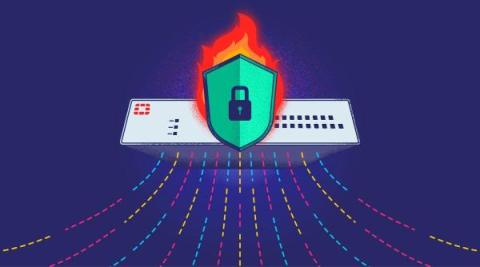
FortiGate firewalls are highly popular and extensively utilized for perimeter-based security in a wide range of applications, including monolithic applications developed and deployed using the traditional waterfall model. These firewalls establish a secure perimeter around applications, effectively managing inbound and outbound traffic for the organization. FortiGate relies on IP addresses for implementing “allow/deny” policies.
Most modern companies are highly reliant on their IT infrastructure for day-day business, with employees relying on numerous on-prem and cloud-based software solutions for their daily activities. However, for many companies, the network can be something of a black box. As long as data gets from point A to point B and applications continue to function, everything is assumed to be okay. However, the network can be a rich source of data about the state of the business.