Security | Threat Detection | Cyberattacks | DevSecOps | Compliance

Why Shopify B2B Merchants Seek Flexible Storefront Authentication Options

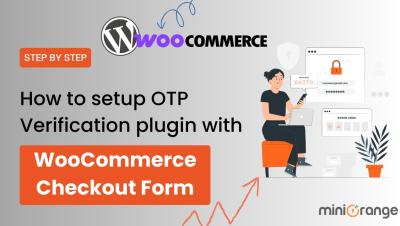
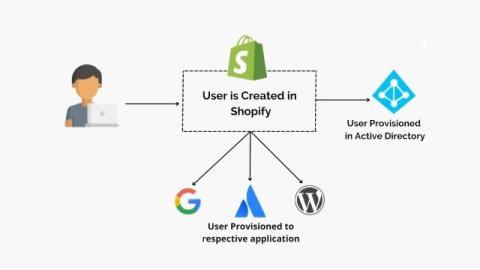
Imagine this: you're running a Shopify Plus store that supplies products to several companies. One customer wants their employees to log in with a simple email and password. Another asks if their staff can use a secure company login. A third keeps requesting one-time passwords for quick access. Managing all these different expectations is difficult since Shopify only offers one login method, i.e., email OTP, and forcing everyone to use it is a headache.

Agentic commerce is happening now. Here's what we've learned.

We’ve been collaborating with others to explore when and how agentic commerce will work. Robin Gandhi is the CPO of Lithic, a leading card issuer that’s already seeing agents use its cards to make purchases. Below, he shares his thoughts on what’s changed, and what needs to change, for agentic commerce to become mainstream. Last year, I wrote about the opportunity for agentic payments to revolutionize travel bookings, ad spend management, procurement, and more.

A complete IAM portfolio for Reti through its One Identity partnership

Join Lorenzo Beliusse, Reti Marketing Director, as he explores the partnership with One Identity and how the completeness of the One Identity portfolio makes it easy to recommend to Reti clients. Examine the One Identity solutions – for privileged access management (PAM), identity governance and administration (IGA), access management, and AD management – that have become such an important part of the Reti enterprise.

Privileged Access Governance (PAG): What It Is & Why It Matters

Your Privileged Access Management (PAM) tool is running. Your vaults are configured. Your sessions are monitored. And somewhere in the environment, a former contractor’s account still has domain admin rights. This is the problem that Privileged Access Governance (PAG) solves. In this blog, we'll see why having the right Privilege Access Management tools isn’t the same as having privileged access under proper control.

Non-Human Identity Sprawl Is the Hidden Cost of AI Velocity

In the current AI boom, we race to use copilots, orchestration scripts, CI workflows, retrieval pipelines, and background jobs. Sometimes, we take for granted that every one of these things needs an identity. Service accounts. OAuth apps. API keys. Short-lived tokens. As AI velocity increases, so does the number of these non-human identities (NHIs). Instead of obsessing over model quality, latency, hallucinations, and GPU costs, we also need to consider how these identities impact security.

Nonprofit KYB: How to verify 501(c)(3) status and stay compliant

If you operate a fundraising platform, process donations, or work with nonprofit organizations, you’re expected to verify that those organizations are legitimate before doing business with them. This process is known as nonprofit Know Your Business (KYB) or non-profit verification, which requires confirming 501(c)(3) status and ensuring the nonprofit is in good standing. But the verification process for nonprofit KYB isn’t as straightforward as it sounds.

Identity and Access Management (IAM) Use Cases

Before the COVID-19 pandemic, when hybrid and remote work became common, Identity and Access Management (IAM) worked in the background. It was important, but mostly invisible outside IT and security teams. That’s not the case anymore. Today, identity shows up in almost every digital interaction. Employees move between devices. Customers expect sign-ins to just work. Compliance teams want clear answers about access trails. Industry trends reflect this shift.