Security | Threat Detection | Cyberattacks | DevSecOps | Compliance

Secure Web Gateway (SWG) vs. Firewall: What's the Difference?

Secure Web Gateways (SWGs) and Firewalls both protect your business, but they defend at different layers. One protects your web traffic and cloud apps the other secures your network perimeter. Let’s explore how they differ and how to use both for maximum protection.

Age assurance methods for worldwide compliance

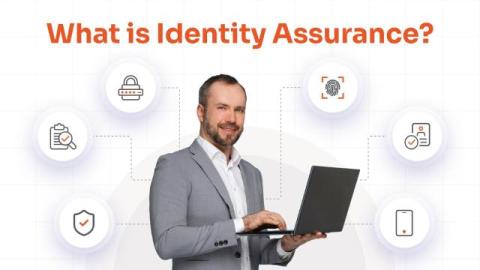
Age-based regulations are evolving worldwide. While many people are already familiar with self-attestation forms for accessing adult content, the scope and approved methods of age assurance continue to expand due to evolving regulations worldwide. These regulations include the UK's Online Safety Act, which was accompanied by a set of highly effective methods to gauge age, and Australia's Social Media Minimum Age Act that places guardrails around what digital content children have access to.

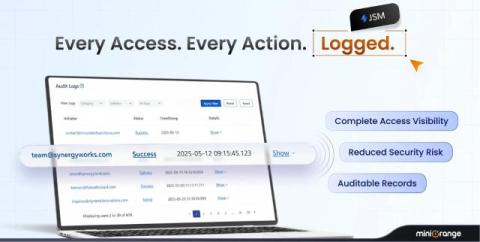
How to Set Up Auto-Activation for Users in Jira | miniOrange Automated User Management

This video tutorial walks you through how to configure the automation to Auto-Activate Users in Jira using the miniOrange Automated User Management app. The video demonstrates the complete setup flow, starting with Jira automation configuration and then setting up the auto-activation rule inside the miniOrange User Management app, followed by the user flow that triggers the rule in action. Video Chapters.

How to Setup SAML SSO for Confluence Using miniOrange as Your Identity Provider (IdP)

This video tutorial walks you through the step-by-step configuration of miniOrange SAML SSO for Confluence with miniOrange as your Identity Provider (IdP). Learn how to securely integrate Confluence with miniOrange to enable seamless Single Sign-On (SSO) and centralized authentication management. With this app, you can: Enable login to Confluence using miniOrange credentials Configure robust authentication policies with miniOrange as your IdP.

The next chapter of identity security begins with privilege

Privileged access management (PAM) was once thought of in simple terms: secure the credentials of a handful of administrators managing on-premises systems. Vault the passwords, rotate them regularly, and record every privileged session It worked for a world with clear boundaries and predictable users. That world is now a museum piece. But here’s the shift: It’s not that PAM has changed. The very definition of privilege has evolved.

Racing and Fuzzing HTTP/3: Open-sourcing QuicDraw(H3)

This blog post provides a dive into HTTP/3’s evolution for security engineers, an overview of our research journey, and what led us to develop the open-source tool QuicDraw, which can be used for fuzzing and racing HTTP/3 applications. QuicDraw implements “Quic-Fin-Sync” our implementation of the last-byte-sync with the single packet attack on HTTP/3. We conclude by evaluating QuicDraw’s performance against a real-world target and comparing its results to other tools.