Security | Threat Detection | Cyberattacks | DevSecOps | Compliance

What is Java Code Signing Certificate [A Detailed Guide]

Java is a prominent and highly prevalent language in which thousands of software are regularly designed. From social media platforms to popular desktop applications, Java is used to build truly great applications. However, to ensure the safety of Java applications from malware, owners need to obtain a Java code signing certificate. It helps assert the software publisher’s identity to its users and affirm file integrity.
Stranger Danger: Your Java Attack Surface Just Got Bigger

Building Java applications today means that we take a step further from writing code. We use open-source dependencies, create a Dockerfile to deploy containers to the cloud, and orchestrate this infrastructure with Kubernetes. Welcome, you're a cloud native application developer! As developers, our responsibility broadened, and more software means more software security concerns for us to address.

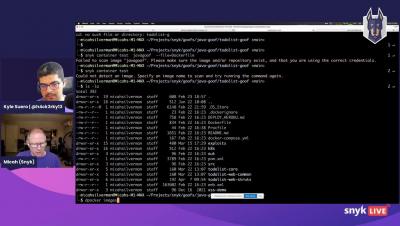
Stranger Danger: Your Java Attack Surface Just Got Bigger

Building Java applications today means that we take a step further from writing code. We use open-source dependencies, create a Dockerfile to deploy containers to the cloud, and orchestrate this infrastructure with Kubernetes. Welcome, you're a cloud native application developer! As developers, our responsibility broadened, and more software means more software security concerns for us to address.

Best practices for managing Java dependencies

Creating Java applications is great, and many resources are available. To speed up development, many folks use frameworks and libraries that do some of the heavy lifting. When looking at modern Java applications, almost all of them contain dependencies from libraries developed by someone else. Dependencies take up about 80 to 90 percent of the binary — so, we should take good care of them when creating a Java project.

Stranger Danger: Your Java Attack Surface Just Got Bigger

Building Java applications today means that we take a step further from writing code. We use open-source dependencies, create a Dockerfile to deploy containers to the cloud, and orchestrate this infrastructure with Kubernetes. Welcome, you're a cloud native application developer! As developers, our responsibility broadened, and more software means more software security concerns for us to address.

Stranger Danger: Your Java Attack Surface Just Got Bigger

Building Java applications today means that we take a step further from writing code. We use open-source dependencies, create a Dockerfile to deploy containers to the cloud, and orchestrate this infrastructure with Kubernetes. Welcome - you're a cloud native application developer! As developers, our responsibility has broadened, and more software means more software security concerns for us to address.

CVE-2022-21449 "Psychic Signatures": Analyzing the New Java Crypto Vulnerability

A few days ago, security researcher Neil Madden published a blog post, in which he provided details about a newly disclosed vulnerability in Java, CVE-2022-21449 or “Psychic Signatures”. This security vulnerability originates in an improper implementation of the ECDSA signature verification algorithm, introduced in Java 15.

Just Because You Don't Use Log4j or Spring Beans Doesn't Mean Your Application is Unaffected

By now, you’re probably all aware of the recent Log4j and Spring Framework vulnerabilities. As a recap, the Log4j vulnerability – made public on December 10, 2021 – was the result of an exploitable logging feature that, if successfully exploited, could allow attackers to perform an RCE (Remote Code Execution) and compromise the affected server.

Java Spring vulnerabilities

Several vulnerabilities for Java Spring framework have been disclosed in the last hours and classified as similar as the vulnerability that caused the Log4Shell incident at the end of 2021. However, as of the publishing of this report, the still ongoing disclosures and events on these vulnerabilities suggest they are not as severe as their predecessor.

Two RCE Vulnerabilities Found in Spring Framework

At the end of March 2022, two critical vulnerabilities (CVE-2022-22963 and CVE-2022-22965) were discovered in different components of VMware Spring. Spring is a popular framework focused on facilitating the development of Java applications, including cloud-based apps, eliminating the need for additional code or concerns related to server requirements.