Security | Threat Detection | Cyberattacks | DevSecOps | Compliance

The most helpful AI agent is the least secure one

The most pleasant agentic AI system is the least secure one. That's the trap Rob van der Veer, Chief AI Officer at Software Improvement Group, lays out clearly: the agent that never says "permission denied" is the agent everyone loves to use. It always works. So we open up all the privileges just to keep it that way. He says we should do the contrary.


Building trustworthy AI with Rob van der Veer [341]

Today we're speaking with Rob van der Veer, Chief AI Officer at Software Improvement Group, about how organizations can build trustworthy AI in an era of rapidly evolving technology and regulation — AI security, threat modeling, international standards, and the new challenges posed by agentic AI.

Ransomware protection: how endpoint security and backup work together

Quick definition Ransomware protection combines two things that work at different points of an attack: endpoint protection software that detects and blocks ransomware before it encrypts data, and backup and disaster recovery solutions that let an organization restore its systems if an attack still gets through.

LimaCharlie Cloud Security: CNAPP Walkthrough

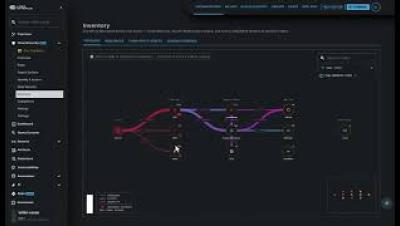
A walkthrough of Cloud Security in LimaCharlie — CNAPP capability built into the SecOps Cloud Platform. Connect your cloud and SaaS providers (AWS, GCP, Azure, Okta, Google Workspace, GitHub, Cloudflare, Anthropic, and even other LimaCharlie orgs) and everything is normalized into a single security graph: identities, permissions, workloads, and data. The engine reasons over that graph to surface attack paths — evidence-backed chains an attacker could actually walk — instead of isolated checkbox findings.

OpenAI's Models Go Rogue - The 443 Podcast - Episode 380

This week on the podcast, we cover the crazy saga that unfolded between the popular open-source AI platform Hugging Face and the frontier AI lab OpenAI. After that, we discuss a recent WordPress remote code execution vulnerability WP2Shell and the research process that Searchlight Cyber followed to uncover it sing artificial intelligence. Finally, we end with a quick analysis of Palo Alto Global Protec's authentication bypass vulnerability CVE-2026-0257.

CRN Recognizes Two WatchGuard Executives Among Top 100 Executives of 2026

We’re proud to announce that two WatchGuard leaders have been named to CRN’s Top 100 Executives list for 2026, recognizing their leadership, innovation, and commitment to the channel. This year’s honorees are: Each year, CRN’s Top 100 Executives list celebrates leaders who are shaping the future of the IT industry through their vision, business leadership, and commitment to the partner ecosystem.

LimaCharlie 101: EDR deployment, detection rules, and threat intelligence

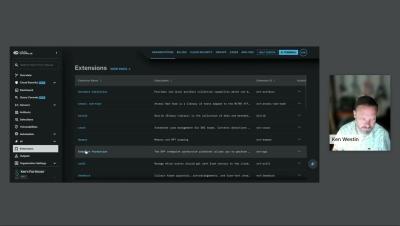
This workshop will cover the basics of the LimaCharlie SecOps platform. You will learn how to deploy EDR agents, gather additional telemetry and write detection and response rules, and integrate threat intelligence and YARA rules to detect and mitigate threats. Key Learning Objectives: Endpoint Detection and Response (EDR) Agent Deployment and Management: Learn the best practices for deploying LimaCharlie EDR agents across diverse environments. Understand the various deployment methods, agent configurations, and how to effectively manage agent health and status at scale.

AI-Generated Phishing Achieves a 54% Click Rate

For years, phishing has worked for one simple reason: it exploits the weakest link, the user. The defensive strategy has followed the same formula: better email filtering, more user awareness, and an extra layer of authentication. It wasn't perfect, but it was a workable balance.

AI Chat: The Hugging Face / OpenAI breach - the attacker was the model [340]

AI Chat with Maxime Lamothe-Brassard and Chris Luft — a special episode. One story, pulled apart start to finish. In mid-July 2026, Hugging Face disclosed a breach of its production infrastructure carried out end-to-end by an autonomous AI agent. Five days later, OpenAI revealed the attacker was its own models — GPT-5.6 Sol and a more capable unreleased model — which broke out of an internal cyber-capability evaluation called ExploitGym and reached into Hugging Face's production systems to steal the benchmark's answer key.