Security | Threat Detection | Cyberattacks | DevSecOps | Compliance

AI Governance vs AI Compliance: What's the Difference?

The main difference between AI governance and AI compliance is that AI governance is the internal framework an organization develops to manage AI responsibly, while AI compliance is how organizations demonstrate to external regulators that they’re adhering to applicable laws and regulations. These two terms get used interchangeably, but they solve different problems. With compliance alone, an organization can satisfy regulators without meaningfully controlling how its AI behaves.

The 1Password Environments MCP Server is now on Cursor Marketplace

AI agents are doing more than just generating code. Increasingly, they are working autonomously on complex coding challenges, touching production APIs, databases, and infrastructure across development environments, often without thorough human review. To perform these operations and access multiple systems, agents rely on developer secrets and non-human identities (NHI). But often, developers lack a secure way to share these secrets, leading to overprivileged, invisible access.

Scaling security reviews at 1Password: Solving the context and nondeterminism problems

In our last post, we shared how we began to scale our security code review process with SAGE. We discussed how we gathered historical Product Security (ProdSec) review records to create a 1Password-specific ruleset, the three-stage Finder/Critic/Judge pipeline, and the limitations of our v1 implementation.

1Password Credential Broker is now in public preview

Every security team has tried to trace a credential access event back to a specific workload, and received nothing but a "service account." That service account probably had access to an entire vault, and its audit trail doesn’t tell you which repo triggered the request, which specific credential was accessed, or whether the workflow still has access. When an auditor asks, or an incident occurs, that's not a good place to be.

Secrets Off Disk: How 1Password Secures Developer Workflows

Your.env file has your database password, your AWS keys, and your Stripe secret, all in plaintext, sitting on your laptop. 1Password Developer Watchtower finds it, 1Password Environments secures it, and you keep shipping. See how 1Password discovers plaintext developer credentials, imports them into an encrypted environment, and mounts a virtual protected.env, with no workflow disruption for developers and full fleet visibility for security teams.

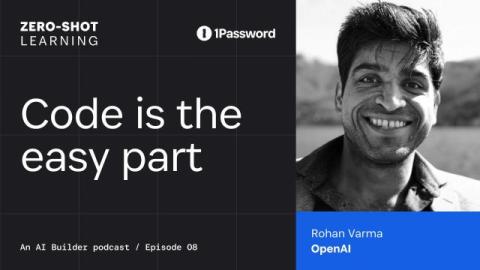
Distributed systems in disguise with Maxim Fateev from Temporal | Zero-Shot Learning

When most developers write code, crash recovery logic is at the bottom of their priorities, until crashes and delays force them to incorporate resiliency logic. That’s why Temporal co-founder and CTO Maxim Fateev built a system to turn code into durable execution. In his conversation with 1Password CTO Nancy Wang and VP of Engineering for Developer and AI Jeff Malnick, Maxim explains why the distributed systems thinking that shaped his work is now essential for building reliable AI agents, with a live demo of a durable agent surviving a crash.

Manage Your Secrets With Keeper Security's Universal Secrets Sync

Developers, how are you managing your secrets? Keeper Security’s Universal Secrets Sync automatically distributes credentials and secrets stored in Keeper to external secrets managers and cloud platforms, including AWS Secrets Manager, Azure Key Vault and Google Cloud Secret Manager.