Security | Threat Detection | Cyberattacks | DevSecOps | Compliance

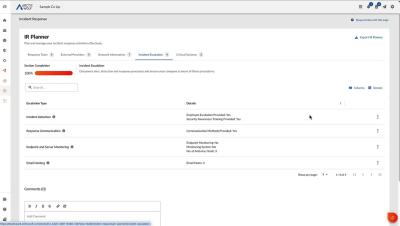
The Value of IR Planning and Incident Readiness

A harsh reality of enterprise cybersecurity is that even the most diligent, careful organizations will eventually experience a threat incident. That’s why an important part of a robust cybersecurity strategy is not just preventing attacks but knowing how best to respond to an active one.

CVE-2025-20265: Maximum-Severity Remote Code Execution Vulnerability in Cisco Secure Firewall Management Center

On August 14, 2025, Cisco released fixes for a maximum-severity vulnerability affecting Cisco Secure Firewall Management Center (FMC) Software, tracked as CVE-2025-20265. FMC is the centralized platform used to manage security settings and network devices across Cisco Firepower and ASA deployments.

Threat Actor Profile: Interlock Ransomware

A relatively new ransomware group, Interlock, has gained traction in 2025 as an opportunistic ransomware operator that leverages compromised websites and multi-stage social engineering techniques to deliver their payloads. First observed in September 2024, Interlock departs from the traditional Ransomware-as-a-Service (RaaS) model, operating without affiliates or public advertisements.

CVE-2025-25256: PoC Available for FortiSIEM Remote Unauthenticated Command Injection Vulnerability

On August 12, 2025, Fortinet released fixes for a critical-severity vulnerability in FortiSIEM, tracked as CVE-2025-25256. The flaw arises from improper neutralization of special elements used in an OS command within the phMonitor service (TCP/7900). Successful exploitation could allow a remote, unauthenticated threat actor to execute unauthorized code or commands via crafted CLI requests.

Ransomware Evolution: The Changing Landscape of Cyber Extortion

Cybercriminals are shifting tactics. Rather than relying solely on ransomware’s tried-and-true method of using encryption to lock files and demand payment to decrypt, many are now instead embracing exfiltration and extortion, with encryption as a secondary tactic. This marks a significant evolution in ransom-based attack methods, one where encryption is optional, but leverage is mandatory.

CVE-2025-53786: U.S. CISA Issues Emergency Directive for Post-Authentication Vulnerability in Microsoft Exchange Hybrid Configurations

On August 6, 2025, Microsoft disclosed a high-severity post-authentication vulnerability affecting on-premises Microsoft Exchange servers configured for hybrid-joined environments, tracked as CVE-2025-53786. The U.S. Cybersecurity and Infrastructure Security Agency (CISA) has issued Emergency Directive 25-02, requiring federal agencies to patch the vulnerability by Monday, August 11.

The Role of AI in Cybersecurity

Artificial intelligence (AI) is not a new concept or technology in the world of cybersecurity. It’s been iterated and utilized by security professionals for decades. But as both cybersecurity technology and cyber threats continue to advance, AI is being adopted by organizations at a rapid pace, all of whom seek to harness AI’s power to automate, advance, and empower their security.

CVE-2025-54948 & CVE-2025-54987: Trend Micro Releases Mitigation Tool for Actively Exploited Apex One Vulnerabilities

On August 5, 2025, Trend Micro released a short-term mitigation tool addressing two critical command injection vulnerabilities (CVE-2025-54948 and CVE-2025-54987) in Apex One. These flaws affect the on-premise Apex One Management Console and have been exploited in the wild. Both stem from a command injection issue that allows unauthenticated, remote threat actors to execute arbitrary code on vulnerable systems. While the vulnerabilities are similar, they differ based on the targeted CPU architectures.

Embracing "Coopetition": It's Time to Build a Security Industry That Works Together

The cybersecurity industry is intensely competitive. Thousands of vendors are locked in a daily battle for market share, deploying technologies that can become outdated almost as quickly as they’re released. But unlike most industries, we’re not just competing with each other. We’re also up against a shared adversary. So, here’s the uncomfortable question: if our real fight is against attackers, why aren’t we doing more to work together?