
Security | Threat Detection | Cyberattacks | DevSecOps | Compliance

How Arctic Wolf Delivers Managed Detection and Response with Broad Visibility and Proactive Security

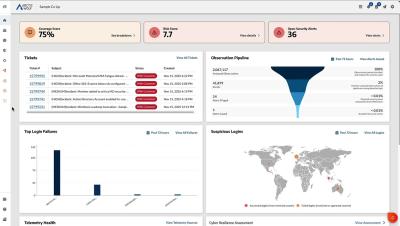
In this Managed Detection and Response overview, we see how Arctic Wolf delivers 24x7 monitoring, broad visibility, response capabilities and proactive security recommendations to our customers leveraging their existing security tools and the Aurora Platform.


Shai-Hulud Malware Targets Numerous NPM Packages in Second-Wave NPM Supply-Chain Attack

On November 24, 2025, researchers identified a renewed supply-chain attack linked to Shai-Hulud malware, revealing that numerous npm packages had been quietly trojanized following the initial wave of malicious activity in September. This second iteration involved compromised versions of popular packages uploaded between November 21, 2025, and November 23, 2025, with additional compromised packages continuing to surface at the time of writing.

How To Combat AI-Enhanced Social Engineering Attacks

Artificial intelligence (AI) has supercharged social engineering. Global management consulting firm McKinsey & Company reported a 1,200% global surge in phishing attacks since the rise of generative AI in the latter half of 2022. And it’s not just the number of attacks that’s climbing; it’s also the success rate. Arctic Wolf’s Human Risk Behavior Snapshot: 2nd Edition reveals that nearly two-thirds of IT and security leaders self-reported falling for a phishing attempt.

Salesforce Discloses Unauthorized Access to Customer Data via Compromised Gainsight-published Applications

On November 19, 2025, Salesforce announced an investigation into unusual activity involving applications published by Gainsight, a company that provides customer success software integrated with Salesforce. In their advisory, Salesforce indicated that they had notified affected customers directly, and that an investigation is ongoing. Salesforce has not yet provided details about the full scope of the malicious activity.

CVE-2025-64446: Critical Fortinet FortiWeb Path Traversal Vulnerability Exploited to Create Administrative Accounts

On November 13, 2025, open source reporting began detailing active exploitation of a silently patched Fortinet FortiWeb vulnerability. The flaw is a path traversal issue in the FortiWeb web application firewall (WAF) that allows an unauthenticated threat actor to create new administrative users on exposed devices. The following day, November 14, Fortinet officially addressed the vulnerability in an advisory, tracking it as CVE‑2025‑64446.

How Aurora Endpoint Powers Outcome-Driven Security

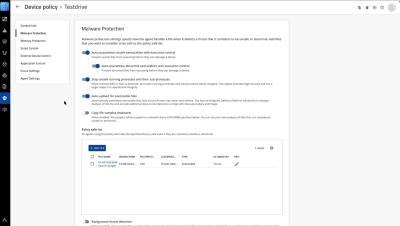
See how Aurora Endpoint Defense uses predictive AI and behavioral detection to deliver powerful, outcome-driven endpoint protection. This demo highlights key features like alert triage, threat prevention, and automated response—all designed to simplify and strengthen your security posture.

What's Behind The Rise of Spear Phishing Attacks on IT Leaders?

Phishing has been a mainstay of cybercrime for decades – and for good reason. Threat actors continually evolve their phishing tactics, techniques, and procedures (TTPs), adapting the method with new tools and technologies to ensure it remains highly effective. IT leaders have become especially attractive targets: their privileged access amplifies the impact of a successful compromise.

The Unmeasurable is Unmanageable: Why Cyber Resilience Takes Center Stage for Businesses

The World Economic Forum (WEF) recently published an article on cyber resilience that resonates with conversations we have daily at Arctic Wolf. Their central argument — that organizations need to move beyond basic prevention toward comprehensive, measurable resilience — reflects what we’re hearing from business leaders across industries.

CVE-2025-42890: Hard-Coded Credentials in SAP SQL Anywhere Monitor (Non-GUI)

On November 11, 2025, SAP published a security advisory as part of their November security patches, addressing a maximum severity vulnerability identified as CVE-2025-42890 in SQL Anywhere Monitor (Non-GUI) version 17.0. The vulnerability involves hard-coded credentials, which exposes system resources to unauthorized users and allows threat actors to execute arbitrary code without authentication.