RFDiscussion #0 ~ RFDs and HSMs
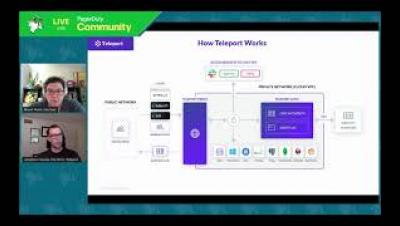
0:00 - Introduction to RFDs
6:59 - RFD 25 Hardware Security Module (HSM) support


0:00 - Introduction to RFDs
6:59 - RFD 25 Hardware Security Module (HSM) support
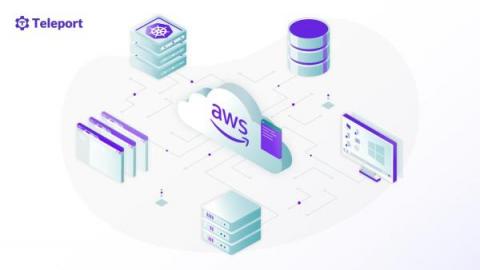
Teleport will be live at re:Invent from Nov. 30-Dec. 2. If you are there, please stop by Booth 718 and talk to me and the Teleport team about how we can improve your security and compliance of apps running on AWS. If you can’t make it in person, here is my top 10 list of things you should know about AWS and Teleport. Check out our Teleport on AWS page for more info.
Engineers worldwide have a tradition to look forward to every holiday season. You are taking in a sporting event on Thanksgiving Day when your uncle asks you why he keeps getting a message to update his iPhone; it’s only two years old. Or your grandma needs help with her hacked Facebook account.
Passwords are everywhere. Sometimes they are obvious — hardcoded in the code or laying flat in the file. Other times, they take the form of API keys, tokens, cookies or even second factors. Devs pass them in environment variables, vaults mount them on disk, teams share them over links, copy to CI/CD systems and code linters. Eventually someone leaks, intercepts or steals them. Because they pose a security risk, there is no other way to say it: passwords in our infrastructure have to go.
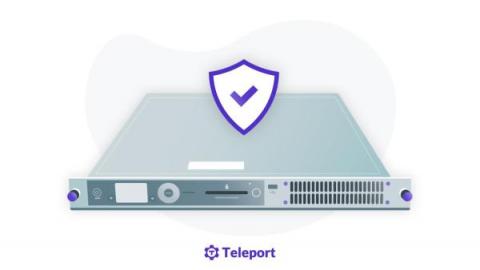
Hardware security modules (HSM) and trusted platform modules (TPM) seemingly do the same thing: they manage secret keys and enable data protection. But what does “managing secrets” mean, and what’s the difference between the two? Before diving deeper, let’s explore why computers need help with managing their secrets.
https://goteleport.com/docs/setup/guides/fluentd/
0:00 Intro
0:35 Forwarding events with Fluentd
6:54 Setting up ElasticSearch
11:02 Setting up FluentD
14:02 Viewing events in LogStash
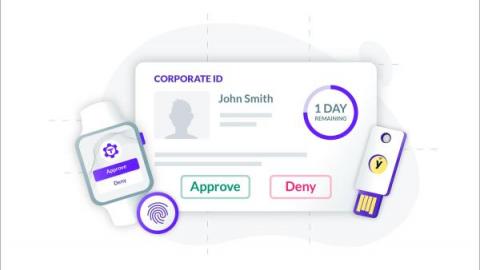
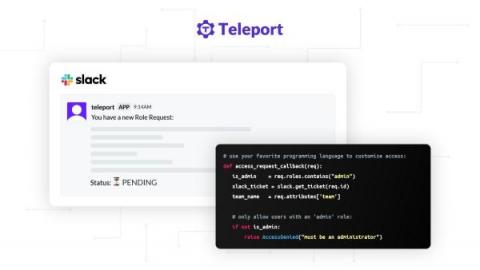
Customers are increasingly looking for just-in-time access to infrastructure. Imagine there is a production outage and a senior SRE needs to login to a production server to diagnose and fix the issue. In this organization, on-call SREs have elevated access to production systems, but when they are off-duty, their privileges are reduced. When the Pager Duty alert goes off, our on-call SRE ssh’s into the server but after several minutes of looking, can’t diagnose the issue.
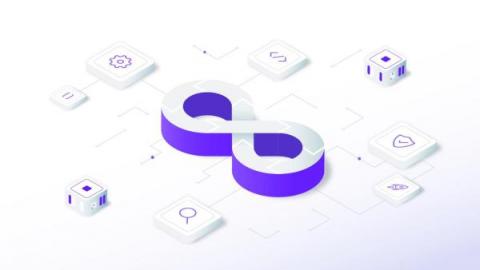
Over the last few years, the term DevOps and DevSecOps (which stand for Developer Operations and Developer Security Operations respectively) have become synonymous with companies trying to become more agile and less monolithic.