Security | Threat Detection | Cyberattacks | DevSecOps | Compliance

The future of security operations with John Hubbard

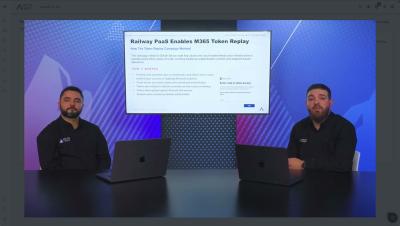
Join us for this week's Defender Fridays as we explore the transformative impact of AI on Security Operations Centers with John Hubbard, SANS Senior Instructor and Cyber Defense Curriculum Lead. At Defender Fridays, we delve into the dynamic world of information security, exploring its defensive side with seasoned professionals from across the industry. Our aim is simple yet ambitious: to foster a collaborative space where ideas flow freely, experiences are shared, and knowledge expands.

Claude Code reads a threat report, hunts for IOCs, and deploys detection rules #cybersecurity #ai

From threat intelligence article to deployed coverage. The AI agent extracts indicators, searches for compromise across tenants, confirms clean status, then creates and tests detection rules for ongoing protection within your LimaCharlie environment.

The CEO's Take: Bridging the Cybersecurity Divide To Address Cyber Risk

“150 companies account for 90% of the technology products and services across the global attack surface. 41% of those companies had evidence of at least one compromised device in the past year.” With organizations as interconnected as they are, even organizations who “have” good cybersecurity are only as good as their weakest link.

Persistent Threats Are Coming-And Companies Aren't Ready #cyberattacks #2026 #defense

From evolving regulations and relentless cyber threats to the rise of AI, CISOs in 2026 are facing their toughest year ever. Discover what’s pushing security leaders to their limits—and why strong leadership and strategy matter more now than ever.#razorwirepodcast.

Under The Light: Operationalizing CTEM with Falcon Exposure Management

CTEM promises a better way to manage exposure but only if it can be operationalized. In this lightboard session, we break down the CTEM framework and show how Falcon Exposure Management turns it into a continuous, actionable program—helping teams reduce noise, validate real risk, and drive measurable exposure reduction.

Domain-to-IP Volatility at Scale: A Study of 4 Million Enterprise Domains

Exposure management depends on the ability to consistently observe and attribute externally reachable systems. Domains are commonly treated as stable identifiers, resolving to IP addresses that can be associated with specific assets and monitored over time. In modern enterprise environments, this assumption increasingly fails. In many architectures, IP addresses function as routing mechanisms rather than stable identifiers, changing as traffic is distributed and infrastructure is rebalanced.