Security | Threat Detection | Cyberattacks | DevSecOps | Compliance

Less noise, more signal: How Elastic Defend slashed event volume

When an EDR tool generates too much endpoint telemetry, security teams quickly run into problems. Mountains of process events, network connections, and file operations can overwhelm analysts, making it harder to spot real threats in the noise. High data volumes drive up storage costs, slow down searches, and contribute to alert fatigue — leading to longer investigation times and potential blind spots.

A Complete Guide to Endpoint Detection and Response (EDR)

Cyber threats aren’t slowing down—and endpoints are often the first target. That’s why having strong visibility and control at the device level has never been more important. Endpoint Detection and Response (EDR) is key in today’s security strategies. It helps teams spot, investigate, and respond to threats in real time—before they turn into bigger problems.

Securing Endpoints with MITRE ATT&CK: From Theory to Practice

MITRE ATT&CK has become the go-to knowledge base for understanding how attackers operate since 2013. The framework’s 12 tactical categories map out attack stages from original access to final impact. Security teams can spot and block threats at multiple points before any damage occurs. This piece shows how companies can utilize MITRE ATT&CK’s framework to boost their EDR.

How do EDR tools improve cyber security and threat response?

To keep pace with the scale and sophistication of cyber threats, organizations are re-evaluating how they secure the most common attack surface the endpoint. From laptops and servers to mobile devices, endpoints serve as entry points into business-critical systems. This is why Endpoint Detection and Response (EDR) tools are fast becoming a foundational layer in modern cyber defence strategies.

Why is EDR not enough: Transition from EDR to XDR solution

Various studies reveal a startling fact: endpoint devices are the source of 90% of successful cyber-attacks and 70% of data breaches1. These numbers emphasize why modern cybersecurity strategies must carefully weigh the choice between XDR vs EDR. Endpoint detection and response (EDR) has served as the life-blood of security frameworks.

Beyond the Endpoint: Why EDR/XDR Struggles in the Cloud

The cybersecurity landscape has dramatically shifted with the rise of cloud computing. While Endpoint Detection and Response (EDR) and Extended Detection and Response (XDR) have proven valuable in protecting traditional endpoints, the cloud introduces a new set of challenges. This post examines why these solutions, rooted in endpoint-centric approaches, may fall short in the cloud, highlighting the need for a new generation of cloud protection strategies designed for SaaS, IaaS, and PaaS environments.

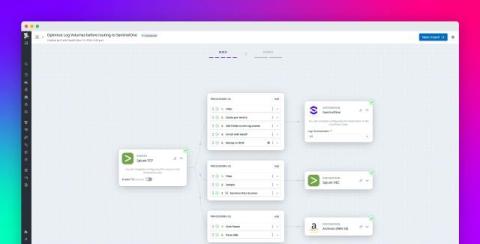
Optimize EDR logs and route them to SentinelOne with Observability Pipelines

Endpoint detection and response (EDR) systems such as SentinelOne Singularity Endpoint, CrowdStrike, and Microsoft Defender monitor IT infrastructure such as computers, mobile devices, and network devices to detect, alert on, and respond to cyber threats. These EDR systems record data about the endpoints to identify abnormal behavior, block malicious activity, and provide remediation suggestions with contextual information.

Acronis: The leader in EDR detection on Windows

In September 2024, SE Labs tested Acronis Extended Detection and Response (XDR) against targeted attacks based on APT29 and Scattered Spider. The test was done in parallel with SE Labs’ Q3 2024 comparative EDR test. Both tests were done using the same methodology and targeted attacks from APT29 and Scattered Spider, but the comparative test added DPRK (Democratic People’s Republic of Korea) ransomware to the evaluation.