The cybersecurity skills gap: No end in sight?
We all know how hard it is for companies to fill open cybersecurity positions. But is the situation improving? What are the root causes of the problem? And most importantly—what can be done about it?


We all know how hard it is for companies to fill open cybersecurity positions. But is the situation improving? What are the root causes of the problem? And most importantly—what can be done about it?
JavaScript is a programming language based on prototypes instead of classes. When a new object is created, the features of the prototype object are inherited – this includes arrays, functions, and even class definitions. The new object can also act as a template for other inheriting objects, transferring its properties, and creating the prototype chain.
Social engineering is the art of manipulating people so that they give up confidential information or perform an action you ask them to do. Social engineers are usually trying to trick victims into giving them their credentials, bank information or access to computers to secretly install malicious software. Find out how phishing actually works and what you can do to reduce the risk.
We are excited to announce that ManageEngine has been recognized in three different categories by the Business Intelligence Group in its 2022 Fortress Cyber Security Awards. It is a moment of pride for us to see two of our solutions, AD360 and Log360, win more awards. AD360 was declared a winner in the Authentication and Identity category, and Log360 won awards in both the Threat Detection and the Incident Response categories.
Google Forms is a useful tool for submitting tickets and generating issue tracking within your organization. Configuring a webhook in Google products isn’t always easy and the data must typically pass through a Google Sheet. In this blog, we’ll show you how to cut out that middle step and automate issue tracking, so that newly submitted cases can be transferred directly from Google Forms to Zendesk.
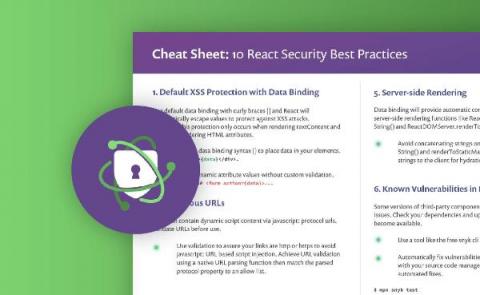
The date on this post reflects its latest update. This post was originally published on October 28, 2020. Looking for the best ways to secure your React app? Then you’ve come to the right place! We’ve created this checklist of React security best practices to help you and your team find and fix security issues in your React applications. We’ll also show you how to automatically test your React code for security-related issues and automatically fix them. Let’s get to it!
Cybersecurity threats continue to increase in sophistication and frequency. As a CIO, it is important to be aware of the latest trends and how to best protect your organization from these threats. Here are seven cybersecurity trends and ransomware attack examples that you should make sure to keep top of mind in 2022.
The Spanish philosopher George Santayana is credited with the aphorism “Those who cannot learn from history are doomed to repeat it.” This statement is particularly true when it comes to cybersecurity. Threat actors reuse well-known and previously patched vulnerabilities and attempt to take advantage of organizations making the same error over and over. So, if one does not know what has recently taken place it leaves you vulnerable to another attack.
Penetration testing and vulnerability scanning are both important practices that protect the network of a business. However, the two are very different from each other in the way they test the security and vulnerabilities of a network. Keep reading to learn more about the differences and how to decide whether one or both would best suit your needs.