Security | Threat Detection | Cyberattacks | DevSecOps | Compliance

Smart TV Security Tips Every Home User Should Know in 2026

Smart TVs are now part of everyday entertainment in many homes. People use them for movies, sports, live channels, documentaries, and family content every day. However, many users focus only on picture quality and forget that device security and performance optimization are equally important for a smooth viewing experience. Keeping your Smart TV updated is one of the best ways to improve stability and overall performance. Manufacturers regularly release firmware updates that fix bugs, improve compatibility, and optimize streaming quality across different applications and connected devices.
How to Protect Sensitive Data in Cloud Storage Systems

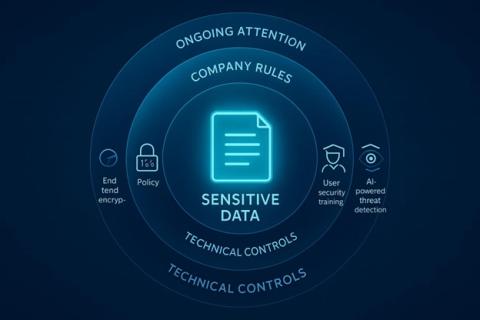
Cloud storage is now a normal part of daily work for both people and companies. It helps teams work together on shared files and makes backups simple. Services like Microsoft OneDrive, iCloud, and Google Drive are easy to use and widely available. But that ease can also create risk: sensitive data still needs strong protection. Protecting it in cloud storage takes several layers, including solid technical controls, clear company rules, and ongoing attention to new risks.

MITRE ATLAS for AI Agent Attack Detection: A Complete Mapping

MITRE ATLAS catalogs sixteen tactics and eighty-four techniques adversaries use against AI systems, including fourteen agent-focused techniques added through the October 2025 Zenity Labs collaboration. It is the canonical taxonomy a security architect’s CISO, auditor, or RFP will name. It is not a detection plan. ATLAS organizes around adversary objectives.

Prompt Analysis for AI Attack Detection: Four Signal Categories, Three Blind Spots, One Correlation Layer

At 2:47 PM on a Tuesday, a customer support agent receives a routine ticket asking about return policy edge cases. The agent retrieves a section from your internal policy wiki through RAG to formulate the response. Three weeks earlier, an attacker had planted a hidden instruction in that wiki page. Bedrock Guardrails scored the retrieved context at 0.04 — well within benign range.

What Your Board Gets Wrong About AI Security

Editor's note: This article was originally published by Craig Riddell on LinkedIn. It has been republished here with the author's permission. Boards are giving AI security more airtime than ever. What they're not giving is the right framing. A year or two ago, AI was mostly a question of experimentation risk. Today, it's tied directly to revenue, customer experience, operational efficiency, and competitive advantage. The urgency is real, and it's translating into aggressive deployment timelines.

What is AI penetration testing?

As organisations continue integrating AI capabilities into customer-facing applications, internal tooling, and operational workflows, the security implications of these systems are becoming increasingly important. Large Language Models (LLMs), AI assistants, and automated decision-making features are now appearing across SaaS platforms, support systems, and enterprise applications, often connected directly to sensitive data and business processes.

What is shadow AI? And why GenAI usage monitoring matters for MSPs and SMDs

Author: Alexander Ivanyuk, Senior Director, Technology Generative AI is no longer a side experiment inside businesses. It is moving into normal work: writing, summarizing, coding, research, customer support, internal search and repeatable workflows. OpenAI says it now serves more than one million business customers, more than seven million ChatGPT workplace seats, and roughly 8x growth in weekly enterprise messages since November 2024.

Salt Agentic Security Platform

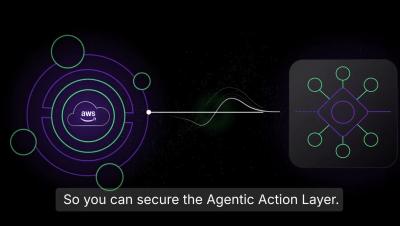
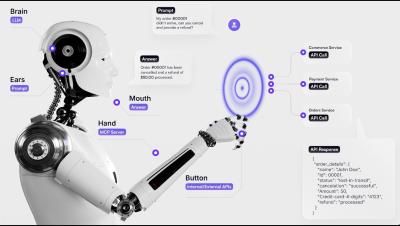
Most enterprise AI security investment is focused on the model layer—guardrails, output filtering, LLM governance. That's necessary. It's not sufficient. AI agents take actions: they call APIs, invoke MCP servers, access databases, and trigger downstream workflows. The Salt Security Agentic Security Platform was built to secure that action layer (the infrastructure your agents actually operate across).

OpenAI Daybreak and the Future of Secure Software Development

OpenAI recently introduced Daybreak, a cybersecurity initiative designed to apply frontier AI models to vulnerability discovery, secure code analysis, and earlier remediation across the software lifecycle. By combining advanced reasoning and planning capabilities, Daybreak aims to help organizations identify and address weaknesses before they reach production. This is a meaningful step forward, but it is also a continuation of a long-standing approach.