The Forward Networks platform creates a complete digital twin of your network—but the power of that data multiplies when it’s accessible via API. Whether you’re pushing insights into dashboards, validating changes before rollout, or automating ticket generation, the API puts your network state into your workflows.
A presence online is essential today. Websites are your virtual shopfront. Many people have dreams of creating an online presence. Cost can cause some to be reluctant. There are solutions to overcome this. It is possible to get a free domain name with hosting. This will make the beginning of your journey considerably more simple. It eliminates a major initial barrier.
In the competitive market of today, client loyalty is crucial. It is significantly less expensive to retain current customers than to find new ones. Loyal clients make greater purchases. Every purchase they make costs them more money. They turn into your most effective marketers as well. They spread the word about your brand to their friends and relatives. This forges a strong and long-lasting route to expansion.
It seems like Artificial Intelligence (AI) has suddenly appeared in everything, everywhere, all at once. What feels like “five minutes ago”, there was “pre-AI life”, and now we have AI assistants that speak like real people, apps that create images, music, and video from nothing, and AI agents that do work for us.
LimaCharlie Query Language (LCQL) enables security teams to search across their entire multi-platform fleet, from Windows Event Logs to Linux package installations to macOS volume mounts. Our MCP server allows users to generate LCQL queries from plain-text language commands. Eric Capuano, founder of Digital Defense Institute, demoed this during our webinar: "I want an LCQL query that'll go and find processes in the last twenty four hours that exhibit signs of x. I can just give it that instruction... that MCP tool will work it out and give Claude the ideal LCQL query to run.".
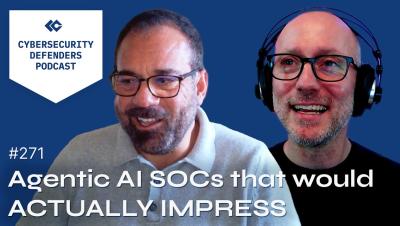
We dove into AI in the SOC with Matt Bromiley from Prophet Security! Matt broke down how AI is transforming (and should be transforming) SOC workflows. Whether you're already using AI tools or wondering where to start, this is the conversation you don't want to miss.
Protecting humans means protecting the tools humans use. Human risk management (HRM) means reducing human-based risk, or in our particular area, human-based cybersecurity risk. Study after study has shown that, in one way or another, humans are involved in the vast majority of cybersecurity incidents.
Imagine your marketing team needs to share a product roadmap with a partner, so they drop it into a shared OneDrive folder. Everything looks fine — same interface, same app — but no one realizes the file was uploaded to the partner’s personal OneDrive account instead of their corporate tenant. Days later, the file is still accessible from an unmanaged device, with no audit trail, no data loss protection, and no way to revoke access.
Security teams know all too well the grind of manual investigations and remediation. With the mass adoption of AI and increasingly automated attacks, defenders cannot afford to rely on overly manual, low priority, and complex workflows. Heavily burdensome manual response introduces delays as analysts bounce between consoles and high alert volumes, contributing to alert fatigue. Even worse, it prevents security teams from dedicating time to high-priority threats and strategic, innovative work.