Security | Threat Detection | Cyberattacks | DevSecOps | Compliance

Cloud security - the right way

In the cloud, everything moves fast, especially your security and development teams. But oftentimes, they're moving in different directions. And when priorities don't align, teams end up settling for good enough. But when your reputation is on the line, good enough doesn't cut it. When securing every second matters, choose Sysdig. Choose cloud security the right way. Learn more on sysdig.com.
Securing the Next Era: Why Agentic AI Demands a New Approach to API Security

I’ve spent my career building solutions to protect the API fabric that powers modern businesses. I founded Salt because I saw that traditional security tools such as WAFs, gateways, and CDNs weren’t designed to see or secure APIs. That gap led to breaches, blind spots, and billions in risk. Today, we’re facing a new wave of risk that’s even bigger than the last. The rise of Agentic AI has brought us to a true inflection point. Agentic AI isn’t just another software layer.

What We Found with OpenAI's Codex CLI Tool

In this video, I explore OpenAI’s Codex CLI tool to see how powerful it really is for coding with AI. But things quickly go off the rails… what started as a simple test ended with a surprise identity verification request. Apparently, to continue using the tool, I need to submit a government-issued ID and a photo of myself—something I didn’t expect at all. I talk through the process, show the error I ran into, and share my honest thoughts on this level of access and how invasive it feels for a developer tool.

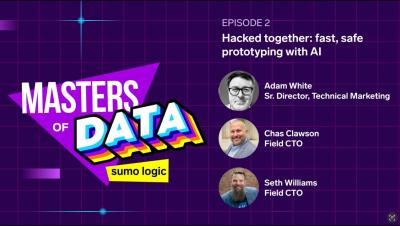
Ep 2: Hacked together: fast, safe prototyping with AI

Join security experts Adam White, Chas Clawson, and Seth Williams as they explore how AI-first development is reshaping the way cybersecurity teams build, test, and deploy solutions. Traditional development cycles often leave critical ideas trapped in backlogs, but with Gen-AI and language models, security teams can now move from concept to prototype in hours, not months.

Identify common security risks in MCP servers

AI adoption is rapidly increasing, and with that comes a steady influx of useful but potentially vulnerable tools and services still maturing in the AI space. The Model Context Protocol (MCP) is one example of new AI tooling, providing a framework for how applications integrate with and supply context to large language models (LLMs). MCP servers are central to developing AI assistants and workflows that are deeply integrated with your environment.

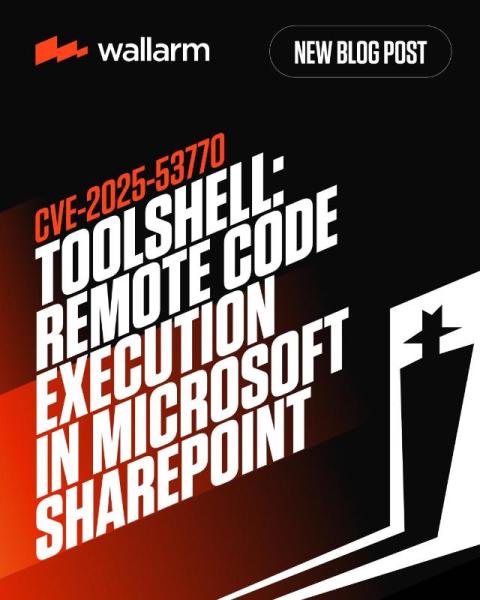
ToolShell: Remote Code Execution in Microsoft SharePoint (CVE-2025-53770)

On July 19, 2025, a critical remote code execution (RCE) vulnerability (CVE-2025-53770, also referred to as ToolShell) was publicly disclosed, impacting on-premises Microsoft SharePoint Server installations. This vulnerability allows unauthenticated attackers to execute arbitrary code remotely by leveraging insecure deserialization techniques.

LLMs Are Not Goldfish: Why AI Memory Poses a Risk to Your Sensitive Data

We’ve all heard the myth: goldfish have a memory span of just a few seconds. While that’s debatable in marine biology circles, it’s useful as a metaphor in tech, especially when talking about memory, risk, and AI. The problem is, large language models (LLMs) are not goldfish. In fact, they have incredible memory. And increasingly, that memory isn’t just session-based. It’s persistent, long-term, and system-connected. That changes everything.

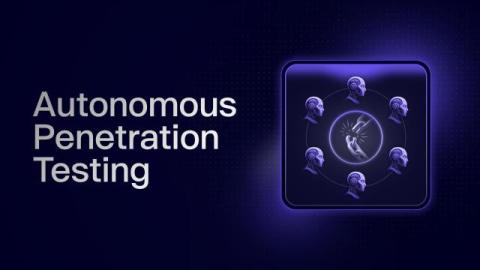
What Is AI Penetration Testing? A Guide to Autonomous Security Testing

AI penetration testing is changing how organizations identify and exploit vulnerabilities. Instead of relying on traditional manual tests or basic automated scans, autonomous systems now simulate attacker behavior continuously and at scale. These systems use agentic AI to execute real-world exploits, reduce noise, and shift security left, all while keeping human experts focused on the creative flaws machines can’t yet catch.

Securing AI-Generated Code: Why It Matters

Securing AI-Generated Code: Why It Matters In this video, A10's Madhav Aggarwal explains how using AI for coding is an excellent use case, but the code generated by AI must be safe and secure. As AI and large language models (LLMs) become central to enterprise strategy, securing these powerful workloads is no longer optional—it's essential. A10 Networks' security leaders, Jamison Utter, Madhav Aggarwal, and Diptanshu Purwar, explore the growing security risks associated with AI/LLM adoption and what organizations must do to stay protected.