Security | Threat Detection | Cyberattacks | DevSecOps | Compliance

Agentic AI in Cybersecurity: The Complete Guide for Security Teams

Every modern engineering team pushes code multiple times a day. With each deployment, the attack surface shifts and expands in real time as new dependencies and configurations emerge. According to recent industry data, 16% of teams now deploy on demand or multiple times a day. At this pace, securing the attack surface with traditional pentesting is like playing an exhausting game of Whack-a-Mole, while here the targets never stop evolving and multiplying.

The World's First Fully Autonomous Security Platform: AigentX

Stop managing alerts. Start managing your business. While other platforms wait for your "OK," our KomodoSec AigentX is already halfway through the fix. Security teams today are overwhelmed by alerts, delayed responses, and fragmented tools. An autonomous security platform changes that by acting instantly, detecting and fixing threats without waiting for human input.. Traditional Security Operations Centers (SOCs) often struggle to keep up with the scale and speed of modern threats.

When a Government Pulls an AI Model: What the Fable 5 and Mythos 5 Suspension Means for Security Teams

On the evening of June 12, 2026, Anthropic disabled access to two of its newest models, Claude Fable 5 and Claude Mythos 5, for every customer worldwide. The company did not do this because of an outage or a self-discovered flaw. It did it to comply with a US government export-control directive, received at 5:21 PM ET that day, citing national security authorities.

Why Security Tools Alone Can't Eliminate Operational Risk

The company had done what most security consultants recommend. They invested in endpoint protection. Employees completed cybersecurity training. Multi-factor authentication was enabled across critical systems. Network monitoring tools generated alerts around the clock. Regular software updates were enforced through company policy. On paper, the organization appeared well protected.

Full Fathom Five: The context of Anthropic's Mythos-class public release

This week bore witness to some interesting events and milestones as Anthropic announced the availability of Claude Fable 5, a descendant of their Mythos Preview model, and Microsoft published their largest Patch Tuesday in history with over 200 vulnerabilities. The two are not unrelated.

The Red Flags Hidden in Step-by-Step Guides Across the Internet

The internet has made learning new skills easier than ever. Whether someone wants to repair a household appliance, organize a closet, prepare a complicated recipe, or improve a beauty routine, thousands of step-by-step guides are available within seconds. This accessibility has transformed the way people solve problems and learn new techniques.

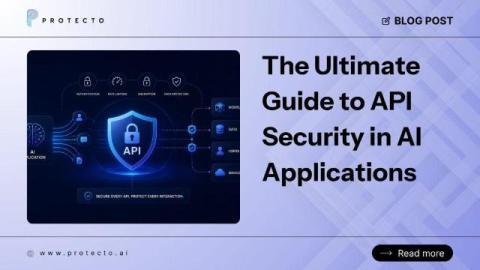
The Ultimate Guide to API Security in AI Applications

API security is the practice of protecting the interfaces that connect your applications, models, and data from unauthorized access, abuse, and data theft. In AI applications, APIs carry prompts, model responses, customer PII, and agent instructions, which makes them the single most exposed layer of your AI stack. Securing them requires authentication, rate limiting, encryption, and a layer most teams miss: protection of the sensitive data in every API call.

It's Not If Attackers Get In. It's What Happens Next | Insurity CISO Jay Wilson

"Usually it's not a question of if the bad guys get in. It's a question of what happens when they do." Jay Wilson, CISO and CIO at Insurity, and Garrett Hamilton, CEO of Reach, joined Shubhangi Dua on The Security Strategist from EM360Tech to talk about why the controls you already own are where exposure quietly builds up. That's Jay's line, and one every security leader has lived. Defense in depth only holds if every inner layer is configured the way you think it is. The outer door gets the attention. The inner doors are where incidents actually get stopped, or don't.

AI Kill Switch Architecture: How to Stop a Rogue AI Agent

AI agents today are becoming a part and parcel of everyday enterprise operations. They can access databases, trigger workflows, send emails, approve requests, and interact with business systems with very little human involvement. What started as AI assistants is now evolving into autonomous operators capable of making decisions and executing actions at machine speed.