Security | Threat Detection | Cyberattacks | DevSecOps | Compliance

The IT Hour | Mobile Device Trust 06.28.24

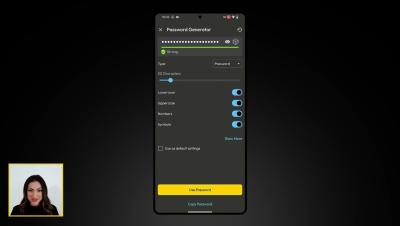
Sergey Belous, Principal Product Manager joins us to announce the highly anticipated Mobile Device Trust! Join us at 11:30 am ET The #IT Hour hosted by #JumpCloud is a #communityprogram focused on the life of #ITAdministrators. With the ever changing #ITlandscape, having community and professional networking opportunities is very valuable. You can expect from our weekly conversations.

AI in Cybersecurity: Benefits and Challenges

Cyber threats are getting more sophisticated and frequent. As a result, organizations are always looking for ways to outsmart cybercriminals. This is where artificial intelligence (AI) comes in handy. Artificial intelligence (AI) is transforming the cybersecurity landscape by offering faster, more precise, and more efficient means of identifying cyber threats.

Integrating Zero Trust Security Models with LLM Operations

Zero Trust Security Models are a cybersecurity paradigm that assumes no entity, whether inside or outside the network, can be trusted by default. This model functions on the principle of "never trust, always verify," meaning every access request must be authenticated and authorized regardless of origin.

Healthcare Data Security: Best Practices, Challenges, and Compliance Guide

Healthcare data security protects patient records from cyber threats and unauthorized access. The increasing use of electronic health records raises concerns about data breaches. Organizations must follow strict security protocols to ensure patient safety and regulatory compliance. Healthcare data security is more critical than ever as healthcare systems integrate more digital tools. As risks grow, security measures become increasingly essential.

Creating Users Manually | JumpCloud University Tutorial (2024)

In this tutorial, we will go over how to create a user in JumpCloud manually. This method can be used when you need to add a single user. To discover more resources checkout JumpCloud University where you’ll find courses, tutorial videos, engaging guided simulations, and end user content.

How to Enhance Ubuntu Security: Advanced Features and Techniques

Jump to Tutorial Ubuntu, a popular Linux distribution, is known for its robust security features. There is always space for improvement once you install a fresh operating system, so in this article, we will guide you through the advanced techniques and features to enhance the security of the latest Ubuntu 24.04 version. There are multiple layers of security that Ubuntu offers out of the box, but we can implement additional steps that can further protect your system from threats.

Data Anonymization Techniques for Secure LLM Utilization

Data anonymization is transforming data to prevent the identification of individuals while conserving the data's utility. This technique is crucial for protecting sensitive information, securing compliance with privacy regulations, and upholding user trust. In the context of LLMs, anonymization is essential to protect the vast amounts of personal data these models often process, ensuring they can be utilized without compromising individual privacy.

Adversarial Robustness in LLMs: Defending Against Malicious Inputs

Large Language Models (LLMs) are advanced artificial intelligence systems that understand and generate human language. These models, such as GPT-4, are built on deep learning architectures and trained on vast datasets, enabling them to perform various tasks, including text completion, translation, summarization, and more. Their ability to generate coherent and contextually relevant text has made them invaluable in the healthcare, finance, customer service, and entertainment industries.

Introducing Postman Collection Support for API Security Testing

In today's digital landscape, Application Programming Interfaces (APIs) play an important role in driving innovation. They allow teams to integrate new applications with existing systems, reuse code and deliver software more efficiently. But, APIs are also prime targets for hackers due to their public availability and the large amounts of web data they transmit. API vulnerabilities can lead to unauthorized access, data breaches, and various other forms of attacks.