Security | Threat Detection | Cyberattacks | DevSecOps | Compliance

Responsibilities of a modern CISO

The role of a Chief Information Security Officer (CISO) is critical in an interconnected business environment. A modern CISO will ensure that their organization is well-prepared to handle the myriad of cybersecurity challenges it faces. It is multifaceted, extending beyond traditional IT security to encompass various responsibilities to protect an organization's information assets.


Unzipping the XZ Backdoor and Its Lessons for Open Source

By now, you have probably heard about the recently discovered backdoor into versions 5.6.0 and 5.6.1 of the tarballs of the xz utilities, a popular compression/decompression library for xz files, which provides unauthorized remote access under certain conditions. This vulnerability was reported under CVE-2024-3094. Andres Freund, of Microsoft, who discovered the vulnerability, summarized it well.

What Makes Containers Vulnerable?

When looking for sensitive information and other valuable assets, attackers rarely access their target directly. Instead, they find vulnerabilities in other components and use them to weave through the system and escalate privileges where they can. Because containers add a layer of complexity to already large and complex applications, the attack surface is increased, giving threat actors more to work with.

Hunting 'unknown-unknowns' in your attack surface

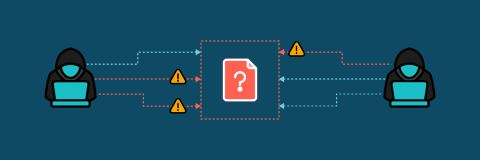
Ever lost sleep over possible hidden attack routes lurking in your organization’s attack surface? You’re not alone. The concept of ‘unknown-unknowns’ is a recurring nightmare for many IT professionals – but there are ways to mitigate the risks. We’ll explore the problem of unknown-unknowns and provide some practical strategies to help your organization uncover these hidden threats.

An investigation into code injection vulnerabilities caused by generative AI

Generative AI is an exciting technology that is now easily available through cloud APIs provided by companies such as Google and OpenAI. While it’s a powerful tool, the use of generative AI within code opens up additional security considerations that developers must take into account to ensure that their applications remain secure. In this article, we look at the potential security implications of large language models (LLMs), a text-producing form of generative AI.

New Vulnerability in R's Deserialization Discovered

Security researchers have identified a vulnerability, CVE-2024-27322, in the R programming language that permits arbitrary code execution by deserializing untrusted data. This flaw can be exploited when loading RDS (R Data Serialization) files or packages, which are commonly shared among developers and data scientists. An attacker can craft malicious RDS files or packages containing embedded arbitrary R code, triggering execution on the victim’s device upon interaction.

Emerging Security Issue: Palo Alto Networks GlobalProtect PAN-OS Software CVE-2024-3400

While Palo Alto Networks has not released patches for all affected versions, CyCognito has conducted active tests across all customer realms and 97.5% of CyCognito customers’ affected devices are no longer exploitable.

How AppSentinels aligns with Gartner API Security Recommendations

The Gartner research paper “What You Need to Do to Protect Your APIs” outlines key requirements for bolstering API security measures. In this blog post, we’ll delve deeper into these requirements as introduced by Gartner, explain their significance, and demonstrate how AppSentinels offers comprehensive solutions for each requirement. As per Gartner, the second step is to assess the security of these APIs.

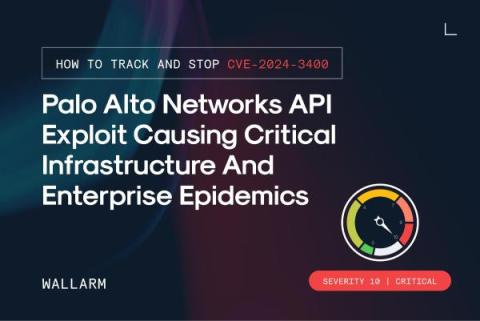
How to track and stop CVE-2024-3400: Palo Alto Networks API Exploit Causing Critical Infrastructure and Enterprise Epidemics

On Friday April 12, Palo Alto disclosed that some versions of PAN-OS are not only vulnerable to remote code execution, but that the vulnerability has been actively exploited to install backdoors on Palo Alto firewalls. A patch is expected to be available on April 14th. The advisory from Palo Alto is here. Palo Alto has marked this vulnerability as critical and NVD has scored it a 10.0 with CVSSv3. Wallarm currently detects attacks against this vulnerability with no additional configuration required.