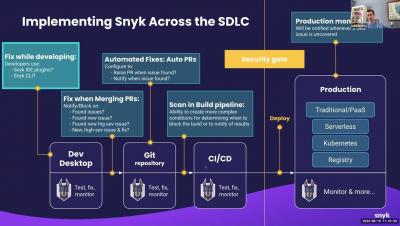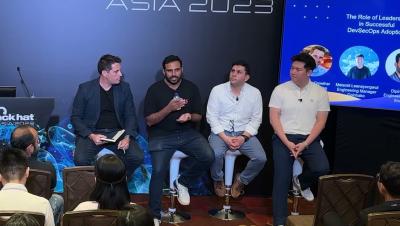
At this year’s AWS re:Invent, Mic McCully, Field CTO at Snyk, spoke with Jacob Salassi, Director of Product Security at Snowflake. They discussed what it looked like for Snowflake to overcome various security challenges with the right combination of processes, company culture shifts, and tool partners (including Snyk!). Read on to learn about the practices Jacob and his team established to create a successful application security program.
There are few security tasks more important, yet more difficult, to conduct than a vulnerability scanning program. A properly conducted scanning program requires a team of human-led experts with the technology to search for issues that might give a threat actor access to a network. Only the largest organizations with equally large wallets can afford to take on this task, but there is an option.
We’ve seen how technology can evolve at warp speed, and AI has emerged as both a revolutionary force and a tantalizing enigma. Whether you're a seasoned developer seeking to expand your toolkit or a security enthusiast on a quest for clarity in the realm of AI, embarking on the journey to demystify this dynamic field can be both exhilarating and overwhelming.
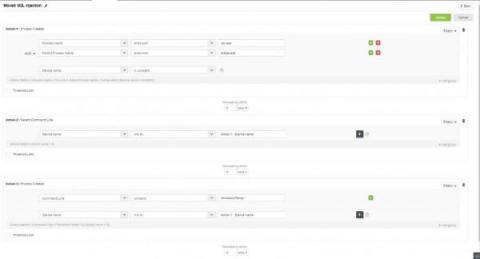
Threat Intelligence Analyst How does phishing-as-a-service (PhaaS) really work, and can it really bypass MFA? Here, we will walk you through the user interface of a PhaaS platform, and how its users can quickly build their own attacks using the built-in attack models and templates (and bypass MFA). For a layered approach, beyond MFA, we will introduce you to the benefits of using a threat intelligence solution to stay-ahead of emerging and advanced phishing attacks.
There are flaws in every organization’s IT infrastructure, along with software that requires patching. These flaws could arise from various sources, such as human errors during software coding. Hackers are always on the lookout to exploit these flaws and applications. However, by following a vulnerability assessment methodology to perform vulnerability assessments, organizations can identify these weaknesses before the cyber adversaries do.

Get more from your investment in ServiceNow. Secure IT assets by proactively identifying endpoint security and compliance risks, automating patching of vulnerabilities, and more.
The cyber risks of your organization demand a proactive and holistic approach. Enter the realm of comprehensive risk-based vulnerability management—a paramount strategy encompassing identifying, evaluating, mitigating, and monitoring vulnerabilities across your vital assets. Imagine achieving all this through a singular solution.


Tracking vulnerabilities and compliance requirements is essential for maintaining application security in any software project. However, this process can be time-consuming and complicated, especially as new issues are identified. Fortunately, the JFrog build-info provides a comprehensive solution by recording key information about your project’s build. With build-info, you can easily track vulnerable versions of your project and ensure that your software stays secure.
With threat actors performing man-in-the-middle (MITM) attacks, having an SSL/TLS certificate is no longer a valid reason to trust an incoming connection. Consequently, developers are increasingly adopting SSL/TLS pinning, also known as certificate or public key pinning, as an additional measure to prove the authenticity and integrity of a connection.
Welcome to the 6th post in our weekly series on the new 2023 OWASP API Security Top-10 list, with a particular focus on security practitioners. This post will focus on API5:2023 Broken Function Level Authorization. In this series we are taking an in-depth look at each category – the details, the impact and what you can do about it.
In over 600 data breaches, 40 million individuals were affected across the globe due to the MOVEit Transfer vulnerability. Between June 2023 and the present day, healthcare information, educational records, financial records, personal information, Social Security numbers, and insurance details have been either stolen or wiped out by threat actors who abused the MOVEit Transfer vulnerability.
Dell disclosed a Compellent vulnerability affecting VMware users. Let's take a closer look to learn to safeguard your data, prevent coding mishaps, and ensure online security.
Many organizations find it challenging to locate and fix the vulnerabilities in their containers. But the team at Okta knew that securing the containers that support Auth0 (their identity and access (management platform), was imperative. The team also knew these security processes had to be developer-friendly: making finding and fixing container vulnerabilities as simple as possible.
Cross-Site Scripting (XSS) is a web security vulnerability that happens when cybercriminals inject client-side scripts into web pages accessible by other users. These scripts compromise the web page and allow cybercriminals to inject malicious scripts into a user’s browser, leading to the exposure of data, session hijacking or manipulation of the web page’s content and functionality.
Have you ever found yourself worrying about the safety of your data? In the contemporary digital-first world, where cyber threats only seem to be growing more sophisticated, such concerns hardly come as a surprise.
Developing quality software applications can be arduous, as many moving parts must come together to create a working solution. That’s why developers need all the help and convenience they can get, especially when securing their applications. Visual Studio Code (VS Code) is one of the most popular open source code editors for various reasons.
Containers bring new flexibility and agility to software development and deployment. However, they also introduce a new attack surface that malicious actors can exploit. A compromised container can give an attacker access to other containers and even the host system. Smaller images that contain fewer artifacts are already a great help in achieving a smaller attack surface.
As the threat landscape evolves, so must the methods and tools to safeguard critical digital assets. Vulnerability management programs that were once considered the gold standard are starting to show limitations in their ability to address complex cyber risks.
Kroll’s findings for Q2 2023 reveal a notable shift toward increased supply chain risk, driven not only by the CLOP ransomware gang’s exploitation of the MOVEit transfer vulnerability, but by a rise in email compromise attacks. This and other key security trends are shaping a threat landscape in which diverse cyber threats are present.
Managing dependencies for a project is a task that requires consistent effort and attention. Surely, you’ve found yourself concerned about any of the following while maintaining a project: Luckily, we’ve been able to use GitHub bots to automate dependency management to an extent with solutions like Dependabot and GreenKeeper. However, these bots mostly automate the creation of a new code pull request that proposes the changes to be made.
Docker is a containerization platform for bundling your code, dependencies, and runtime environment into self-contained units that run identically in different environments. Dockerizing a PHP application simplifies deployment by packaging the PHP runtime, a web server, and your source code and composer dependencies into a container. Getting started with Docker is easy. However, there are a few pitfalls you need to avoid before you can safely use it in production.
GitOps was pioneered by Weeveworks in 2017. It uses familiar tools to implement continuous deployment for cloud-native applications, improving the developer experience of Kubernetes cluster management and application delivery.
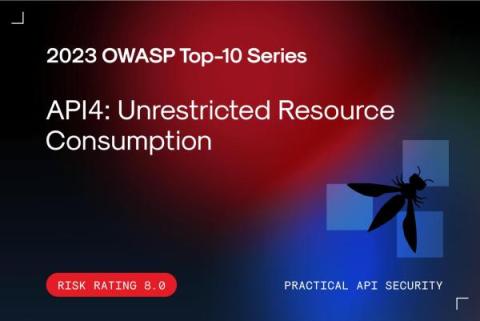
Welcome to the 5th post in our weekly series on the new 2023 OWASP API Security Top-10 list, with a particular focus on security practitioners. This post will focus on API4:2023 Unrestricted Resource Consumption. In this series we are taking an in-depth look at each category – the details, the impact and what you can do about it.
By now, the facts of the recent MOVEit breach are well known (although the victim total keeps climbing), but it never hurts to be reminded that these attacks do not take place in a vacuum and threat actors are more than happy to repeatedly use the same tactics if their targets remain vulnerable. Trustwave SpiderLabs, has tracked and documented these events explaining how threat actors were found to be exploiting three vulnerabilities, including a zero-day, (CVE-2023-34362, CVE-2023-35036.
We’re happy to announce the open beta availability of Snyk’s new Risk Score! Replacing the existing Priority Score, the new Risk Score was designed to help you prioritize more effectively by providing you with an accurate and holistic understanding of the risk posed by a given security issue.
Vulnerability management (VM) is the process of detecting, prioritizing, remediating, and auditing security vulnerabilities in systems and software. This critical process minimizes the organization’s “attack surface” by installing the most current software updates and properly hardening computer configuration.
As GenerativeAI expands its reach, the impact of software development is not left behind. Generative models — particularly Language Models (LMs), such as GPT-3, and those falling under the umbrella of Large Language Models (LLMs) — are increasingly adept at creating human-like text. This includes writing code.
Threat actors are constantly looking for new ways or paths to achieve their goals, and the use of Artificial Intelligence (AI) is one of these novelties that could drastically change the underground ecosystem. The cybercrime community will see this new technology either as a business model (developers and sellers) or as products to perpetrate their attacks (buyers).
The Vitality Group, LLC, a business-to-business vendor that provides employee benefit services to GuidePoint Security, experienced a security vulnerability on May 30, 2023 relating to the third-party file transfer program called MOVEit. The zero-day vulnerability became known in established security networks and channels late on May 31, 2023, and was specifically picked up and identified by internal Vitality security personnel on June 1, 2023.
A strong vulnerability management program underpins a successful security strategy overall. After all, you can’t defend weak points you don’t know are there. It is predicted that 2023 will see an average of 1,900 critical Common Vulnerabilities and Exposures (CVEs) a month, up 13% from last year. This is due to increased interconnectedness, the addition of more tools, IoT devices and SaaS services, and the increased risk of human error.
Public transportation payment systems have undergone significant changes over the years. Mobile payment solutions have become increasingly popular, allowing passengers to pay for their fare using smartphones or other mobile devices. This trend is likely to continue in the years to come. But how secure are mobile payment solutions for public transportation?
URL encoding is a method that ensures your URL only contains valid characters so that the receiving server can correctly interpret it. According to the RFC 3986 standard, URIs (which are a superset of URLs) only contain a limited set of characters consisting of digits, letters, and a few graphic symbols, all within the ASCII character set. If a URL contains characters outside this limited set, the characters must be percent-encoded.
CrowdStrike Counter Adversary Operations is committed to analyzing active exploitation campaigns and detecting and blocking zero-days to protect our customers. In July 2023, the CrowdStrike Falcon® Complete managed detection and response (MDR) team discovered an unknown exploit kit leveraging a still-unknown vulnerability affecting the Windows Error Reporting (WER) component.
As secrets have a role in most security incidents, Snyk is excited to partner with GitGuardian to help development and security teams scale their security programs and further reduce an application's attack surface at every stage of the code-to-cloud lifecycle. We recently spoke at GitGuardian's first digital conference, CodeSecDays, joining security leaders from Chainguard, Doppler, Kondukto, and more — who shared insights on software signing, open source security, and secrets management.
Incorporating security into the software development lifecycle helps ensure the creation of secure and robust software applications from the very beginning. To further evolve our security offerings in the developer community, we announced our partnership with Atlassian to introduce Snyk Security in Jira Cloud as a part of the Security in Jira launch in June. Snyk started gradually rolling out the Jira Security App and has significantly improved the functionality and features available to users.
On August 8, 2023, the.NET community was informed that the testing library called Moq exfiltrates developer's emails from their development machine and sends them off to third-party remote servers. Snyk has already published a security advisory and will alert developers who scan and monitor their.NET projects with Snyk.
Where do vulnerabilities fit with respect to security standards and guidelines? Was it a coverage issue or an interpretation and implementation issue? Where does a product, environment, organization, or business vertical fail the most in terms of standards requirements? These questions are usually left unanswered because of the gap between standards or regulations on the one hand, and requirements interpretation and implementation, on the other.
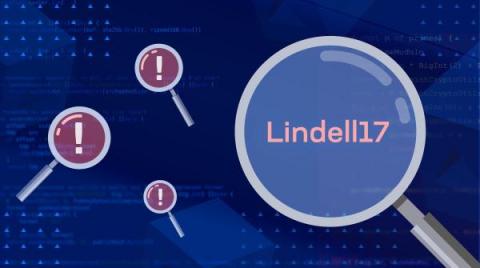
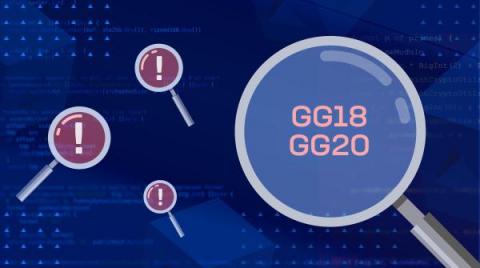
The Fireblocks cryptography research team has uncovered BitForge – a series of zero-day vulnerabilities in some of the most widely adopted implementations of multi-party computation (MPC) protocols, including GG-18, GG-20, and Lindell17.
This vulnerability allows an attacker to extract a full private key from a wallet implementing Lindell17 2PC protocol, by extracting a single bit in every signature attempt (256 in total). Coinbase WaaS, Zengo and other libraries have been patched.
This newfound vulnerability allows an attacker to extract a full private key from any wallet using the GG18 and GG20 protocols. More than 10 wallets and libraries have been found vulnerable, including Binance custody.
The SafeBreach Labs team is committed to conducting original research to uncover new threats and ensure our Hacker’s Playbook provides the most comprehensive collection of attacks. As part of our recent research efforts, we discovered a vulnerability in the Windows Defender update process that could effectively allow an unprivileged user to take full control of the Windows Defender tool and leverage it for future malicious activities.
As the partnership between Snyk and GitGuardian continues to grow, we’ve collaborated on a new cheat sheet that identifies key security considerations and tools that can help you mitigate risks and protect your code. The journey from code to cloud and back to code necessitates a holistic approach to security.
I am excited and humbled to share that Snyk has been named to the prestigious Forbes Cloud 100 list for the fourth consecutive year, coming in at #19. The full list was unveiled this morning. This recognition follows a number of significant company milestones, including being named a leader in both the 2023 Gartner® Magic Quadrant™ for Application Security Testing and The Forrester Wave™: Software Composition Analysis, Q2 2023 report.
Spring Security’s newly released versions contain a fix for a broken access control vulnerability – CVE-2023-34034 – which was given a critical NVD severity (CVSS 9.8) and a high severity by Spring’s maintainers.
Organizations modernizing applications in the cloud find themselves drowning in vulnerabilities. There are too many alerts and not enough time to address them all. Sysdig and Checkmarx announced a partnership today focused on solving this problem.
Technology has greatly transformed the automotive industry, bringing both advancements and new challenges. The reliance on connectivity and software in cars has opened the door to cyber threats, making cybersecurity a crucial concern for the automobile industry. With the increasing complexity of modern cars, there are now around 150 Electronic Control Units (ECUs) and an astonishing 100 million lines of code. Even simple functions like opening car windows require multiple software systems.
The Document Object Model (DOM) acts as an interface between HTML and JavaScript, bridging the gap between static content and dynamic interactivity. This function makes the DOM indispensable for modern web developers. However, the DOM has a pitfall — DOM clobbering. DOM clobbering occurs when HTML elements conflict with global JavaScript variables or functions, which can lead to unexpected behavior and a potential security loophole in your web application.
2023 is a year of “digital forest fires.” The MOVEit and the Barracuda Networks’ email supply chain attacks underscore the massive butterfly effect a single software flaw can have on the threat landscape. Supply chain attacks spread like a forest fire. Once cybercriminals compromise widely used software, attackers gain access to potentially all organizations that use that software.
The Cybersecurity and Infrastructure Security Agency (CISA) just released a report highlighting the most commonly exploited vulnerabilities of 2022. With our role as a reverse proxy to a large portion of the Internet, Cloudflare is in a unique position to observe how the Common Vulnerabilities and Exposures (CVEs) mentioned by CISA are being exploited on the Internet. We wanted to share a bit of what we’ve learned.
As organizations increasingly adopt continuous delivery practices and deploy code as often as every few seconds, the number of vulnerabilities in your code and the potential for them to go undetected increases. Not knowing which vulnerabilities to focus on can be extremely costly—both in terms of the resources needed to address them as well as the risk they pose for your system.
With the SEC's adoption of new rules on cybersecurity risk management, strategy, governance, and incident disclosure by public companies, one thing is clear: better definitions are required.
Michigan State University is a large school located in East Lansing, Michigan. This public university has more than 49,000 students per semester and is set over a location spread across 5,300 acres. The university caters to hundreds of thousands of students over time, many of whom may have been exposed due to a recent data breach. The breach wasn't on the university itself, but it likely impacted many of the students attending Michigan State.
When you rely on a tool to support you in an intense situation, you probably want reassurance that it got tested for extreme conditions. For example, if you’re about to go skydiving, you'd want to know that the parachute strapped to your back underwent rigorous testing and will perform it's needed most. The same is true with the systems supporting our security initiatives. What happens when those systems are under high pressure in an emergency?
Let’s say you’ve built a PHP application, but you want to separate it from supporting infrastructure in a way that keeps things lightweight, portable, and still quite secure. You’d like other developers to be able to work on it without having to recreate whole environments. In short, what you want to do with your application is containerize it — package it and its dependencies into containers that can be easily shared across environments.
Over the last decade, many vulnerabilities were initially perceived as critical or high but later deemed less important due to different factors. One of the famous examples was the “Bash Shellshock” vulnerability discovered in 2014. Initially, it was considered a critical vulnerability due to its widespread impact and the potential for remote code execution.