Security | Threat Detection | Cyberattacks | DevSecOps | Compliance

The Latest Cybersecurity News & Insights From Around The World


Surge in CatDDoS Attacks: Exploiting Vulnerabilities to Spread Mirai Variant
The cybersecurity landscape has recently been shaken by a surge in activity involving a Mirai distributed denial-of-service (DDoS) botnet variant known as CatDDoS. Over the past three months, threat actors have aggressively exploited more than 80 vulnerabilities to spread this malware. In this blog, we explore the recent CatDDoS attacks, the targeted sectors, and the implications for cybersecurity practices.

CyCognito Report Reveals Urgent Need for Web Application Security Testing
With hundreds of exposed web applications typical, nearly 70 percent of organizations report their environment is difficult to test using conventional methods and tools.

An Introduction To Purple Teaming
With cyber threats constantly evolving, organizations must ensure that their approach to identifying and mitigating vulnerabilities is always up to date. Purple teaming can play a vital role in helping them to achieve this. Purple teaming involves red and blue teams collaborating on an ongoing basis to maximize their impact. Read on to discover how purple teaming enables businesses to enhance and accelerate their approach to identifying and mitigating security vulnerabilities.
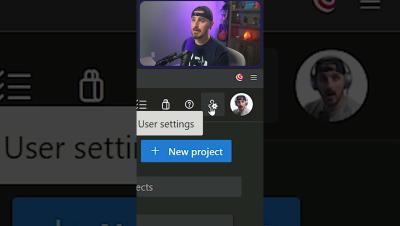
How to Create Azure DevOps Organization and VS Code Personal Access Token (Visual Studio Code)
Watch the full video for more... About Snyk Snyk helps you find and fix vulnerabilities in your code, open-source dependencies, containers, infrastructure-as-code, software pipelines, IDEs, and more! Move fast, stay secure.
Vulnerability Management Modernization & FedRAMP: Resilient Cyber Podcast
Ever wonder how Nucleus got started? Curious to know what our CEO and co-founder Steve Carter is working on? You’re in luck. Steve joined host Chris Hughes on the Cyber Resilience podcast to talk about those topics and more. Additionally, Steve and Chris explored the process for earning FedRAMP authorization, some of the particular vulnerability management challenges government agencies are dealing with, and why risk-based vulnerability management resonates with the government community.
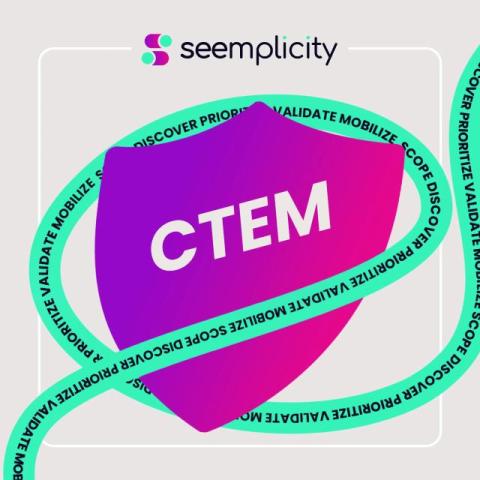
Breaking Down the Phases of CTEM
Continuous Threat Exposure Management (CTEM) serves as a strategic framework for evaluating an organization’s security posture. CTEM is specifically designed to identify and address vulnerabilities and other security gaps within an organization’s digital infrastructure. In essence, CTEM is a systematic approach to fortify cyber defenses and mitigate potential security risks effectively. Gartner, which created CTEM, sees it as a sort of Vulnerability Management 2.0.

7 Types of exposures to manage beyond CVEs
As cybersecurity leaders try to get ahead of threats to their organization, they're increasingly seeking ways to get off the hamster wheel of chasing countless CVEs (common vulnerabilities and exposures). The brass ring that most CISOs reach for today is prioritization of exposures in their infrastructure (and beyond), so their teams can focus on tackling the ones that present the greatest risk. In some cases, the highest priority exposures will still be critical CVEs on mission critical assets.

Securing next-gen development: Lessons from Trust Bank and TASConnect
Today, the average application contains thousands of moving parts. Organizations deploy to multi-cloud environments with containers and microservices, using a combination of code written by internal teams, generated by AI, and curated by third parties. Security teams face a tall order in keeping these complex applications secure, especially given the increasing number of software supply chain attacks.
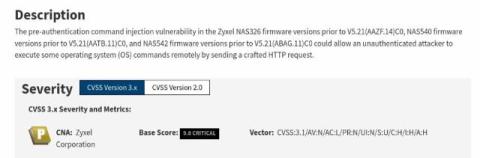
Five new vulnerabilities found in Zyxel NAS devices (including code execution and privilege escalation)
During some standard research as part of the Outpost24 Vulnerability Research Department, I discovered 5 vulnerabilities in Zyxel NAS devices: The vulnerabilities were disclosed to Zyxel on 2024-03-14 as part of our responsible disclosure policy, and have been resolved at the time of publishing this post (2024.06.04).