Security | Threat Detection | Cyberattacks | DevSecOps | Compliance

Top 5 Security Vulnerabilities of 2023

2023 is a year of “digital forest fires.” The MOVEit and the Barracuda Networks’ email supply chain attacks underscore the massive butterfly effect a single software flaw can have on the threat landscape. Supply chain attacks spread like a forest fire. Once cybercriminals compromise widely used software, attackers gain access to potentially all organizations that use that software.


Unmasking the top exploited vulnerabilities of 2022

The Cybersecurity and Infrastructure Security Agency (CISA) just released a report highlighting the most commonly exploited vulnerabilities of 2022. With our role as a reverse proxy to a large portion of the Internet, Cloudflare is in a unique position to observe how the Common Vulnerabilities and Exposures (CVEs) mentioned by CISA are being exploited on the Internet. We wanted to share a bit of what we’ve learned.

The Role of Leadership in Successful DevSecOps Adoption

Customer Speakers: Woolworths | Pablo Reyes, AppSec Lead Shopback | Dipin Thomas, Engineering Manager Coinhako | Metarsit Leenayongwut, Engineering Manager Snyk helps software-driven businesses develop fast and stay secure. Continuously find and fix vulnerabilities for npm, Maven, NuGet, RubyGems, PyPI and more.

MSU Students Could Lose Data in MOVEit Data Breaches

Michigan State University is a large school located in East Lansing, Michigan. This public university has more than 49,000 students per semester and is set over a location spread across 5,300 acres. The university caters to hundreds of thousands of students over time, many of whom may have been exposed due to a recent data breach. The breach wasn't on the university itself, but it likely impacted many of the students attending Michigan State.

Discussions on improving security through chaos engineering

When you rely on a tool to support you in an intense situation, you probably want reassurance that it got tested for extreme conditions. For example, if you’re about to go skydiving, you'd want to know that the parachute strapped to your back underwent rigorous testing and will perform it's needed most. The same is true with the systems supporting our security initiatives. What happens when those systems are under high pressure in an emergency?

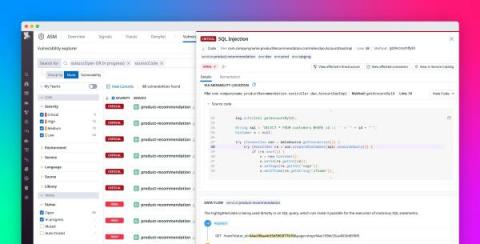
Find vulnerabilities in your code with Datadog Application Vulnerability Management

As organizations increasingly adopt continuous delivery practices and deploy code as often as every few seconds, the number of vulnerabilities in your code and the potential for them to go undetected increases. Not knowing which vulnerabilities to focus on can be extremely costly—both in terms of the resources needed to address them as well as the risk they pose for your system.

How to Dockerize a PHP application securely

Let’s say you’ve built a PHP application, but you want to separate it from supporting infrastructure in a way that keeps things lightweight, portable, and still quite secure. You’d like other developers to be able to work on it without having to recreate whole environments. In short, what you want to do with your application is containerize it — package it and its dependencies into containers that can be easily shared across environments.

What Is Vulnerability Scanning? Types, Tools and Best Practices

Vulnerability scanning is the process of identifying security weaknesses and flaws in systems and software running on them. It's part of a vulnerability management program that protects organizations from data breaches. IT departments or third-party security service providers scan for vulnerabilities using vulnerability scanning tools. Doing so helps predict how effective countermeasures are in case of a threat or attack.

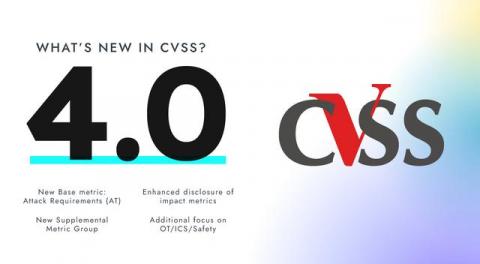
CVSS Version 4.0: What's New

Over the last decade, many vulnerabilities were initially perceived as critical or high but later deemed less important due to different factors. One of the famous examples was the “Bash Shellshock” vulnerability discovered in 2014. Initially, it was considered a critical vulnerability due to its widespread impact and the potential for remote code execution.