

A considerable portion of cyber-attacks target simple and unnoticed security vulnerabilities, that is why conducting a thorough vulnerability assessment is vital for each and every organization. Read our article to learn more. As the technology advances, a vast majority of the business processes are realized online. Each and every day we share important files, send e-mails, conduct communication with our team and customers, and we do all these tasks online.
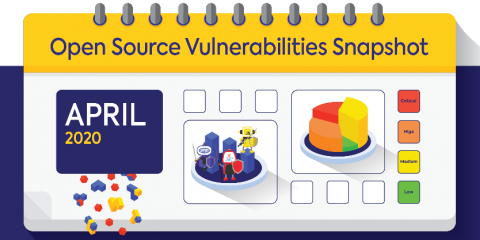
Oh what a difference a month makes! When we launched our new monthly open source vulnerabilities snapshot series last month, we didn’t imagine that the following post would be researched and written by an unexpectedly remote team.
Right, so now the vast majority of your workforce works remotely. Clearly managing all these inbound VPN connections is on top of mind, but what about other vulnerabilities you should be monitoring for? In addition to the ever increasing number of inbound VPN connections, organizations can expect an increase in the use of SaaS-based collaborative software such as Slack, Dropbox, G Suite, and Trello.
Security, whether focused on physical, cyber, operational, or other domains, is an interesting topic that lends itself to considerable debate among practitioners. There are, however, basic concepts and underpinnings that pervade general security theory. One of the most important, yet often misunderstood concepts are those inextricably entwined concepts of vulnerabilities and exploits. These basic underpinnings are critical in all security domains.
The United States’ National Security Agency (NSA) has put together a short guidance document on mitigating vulnerabilities for cloud computing. At only eight pages, it is an accessible primer for cloud security and a great place to start before taking on something like the comprehensive NIST 800-53 security controls.
Cross-site scripting (XSS) is a type of security vulnerability typically found in web applications. XSS enables attackers to inject client-side scripts into web pages viewed by other users and may be used to bypass access control, such as the same-origin policy. The impact of XSS can range from a small nuisance to significant cybersecurity risk, depending on the sensitivity of data handled by the vulnerable website, and the nature of any mitigations implemented.
Barely a week after Patch Tuesday, internet security company Qihoo 360 has discovered yet another vulnerability in Internet Explorer (IE), this time due to a remote code execution vulnerability in the jscript.dll scripting engine. The vulnerability, identified as CVE-2020-0674, is considered Critical for IE 11, and Moderate for IE 9 and IE 10.
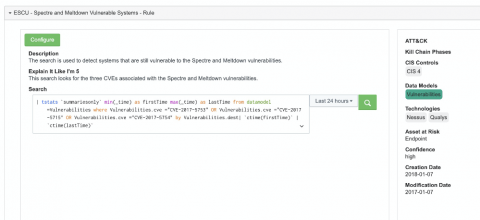
Editor’s note: CVE-2020-0601, unsurprisingly, has created a great deal of interest and concern. There is so much going on that we could not adequately provide a full accounting in a single blog post! This post focuses on detection of the vulnerability based on network logs, specifically Zeek as well as Endpoint. If you are collecting vulnerability scan data and need to keep an eye on your inventory of systems that are at risk, then check out Anthony Perez’s blog.
Software vulnerabilities are part of our lives in a digitalized world. If anything is certain, it’s that we will continue to see vulnerabilities in software code! Recently the CVE-2020-0601 vulnerability, also known as CurveBall or “Windows CryptoAPI Spoofing Vulnerability”, was discovered, reported by the NSA and made headlines. The NSA even shared a Cybersecurity Advisory on the topic. Anthony previously talked about it from a public sector and Vulnerability Scanner angle.