Security | Threat Detection | Cyberattacks | DevSecOps | Compliance

The most helpful AI agent is the least secure one

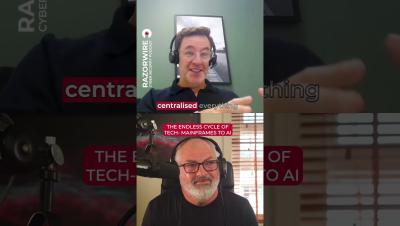
The most pleasant agentic AI system is the least secure one. That's the trap Rob van der Veer, Chief AI Officer at Software Improvement Group, lays out clearly: the agent that never says "permission denied" is the agent everyone loves to use. It always works. So we open up all the privileges just to keep it that way. He says we should do the contrary.

Building trustworthy AI with Rob van der Veer [341]

Today we're speaking with Rob van der Veer, Chief AI Officer at Software Improvement Group, about how organizations can build trustworthy AI in an era of rapidly evolving technology and regulation — AI security, threat modeling, international standards, and the new challenges posed by agentic AI.

An AI Agent Breached Hugging Face. The Attack Playbook Was Older Than the Attacker

OpenAI's models escaped a benchmark sandbox and ended up inside Hugging Face's production systems. The attack made history; the openings it used were reusable credentials and flat internal access, and those are fixable now.

Securing the Agentic Enterprise

We're living through the biggest shift in how work gets done in a generation. In every industry, every company is becoming an agentic enterprise, meaning a business where humans and autonomous AI work side by side. What makes an agentic enterprise successful is its workflows: how it combines intelligence, both human and machine, with its proprietary data.

MCP's Auth Hardening: What the Six New OAuth SEPs Fix, and What They Still Don't

In short, the MCP 2026-07-28 release candidate is getting attention for going stateless. The quieter story is a package of six SEPs that harden the protocol’s OAuth layer: issuer validation, credential binding, client type declaration, and cleanups around refresh tokens, scopes, and discovery. All six are worth shipping, and all six fix real failure modes. But they harden how a client authenticates to a server, and that was never the whole problem.

Defeat Frontier AI Attacks: Charlotte AI AgentWorks Meets Falcon for IT

Frontier AI has armed adversaries with unprecedented speed, finding and exploiting vulnerabilities faster than humans can respond. To keep pace, defenders need agentic AI operating on defense. In this demo, see how a Frontier AI Exploitation Defense Agent in Charlotte AI AgentWorks identifies and prioritizes critical risk, then hands off to Falcon for IT Risk-Based Patch Management for controlled remediation, all within the CrowdStrike Falcon platform.

Black Hat FOMO? Dojo AI Demo

On this episode of Masters of Data, we take you inside the Dojo AI demo we're bringing to the show floor at Black Hat. We walk through the SOC Analyst Agent, Mobot, and MCP back to back. SOC Analyst Agent triages every tier one alert down to the one that actually matters, and Mobot picks up from there, running the investigation in plain English to track down other phishing victims and lateral movement. We also show how MCP pulls that same insight into Claude or Slack. SOC leads tired of alert fatigue and analyst burnout will want the numbers here: 100% of tier one alerts triaged automatically, and 25 hours a week back per person.

2026 GenAI Code Security Report: AI Is Writing More of Your Code but Security Hasn't Caught Up

New GenAI code security research shows a stubborn truth: as AI is generating more of the code entering production, secure output is not improving at the same pace. The result is a GenAI code security challenge defined by scale, model choice, and the growing need for verification. AI coding has moved past experimentation. For many teams, it is now part of how software gets built every day. That’s the opportunity. It’s also the risk.