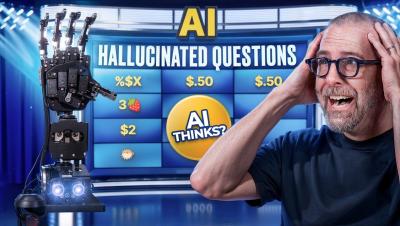
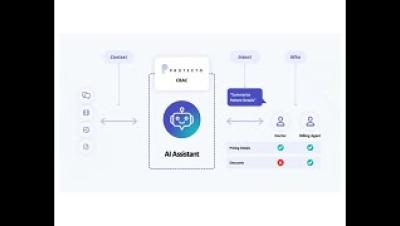
AI is transforming industries—but at what cost to privacy? This clip explores how companies use personal and medical data and why transparency is crucial. Do we still have control over our information?
Enterprises are racing to integrate AI into applications, yet transitioning from prototype to production remains challenging. Managing ML models efficiently while ensuring security and governance is a critical challenge. JFrog’s integration with NVIDIA NIM addresses these issues by applying enterprise-grade DevSecOps practices to AI development. Before exploring this solution further, let’s examine the core MLOps challenges it solves.
In line with our philosophy of delivering an exceptional customer experience, Cato Networks has added a knowledge-base AI assistant as part of the Cato SASE Cloud Platform. The AI assistant provides accurate, relevant answers to questions about using Cato’s many capabilities with detailed, step-by-step instructions uniquely suited to the user’s situation and circumstance.
For years, IT teams have been stuck in a reactive mode, scrambling to fix network performance issues only after users start complaining. Despite an abundance of monitoring tools, the real challenge has always been identifying and resolving issues before they impact productivity—without spending countless hours on manual troubleshooting.
As developers continue to adopt AI tools to transform their workflows, AI-generated code has become more common. In fact, 96% of developers reported using AI coding assistants to streamline their work. Although generative AI (GenAI) tools like ChatGPT can speed up workflows and boost productivity, the security and quality of the outputs aren’t guaranteed.
Generative AI (GenAI) is transforming the cybersecurity landscape, requiring Chief Information Security Officers (CISOs) and their teams to adapt quickly to both opportunities and challenges, according to the Gartner report 4 Ways Generative AI Will Impact CISOs and Their Teams. As organizations integrate GenAI into business processes, it is critical to secure not only the technology’s development but also its consumption across the enterprise.
When generative AI first emerged, the cybersecurity community primarily focused on two promising benefits. However, a concerning “third angle” has now been demonstrated: AI as an attacker – powerful AI systems in the hands of malicious actors, autonomously exploiting vulnerabilities with minimal human guidance.
Demo: AI Test Agent in Action Discover the benefits of CI Fuzz 2.0, our powerful tool that simplifies fuzzing to a single command. The demo will also highlight root cause analysis capabilities, showcasing how vulnerabilities can be identified and addressed efficiently, this demo will uncover several real-world severe vulnerabilities uncovered by AI Test Agent in widely used open-source libraries during the past few months.