Security | Threat Detection | Cyberattacks | DevSecOps | Compliance

How AI Is Changing What Security Teams Can Actually Do | Nancy Phillips, Ensemble Health Partners

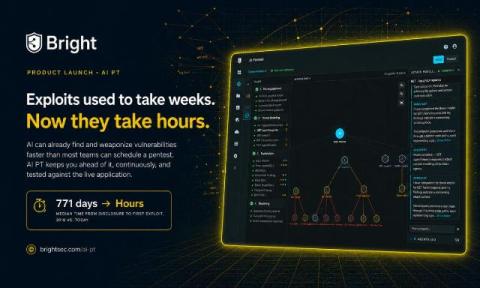
Threat actors used to need days or weeks to exploit a vulnerability. Now AI lets them do it in seconds. Most security teams are already buried. Too many tools, too many alerts, manual processes that can't keep pace, and break-glass changes that get made and forgotten. Keeping everything configured and optimized correctly is a full-time job on its own. Nancy Phillips, Chief Information Security Officer at Ensemble Health Partners: "I want my teams doing the innovative stuff. Not the mundane, repeatable stuff.".

Exposure Management Explained: How to Go Beyond Vulnerability Scanning

Vulnerability scanning gives security teams a starting point, but it has never been the whole picture. Scan results capture known CVEs across applications and systems, yet they say nothing about whether a given weakness is actually reachable, whether the controls around it are functioning correctly, or whether the people with access to it represent a meaningful risk. Exposure management addresses all of that.

Protecting Red Hat OpenShift AI with Trilio for Kubernetes: a hands-on lab

A few weeks ago I was on a call with a financial services customer who had moved a credit-decisioning model into production on Red Hat OpenShift AI. They were happy with the platform. They were less happy with the answer they had for a question their risk officer had just asked: “If an attacker encrypts the cluster tomorrow, what do we need to bring back to be inference-ready by Monday morning?” The team started listing the obvious things — the model artifact, the serving endpoint.

Even Google says you cannot do AI security on one platform

This week, Connie Loizos, editor in chief of TechCrunch, sat down backstage with Francis de Souza, COO of Google Cloud, for a piece on the state of enterprise AI security. The interview is worth reading in full. Three points in it should reshape how every CISO is thinking about the next twelve months.

Cybersecurity Operations Are Entering the AI-Native Era

Cybersecurity operations were already becoming increasingly difficult to scale long before AI-driven and increasingly agentic attacks began accelerating the threat landscape. Customer environments continued expanding across endpoints, identities, cloud services, SaaS applications, remote users, and operational infrastructure. More environments created more telemetry, more coordination, and more operational complexity for teams already operating near capacity.

NetSuite AI Connector: The governance layer your roles and permissions aren't ready for

The NetSuite AI Connector Service enables external AI agents to authenticate directly into NetSuite using real user identities and MCP-based tool execution. While Oracle limits elevated actions at the platform level, AI agents still inherit the full permission scope of the connected role. That shifts longstanding governance weaknesses, including over-permissioned roles, SoD conflicts, and undocumented customizations, into active operational risk.

OWASP Top 10 LLM Risks Explained

As large language models (LLMs) become more embedded in business operations, the risks and attack methods targeting them are evolving just as quickly. The 2025 edition of the OWASP Top 10 for LLM Applications reflects this rapid evolution, addressing the current threats facing generative AI systems in production environments. For organizations investing in LLMs, understanding the risks is crucial for deploying these systems securely.