Security | Threat Detection | Cyberattacks | DevSecOps | Compliance

NIST AI RMF vs ISO 42001: Choosing Your AI Governance Framework

NIST AI RMF and ISO/IEC 42001 answer different questions, so the choice is rarely about which one is better. One gives you a risk process your engineering teams can run. The other gives you a management system an auditor can certify. Organizations that treat them as rival options usually pick the wrong one for the problem in front of them. ‍

The Invisible Expansion of the Attack Surface: Shadow AI, MCP, and Third-Party Risk

AI adoption is moving faster than most of us anticipated and, more importantly, faster than most organizations can govern it. Organizations are implementing the use of AI-enabled applications, browser extensions, coding assistants, and automated agents to enable employees to work faster. In many cases, these tools are adopted without security review, procurement approval, or a clear understanding of where organizational data is being sent.

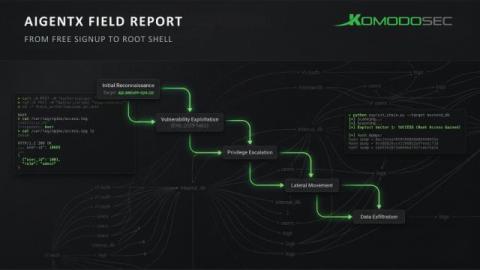
From standard sales user to AWS root in 5 minutes: An AigentX Case Study - Agentic AI Penetration Testing

A recent grey-box Salesforce assessment began with a low-privileged standard user account. From that starting point, AigentX mapped native Salesforce APIs and custom objects, identified cloud credentials exposed through misconfigured Field-Level Security, and demonstrated a path beyond Salesforce into the organization’s connected cloud infrastructure.

Episode II: Attack of The Claudes

Two weeks after Hugging Face disclosed an AI-driven intrusion into part of its production infrastructure, Anthropic said it had found three incidents from its own cyber evaluations. Hugging Face traced its compromise through a data-processing pipeline, where a malicious dataset abused a remote-code dataset loader and a template-injection issue in a dataset configuration.

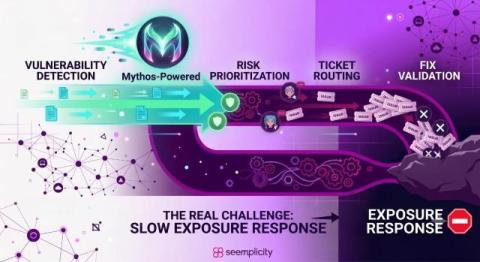
What Mythos Means for Your Vulnerability Management Team

Modern exposure management has evolved beyond vulnerability scanning and alert volume into a discipline focused on measurable risk reduction. As the exposure management market matures, security leaders are adopting cyber exposure management platforms that unify signals across vulnerability, cloud, application, and attack surface tools to prioritize what truly matters.

Show, Don't Tell: What Evo Continuous Offensive Security Found in a Real Enterprise SaaS

Autonomous AI attacks have definitively moved from the research demos everyone's been awed by to standard operating procedure. For anyone paying enough attention, this is not necessarily news: the Five Eyes Alliance warned everyone back in June that AI will bypass cybersecurity in months, not years, with adversary breakout times that can now be measured in seconds. Gartner itself predicted something similar, expecting the window to exploitation to be cut in half as early as next year.

Mythos: When Al becomes the attacker, the network becomes the first line of defense.

Cyber defense in the age of Mythos Advanced AI has fundamentally shifted the security landscape, shrinking the window for vulnerability exploitation from weeks to hours. When standard patching workflows can't keep pace, your network becomes your most critical line of defense. In this video, we explore how Corelight transforms network traffic into actionable security insights to power your SOC. The best data drives the best defense. Discover how to improve your SOC outcomes by up to 300% over legacy data.

LLM Prompt Security Best Practices

An employee pastes a customer contract into ChatGPT to summarize it. Nothing gets attached, nothing crosses the network in a file, and no alert fires. That is the gap most LLM security advice does not address. Prompt security is not the same problem as prompt injection or model hardening. It is a data problem consisting of what enters a prompt, what an agent does with it, and what comes back out.