Artificial intelligence is transforming cybersecurity at an unprecedented pace, but is it making organizations safer or simply exposing more vulnerabilities?
The constant evolution of today's threat landscape has organizations counting on security controls to keep the bad actors out and safeguard their people, sensitive data, critical infrastructure, operations, and brand. However, even the most sophisticated security tools can present a risk when improperly configured. And unfortunately, even the best security teams can make mistakes.
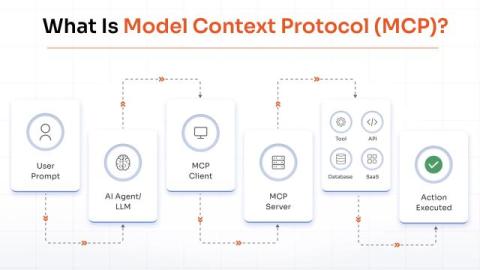
Managing a WordPress site no longer means logging in to the dashboard for every update or routine task. With the Model Context Protocol (MCP), AI assistants such as ChatGPT, Claude, and Cursor can securely interact with your WordPress site through natural language. They can retrieve content, update posts, manage WooCommerce stores, and perform other actions without custom integrations.
Every conversation our team has with security leaders begins the same way. Nobody is backing off on AI in the SOC. The direction of the lean is what’s shifting. Torq’s 2026 AI SOC Leadership Report surveyed more than 450 CISOs and SOC leaders. The data confirms what those conversations were already telling me. We’ve left the adoption phase. The market is now in the architecture phase and the implications for how teams plan, buy, and build are significant.
The enterprise AI security market in 2026 is crowded and confusing. Vendors that built their products to use AI for cybersecurity operations now market themselves alongside vendors that built their products to secure AI systems and govern AI usage. These are fundamentally different product categories solving different problems, and conflating them leads to evaluation errors that leave organizations protected against external threats but exposed to the risks their own AI systems introduce.
AI agents are moving from experiments into production workflows, and the Model Context Protocol (MCP) is becoming the connective layer that enables those agents to access enterprise data, applications, APIs, repositories, and automation tools. That makes MCP powerful, but also security-critical. As organizations adopt agentic AI, they need to understand not only how MCP improves connectivity but also how it creates new visibility, governance, and attack-surface challenges.
SecuritySenses and BCA, an IT services company in Spokane, team together to help small and midsize businesses turn frontier-AI security news into controls they can actually implement. During an internal evaluation, Anthropic gave Claude Mythos Preview access to a restricted computer and instructed it to find a way out. The model discovered a weakness, bypassed its technical restrictions and contacted the researcher overseeing the test.
Oracle's July 2026 Critical Patch Update (CPU) is nearly three times larger than any release in the company's history. To understand it, we parsed all 23 of Oracle's quarterly advisories going back to 2021, matched them against the official CVE record, and compared Oracle against eight other major vendors. We set out to answer three questions: How much of this is genuinely new? Does it really reflect AI-accelerated patching? And how unusual is it?