Security | Threat Detection | Cyberattacks | DevSecOps | Compliance

Introducing Astra's API Security Platform: See Every API, Secure Every Endpoint, Stop Breaches Before They Begin

APIs have quietly become the new first point of failure. They run the workflows your customers see, as well as the ones they never do. Every transaction, every authentication, every AI-driven feature is stitched together through APIs. That same interconnection has made them one of the most consistently underprotected parts of modern infrastructure. The numbers show the shift.

Inside Wallarm Security Edge: Instant Protection at the API Edge

APIs are now the beating heart of digital infrastructure. But as they have risen in importance, they’ve also become prime targets for attackers. Complex, often poorly understood API behaviors present rich opportunities for exploitation, and too often, security teams are left scrambling to protect critical infrastructure with outdated tools or cumbersome deployments. Wallarm’s Security Edge is the answer to this problem.

Telemetry Alone Won't Save You: Why Action Matters in API Security #telemetry #appsec #infosec

Collecting logs and metrics isn’t enough real API security requires actionable insights and the ability to respond fast. In this clip, Wallarm and Oracle experts explain why telemetry without a clear response plan is useless, and how building detection into your incident response process makes the difference between stopping threats and just observing them.

Beyond the Hype: What True API Security Leadership Looks Like

In our previous post, we highlighted a key insight from the 2025 KuppingerCole Leadership Compass: securing AI depends on securing APIs first. The report emphasizes that as AI use grows, the attack surface for APIs becomes more complex and risky. With many solutions available, navigating vendor claims can be challenging, making independent expert analysis extremely valuable.

The API Security Reality Check: Key Takeaways from Q2 2025 API ThreatStats Report

API security has never been more crucial. Vulnerabilities are growing in volume and severity. AI integrations are a burgeoning attack vector. Increasing GraphQL adoption presents hidden dangers. To protect your organization, you must secure your APIs. Keep reading for our key takeaways from the Wallarm Q2 2025 API ThreatStats report – and find out what you need to do to protect yourself.

Automate ServiceNow Ticketing with Forward Insights

Manual ticketing slows response time and invites errors. Forward Networks simplifies this by detecting drift, anomalies, or changes—and automatically creating ServiceNow incidents based on verified data. Incidents are enriched with hostname, config diff, device roles, and severity, saving time and ensuring accuracy. Implementing change management for network modifications has multiple benefits.

How API Abuse Can Drain Your Budget Fast? #ratelimiting #api #apisecurity

API abuse isn’t just a security risk it can hit your bottom line. In this clip, Wallarm and Oracle experts explain how attackers and even legitimate users can trigger costly API calls, drive up cloud bills, or abuse third-party integrations. Learn why monitoring, rate limiting, and cost controls are critical to protecting both your security and your budget.

Introducing Astra API Security Platform - Discover, Scan & Secure Your APIs

Astra API Security Platform is a tool purpose-built to help security-conscious teams find, classify, and secure every API they own. Shadow, dormant, undocumented. Auto-discovers every API in the environment with real-time traffic analysis and continuously scans them with 15,000+ test cases, no guesswork required. What You Can Do with Astra API Security Platform: Enable continuous pentest at scale with Astra.

Why AI Agents and MCP Servers Just Became a CISO's Most Urgent Priority

Over the last year, I’ve spent countless hours with CISOs, CTOs, and security architects talking about a new wave of technology that’s changing the game faster than anything we’ve seen before: Agentic AI and Model Context Protocol (MCP) servers. If you think AI is still in the “cool demos and pilot projects” stage, think again. We’re already seeing autonomous agents reasoning, remembering, and taking actions in live production environments.

Can You Kill an API Token in Real Time? Here's Why It Matters #apikeys #api #incidentresponse

What happens if an API token or key is compromised? The ability to instantly revoke or block tokens during an incident is critical to stopping attackers. In this clip, Wallarm and Oracle experts discuss real-world challenges in detecting and disabling malicious tokens—and why mature incident response and tooling are essential for API security.

Exploiting API4 - 8 Real-World Unrestricted Resource Consumption Attack Scenarios (and How to Stop Them)

Unrestricted Resource Consumption (API4:2023) is the only threat category in the OWASP API Security Top 10 explicitly dedicated to Denial of Service (DoS) and resource abuse. But despite being just one category, attackers can exploit it in many different ways; from large file uploads and expensive GraphQL queries to abuse of metered third-party services like SMS gateways or AI/LLM APIs.

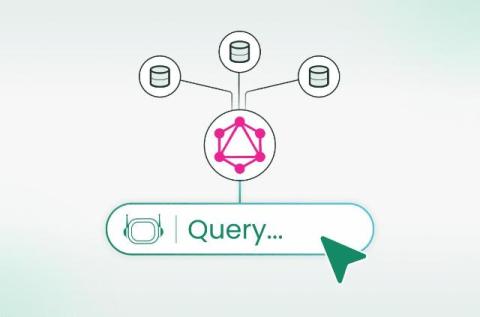
Introducing Cato's API Assistant: Your New Copilot for GraphQL

Imagine you just got a new car with a feature that automatically adjusts the air conditioning based on live weather forecasts. To activate it, you need to connect the car to an external weather service. You could take it to the garage, pay someone to configure it, and wait for the job to be done. Or, you could use a built-in assistant that asks you two simple questions and shows you how to set everything up in minutes. That’s the idea behind Cato’s new API Assistant.

Link11 Highlights Growing Cybersecurity Risks and Introduces Integrated WAAP Platform

Link11, a Germany-based global IT security provider, has released insights into the evolving cybersecurity threat landscape and announced the capabilities of its Web Application and API Protection (WAAP) platform, designed to provide multi-layered defenses against modern digital threats.

The New Frontier: Why You Can't Secure AI Without Securing APIs

The release of a new KuppingerCole Leadership Compass is always a significant event for the cybersecurity industry, offering a vendor-neutral view of the market's current state. The 2025 edition, focusing on API Security and Management, is critical as it arrives at a pivotal moment for technology. It clearly presents a fact many organizations are just beginning to understand: the crucial connection between the rise of Artificial Intelligence and the necessity for robust API security.

10 Critical Capabilities of API Detection and Response

Web Application and API Protection (WAAP) solutions have become increasingly vital in today’s cybersecurity strategies, providing essential defenses against attacks targeting web applications and APIs. It’s no surprise that APIs are growing in popularity, with 80% of companies reporting that more than half of their applications depend on APIs—a figure projected to reach 88% within the next 24 months (ESG Research, 2025).

Sensitive Data Leaks: What You Don't Know Can Hurt You #dataleak #sensitivedata #dataprotection

Sensitive data isn’t always obvious attackers can find and exploit information you never realized was exposed via your APIs. In this clip, Wallarm and Oracle experts explain how insurance policies, business documents, or hidden fields can become valuable targets. Learn why broad data discovery and smarter controls are critical to protect your APIs from unexpected leaks.

Cybersecurity Frontlines Now Require Organizations to Address APIs as a Matter of Urgency

APIs operate throughout the digital world to support mobile applications, enable cloud capabilities, power GenAI tools, and conduct invisible operations during every digital interaction. As the growth of API usage accelerates, Akamai’s 2024 API Security Impact Report shows that organizations find it difficult to align their security efforts with the expanding risk domain.

Comprehensive MCP Security Checklist: Protecting Your AI-Powered Infrastructure

With innovation comes risk. As organizations race to build AI-first infrastructure, security is struggling to keep pace. Multi-Agentic Systems – those built on Large Language Models (LLMs) and Multi-Component Protocols (MCP) - bring immense potential, but also novel vulnerabilities that traditional tools weren’t designed to handle.

Top 25 Web Application Firewalls (WAFs) of 2026: Cloudflare Alternatives, Features & Pricing

In today’s hyper-connected world, Web Application Firewalls (WAFs) have become one of the most critical layers in a modern security stack. As businesses shift more operations, data, and user experiences online, web apps and APIs are increasingly under siege – from basic bot scraping to sophisticated logic abuse and zero-day exploits.

API Vulnerabilities and Attack Surface Management

ThreatX by A10 Networks: API Vulnerabilities and Attack Surface Management In this video, Carlo Alpuerto of A10 Networks discusses API security with Beau Hamilton of SourceForge. He explains that API security is a broad term that includes addressing vulnerabilities in the development cycle, which takes time and involves various stages like QA, staging, and UAT.

Beyond the Prompt: Securing the "Brain" of Your AI Agents

Imagine an autonomous AI agent tasked with a simple job: generating a weekly sales report. It does this reliably every Monday. But one week, it doesn't just create the report. It also queries the customer database, exports every single record, and sends the file to an unknown external server. Your firewalls saw nothing wrong. Your API gateway logged a series of seemingly valid calls. So, what happened? The agent wasn't hacked. Its mind was changed.

IBM 2025 Cost of a Data Breach Report: Lessons for API and AI Security

IBM’s 2025 Cost of a Data Breach Report offers one of the clearest and most comprehensive views yet of how AI adoption is shaping the security landscape. While breach numbers are relatively low – only 13% of organizations reported breaches involving AI models or applications – the report reveals a troubling pattern: APIs and integrations are often the real entry point, and they’re frequently under-secured. At Wallarm, we’ve been banging this drum for a while.

Why Authorization Is Still the Weakest Link in API Security? #apisecurity #authorization #zerotrust

Even as authentication improves, broken authorization remains one of the most exploited vulnerabilities in APIs. In this clip, Wallarm and Oracle experts discuss real-world authorization flaws—including how missing or weak access checks can let attackers access sensitive data and functions. Learn why robust, field-level authorization is essential to protecting your APIs.

How Effective Is 'Shift-Left Security' for Protecting APIs?

Your API rollout is on track. Code’s tested, endpoints documented. John from security asks for the third revision of your vulnerability assessment, and your release date slips another two weeks. Sounds familiar? You are not alone. According to a recent report by Salt Security, 99% companies reported at least one API security incident in 2024-25. And here’s the kicker: 95% API attacks come from authenticated sessions, proving that tokens alone don’t cut it anymore.

Modern APIs, Modern Threats: Why WAFs and API Gateways Aren't Enough

APIs are the connective tissue of today’s digital ecosystems, driving innovation, automation, and business growth. But as APIs grow in complexity and volume, they’ve become prime targets for sophisticated and targeted attacks. Attackers are using threat vectors like business logic which bypass traditional tools like WAFs and API Gateways. In this webinar, we’ll explore why modern API security demands more than legacy defenses and how a dedicated API security solution is essential for protecting against today’s most advanced threats.

How a Real Crypto API Exploit Let Users Change Asset Types #CryptoSecurity #CryptoExchange #crypto

A real-world API vulnerability let a user change the asset type in a major crypto exchange—bypassing expected controls. Watch how a simple tweak to API parameters enabled unauthorized trades and exposed critical flaws. Learn why detailed schema validation and input checks are essential for protecting sensitive financial APIs.

Get started with Astra API Security platform with Observability

In this video, we’ll walk you through how to get started with the Astra API Security Platform, now enhanced with Observability features. You’ll learn how to: Whether you’re a developer, security engineer, or product leader, this guide will help you quickly set up Astra and gain complete visibility into your API security.

The 15 Best API Security Tools in 2026 - Ranked by What They Do

In 2022, Optus – a major Australian telecom – suffered a breach that exposed the data of over 11 million customers. The root cause? A single, unauthenticated API endpoint. What looked like a simple oversight turned into a nationwide scandal, regulatory fallout, and shattered consumer trust. Fast forward to 2025, and APIs have only grown more powerful – and more dangerous.

Fast, Code-Free SIEM Integrations with OpenAPI | Exabeam Automation Management

Sick of slow, expensive integrations? Exabeam is the first SIEM to support the OpenAPI standard—making it easy to connect to Jira, ServiceNow, CrowdStrike, and thousands of other tools with no custom code. Fast, flexible integrations Build and test automations in one place Subscribe for more product demos and cybersecurity insights!

NPCI's UPI API Security Guidelines: What You Must Know and How to Comply Faster with AppTrana

In a landmark move to safeguard the integrity and scalability of India’s real-time payment infrastructure, the National Payments Corporation of India (NPCI) released the UPI API Security Guidelines (OC-215/2025-26). It is a transformative mandate that goes beyond regulatory compliance. These guidelines redefine how Payment Service Providers (PSPs), acquiring banks, and UPI app providers design, deploy, monitor, and govern their API interactions.

Shadow APIs: The Blind Spot Putting Your Security at Risk #ShadowAPIs #APIDiscovery #devsecops

Shadow APIs those undocumented, forgotten, or hidden endpoints are one of today’s biggest cybersecurity risks. If you don’t know what APIs you have, you can’t protect them. Wallarm and Oracle experts explain why a complete and up-to-date API inventory is the foundation of modern security, and how missing even a single API can open the door for attackers.

Snyk Supercharges API Discovery with New Akamai Integration

Today, Snyk is launching a powerful enhancement to our API discovery capabilities through a strategic partnership with Akamai. This integration is designed to solve one of the most significant challenges in modern application security: the difficulty of providing API schemas for DAST scanning. By directly ingesting API inventories and their corresponding schemas from Akamai, we are transforming a difficult manual process into a seamless, automated workflow within the Snyk platform.

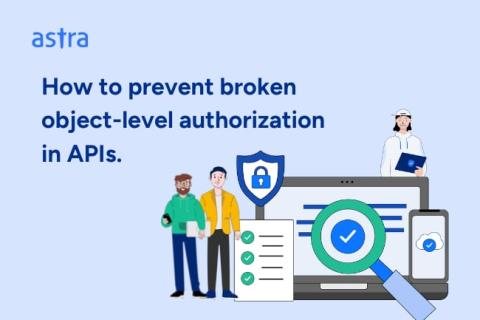
How to Prevent and Fix Broken Object Level Authorization (BOLA) in APIs

It is becoming increasingly common for APIs to be exploited by threat actors. Broken Object Level Authorization (BOLA) attacks are also on the rise and represent a critical general vulnerability. The problem is relevant for a broad range of teams, including API-first companies, fintech teams, SaaS platforms, and mobile app backends. The impact of a BOLA vulnerability is significant, including data exposure and regulatory fines.

Beyond Anomalies: How Autonomous Threat Hunting Uncovers the Full Attack Story

APIs are essential in today's digital landscape, supporting everything from mobile apps to vital backend systems. As their importance grows, they also become attractive targets for advanced attackers who bypass traditional security methods. These adversaries do not simply exploit API flaws; instead, they mimic normal user behavior to launch subtle, slow-and-low attacks that are difficult for conventional tools to detect.

How AI Makes APIs Even More Dangerous #apirisks #aisecurity #airisks #ai

AI and agent-based technologies are accelerating the use—and the risk—of APIs. Experts from Wallarm and Oracle explain how every new AI app or agent can instantly connect to dozens of APIs, multiplying your attack surface. Learn why the combination of AI and APIs is creating new security challenges you can't ignore.

CrowdStrike Announces Integration with ChatGPT Enterprise Compliance API

CrowdStrike is announcing a native integration between CrowdStrike Falcon Shield SaaS security and the OpenAI ChatGPT Enterprise Compliance API, adding visibility and security posture capabilities for mutual customers’ ChatGPT Enterprise environments. This integration helps security teams inventory and monitor AI agents across their organization — including who created them, what they access, and how they’re shared — so teams can consistently apply existing security controls.

Harnessing Elastic APIs for custom AI-driven SOAR

Security teams face a daunting mix of relentless alerts, complex investigations, and limited resources. It’s not just about detecting threats; it's also about responding quickly and efficiently. Elastic Security has long provided prebuilt capabilities for detection, investigation, and response. But what really sets Elastic apart is its open, API-first approach that gives you the power to build and automate specific workflows at your security operations center (SOC).

API Security Attack Vectors (2025): A Complete Guide

APIs run the show today. Whether it’s a mobile app fetching user data, a SaaS platform integrating with Stripe, or a microservice coordinating with ten others, APIs are the glue and the backbone. This is something that attackers are notoriously aware of. The challenge? Most security tooling still operates on a page-view and form-based model. It can’t view the business logic of API calls, like knowing who is supposed to do what on what object and in what context.

Automating security questionnaires with open APIs: Trends in 2025

In this article Chief information security officers (CISOs) are continually tasked with understanding and deploying innovative solutions that reduce risk while increasing operational efficiency. As organizations expand their reliance on digital data and cloud-based infrastructures, the volume and complexity of security questionnaires have grown exponentially. In this environment, modernizing and streamlining these questionnaires is not simply about efficiency; it is a strategic imperative.