Security | Threat Detection | Cyberattacks | DevSecOps | Compliance

AI Model Governance: Framework, Roles, Controls and Implementation Checklist

AI models rarely become a governance problem because of the model alone. The real risk often emerges from what surrounds it: the data it receives, the decisions it influences, the systems it can access, and the people accountable for its outcomes. That makes AI model governance a lifecycle discipline, not simply a model approval process. Even NIST’s AI Risk Management Framework treats governance as a function that cuts across the entire AI lifecycle.

How to Protect Digital Ministries in the Age of Cloud Computing

Church ministry no longer stops at the sanctuary door. Livestreams, online giving, prayer forms, volunteer platforms, email systems, and social channels now carry much of the weekly work. That reach is certainly important. But still, every new account creates another place where credentials, personal records, or payment information can slip into the wrong hands. Churches often manage this digital estate with small teams, rotating volunteers, and limited technical oversight.

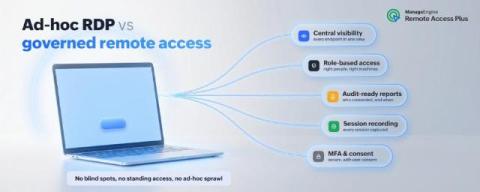
Why unmanaged RDP is risky at enterprise scale (and how to regain control)

Remote Desktop Protocol (RDP) is the path of least resistance for gaining access to another Windows machine. It is built into the OS, it is free, and almost every admin and help desk technician already knows how to fire up mstsc.exe and type in a hostname-as simple as that. That convenience is exactly why RDP is everywhere inside corporate networks.

How Businesses Can Adopt AI Tools Without Compromising Security

Someone in marketing starts using an AI writing tool. A finance team member feeds spreadsheets into an AI summariser because it saves an hour every Friday. A manager wires up a chatbot to handle basic customer questions. None of it goes anywhere near IT first, and most businesses only find out after the fact, if they find out at all.

NIST AI RMF vs ISO 42001: Choosing Your AI Governance Framework

NIST AI RMF and ISO/IEC 42001 answer different questions, so the choice is rarely about which one is better. One gives you a risk process your engineering teams can run. The other gives you a management system an auditor can certify. Organizations that treat them as rival options usually pick the wrong one for the problem in front of them. ‍

The AI notetaker you can't see in the participant list

For about three years, the governance question around AI meeting assistants had a convenient property: you could see them. The tool joined the call as a named participant. It appeared in the attendee list. Everyone in the meeting had at least the theoretical opportunity to object, and a security team reviewing an incident could reconstruct which meetings had been recorded by looking at who else was in them.

Best AI Governance Platforms and Software (2026 Comparison)

You approve five AI tools; your employees use 20. According to UpGuard's State of Shadow AI report, 81% of the workforce is already bringing unmonitored AI tools to work, and legacy security tools are leaving massive gaps in workforce Shadow AI and regulatory compliance. Modern AI governance platforms give you real-time visibility and runtime guardrails to close that gap. They back it up with automated auditing, so you have evidence when someone asks for it.

Guide to Agentic AI Governance

Agentic AI governance is about keeping powerful, autonomous AI systems aligned, safe, and accountable as they act on our behalf. It’s now a certainty that AI agents will be deployed enterprise-wide. So, we need to look more deeply into those agents, figure out where they are, how to find them, and fully understand what they are doing in deployment so we can prevent attacks. The most dangerous agentic attacks will not look like attacks at the layer where they originate.