Security | Threat Detection | Cyberattacks | DevSecOps | Compliance

Translating Risk to Your C-Suite: How To Get Executive Level Buy-In on Cybersecurity

The Chief Information Security Officer (CISO) is a relatively recent addition to the ranks of organizational leadership. It is a key role for businesses and organizations that possess the necessary resources and recognize the need for a robust security program. When leveraged properly, the CISO assumes a leadership position that is integral to an organization’s C-suite.
How to Prioritize Risks in the External Attack Surface Effectively

In today’s interconnected world, organizations face numerous threats from external attackers aiming to exploit vulnerabilities in their systems. Understanding how to prioritize risks in the external attack surface is crucial for mitigating potential vulnerabilities and safeguarding sensitive data. In this comprehensive guide, we will delve into the key considerations and best practices to help you effectively prioritize and manage risks in your organization’s external attack surface.

What Is Practitioner-Focused Cybersecurity?

A basic Google search for the term “cybersecurity” will turn up dozens of competing advertisements for companies promising to solve all your security woes and keep attackers at bay with their version of a “technology silver bullet” – the end all be all that you must, according to them, purchase right now. It’s not that technology isn’t essential to your security strategy; it’s vital!

Privacy Risk Management Across the Data Lifecycle

As a kid, keeping a secret meant not telling anyone else information that a friend chose to share with you and trusted you to protect. In the digital era, protecting customer and employee sensitive data works similarly. Although establishing privacy controls and maintaining data protection are more difficult when managing complex IT environments, the principles underlying your data protection initiatives remain the same.

What is the FFIEC Cybersecurity Assessment Tool?

The FFIEC Cybersecurity Assessment Tool (CAT) is a diagnostic test designed to help institutions identify risks and gauge cybersecurity preparedness. The tool is primarily for financial and non-depository institutions, enabling organizations to make risk-driven security decisions informed by regular cybersecurity assessments and standardized risk measurement criteria.

Android Malware Outbreak: Unmasking the RAT Inside a Screen Recording App

With the worldwide popularity of Android and its open-source software, hackers have an increased incentive and opportunity to orchestrate attacks. A Google search for “Android malware” brings up headlines like these, all from the past few days or weeks: SecurityScorecard recently analyzed a specific threat known as the AhMyth RAT (remote access trojan), which made headlines for infiltrating a popular screen recording app on the Google Play Store.

Increase Cyber Resilience With the Trusted, Must Have Standard for Measuring Cyber Risk

Gain a complete understanding of your attack surface and business ecosystem risk. Know in an instant whether an organization deserves your trust and show others your deserve theirs. From security ratings and third-party risk management to digital forensics and incident response, SecurityScorecard is here for you. Together, we make the world a safer place.

5 Essential Elements of a Municipal Cyber Security Plan

Cyberattacks on state and local governments are on the rise. In 2020, more than 100 government agencies, including municipalities, were targeted with ransomware – an increasingly popular attack vector. Recently, average down time from cyber attacks on these targets is 7.3 days and results in an average loss of $64,645. These incidents are costly and disruptive. Most state cybersecurity budgets are a paltry 0% to 3% of their overall IT budget on average.

What is the Mitre ATT&CK Framework?

In cybersecurity, being well-versed in the wide range of resources available for protecting and enhancing your digital environment is crucial. One of the most significant and effective tools is the Mitre ATT&CK Framework. Read on for an in-depth exploration of this critical cybersecurity framework and how you can apply it to your own organization.

SecurityScorecard and the U.S. Chamber of Commerce

This week, SecurityScorecard is participating in the US Chamber of Commerce’s Cyber Security Trade Mission to Israel. This has been a valuable experience to not only share our cybersecurity knowledge, but to learn more about Israel’s cybersecurity efforts, and those of other countries.

7 Keys to Perfecting Your Cyber Risk Management Strategy

A cyber risk management strategy is a plan for how you will secure your organization from evolving cyber threats. Your strategy is made up of key elements that work together to create a comprehensive approach to proactively mitigating risks and protecting organizational assets. Here are the basic steps you should take to develop an effective cyber risk management strategy.

How SMBs Can Build an Effective Risk Management Plan

As the Chief Information Security Officer (CISO) at Arctic Wolf, I have a deep bench of security experts I can leverage to provide the organization with robust risk management, threat detection, security awareness training, and incident response. That’s an advantage that small businesses often don’t have.

SecurityScorecard's Cyber Resilience Services

With the average cost of a data breach now at $4.35 million, organizations need to take proactive measures to protect themselves and their data against cyber threats. Having a plan in place for how to respond to cyber incidents is an important step in increasing cyber resilience, protecting sensitive data, and saving money. But where should an organization start? And who should it trust?

Fighting Together: TSA, Critical Infrastructure, and Cyber Risk Management

Following the ransomware attack on a US pipeline company in May of 2021, the Transportation Security Administration (TSA) issued a series of security directives to enhance the cybersecurity posture of US transportation systems to mitigate cyber threats.

Free NIST CSF Vendor Questionnaire Template

This NIST CSF questionnaire template will help you understand the degree of each vendor’s alignment with the high-level function of the NIST CSF framework - Identity, Protect, Detect, Respond, and Recover. Though this assessment only offers a superficial understanding of compliance, it’s sufficient for getting a sense of a prospective vendor’s security posture, especially when coupled with an external attack surface scanning solution.

Fortinet Fortigate Vulnerability CVE-2023-27997: How to Surface Exposed Devices and Mitigate the Threat

Recently, a critical vulnerability tracked as CVE-2023-27997 was identified in Fortinet Fortigate appliances. Fortinet makes some of the most popular firewall and VPN devices on the market, which makes them an attractive target for threat actors. This vulnerability has been exploited by the Chinese APT group Volt Typhoon, among others, targeting governments and organizations worldwide. As a result, Fortinet has released an urgent patch for affected systems.

The key to 21 CFR Part 11 Compliance

21 CFR Part 11 is a set of regulations issued by the U.S. Food and Drug Administration (FDA) that establishes the criteria under which electronic records and signatures are considered trustworthy, reliable, and equivalent to paper records. In order to sell products in the United States, companies must demonstrate that their systems meet the standards set forth in Part 11. This can be a daunting task, as the requirements are numerous and detailed.

Cybersecurity Risk is a Business Risk: Upcoming SEC Regulations Make Security Transparency Mandatory

The upcoming cybersecurity regulations from the U.S. Securities and Exchange Commission (SEC) deliver a clear message: Cyber risk is a business risk. Slated to be finalized this fall, the regulations will directly link financial performance to cybersecurity through required public disclosures. If a company is hacked, it can affect the stock price, the market capitalization, and customer trust. That is why the SEC is paying attention and has proposed these vital regulations.

Improve your risk posture: Introducing Risk Management customization

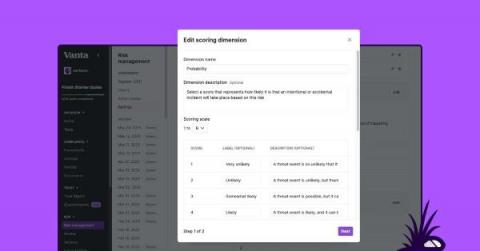
Today we’re excited to announce Risk Management customization, a collection of new capabilities in our platform that enhance the existing Risk Management solution and give you more flexibility to enable custom risk management scoring and prioritization. Currently in beta, Risk Management customization will be generally available in the coming months. ‍ ‍

How to Create a Vendor Risk Management Checklist

Vendor risk management is top of everyone’s mind considering recent headline grabbing supply chain attacks, such as SolarWinds. But as more vendors enter your digital supply chain, keeping up with vendor adoption is tough. According to Accenture, 79 percent of businesses are adopting technologies faster than they can address related security issues. For your organization to be truly protected against supply chain cyber risks, you must develop a robust vendor risk management (VRM) program.

Evidence-Based Strategies to Lower Your Risk of Becoming a Ransomware Victim

The ransomware trend continues to run rampant. One in four breaches involve ransomware, and organized crime actors use ransomware in more than 62 percent of incidents. Cyber criminals are taking advantage of these new opportunities to exploit a greatly expanded attack surface: But ransomware is only one small piece that a security leaders has to manage. The threat of ransomware is compounded by a distributed workforce, trends toward technology consolidation, geopolitical upheaval, and budget constraints.

Managing Cyber Risk in the Insurance Supply Chain

This week in London, SecurityScorecard hosted a roundtable discussion on cyber risk in the insurance supply chain. Keynote speaker Santosh Pandit, head of Cybersecurity at the Bank of England, shared his insights with 20 London-based insurers on managing cyber risk in the financial sector and the latest regulatory initiatives that may impact the insurance industry.

SecurityScorecard Identifies Infrastructure Linked to Widespread MOVEit Vulnerability Exploitation

New disclosures regarding the widespread exploitation of CVE-2023-34362, a new vulnerability affecting the MOVEit file transfer software, and the Cl0p ransomware group’s claim of responsibility for its widespread exploitation and the resulting data theft, have continued in the weeks since the vulnerability’s original publication.

Debunking the Misconception That CRQ Requires a Lot of Data Collection

Cyber risk quantification (CRQ) can be an invaluable tool. The ability to put a number to cyber risk aids in communicating with board members, planning strategic investments, calculating the return on investment of cybersecurity spending, and right-sizing cybersecurity insurance coverage. However, many organizations avoid taking advantage of CRQ due to some common misconceptions.

A Guide to Handling the MOVEit Attack

Last week, a vulnerability in the popular MOVEit managed file transfer service was exploited by the CL0P ransomware gang to execute data breaches – an increasingly common cybersecurity attack technique where popular software is exploited to target, by extension, their users. Victims of this hack include British Airways, Boots, BBC, and multiple US government agencies.

The CyberShield Event | Safeguarding The Digital Landscape

Obrela's inaugural event in KSA about Cybersecurity. A line up of international speakers and honoured guest were present to discuss intriguing topics. Our CEO, George Patsis, commenced the presentations by addressing the prevailing challenges in CyberDefense and highlighting the emergence of the new Cyber Risk Landscape. Furthermore, we delved into an in-depth discussion regarding the significance of adhering to Cyber Assurance standards, the advancements in Modern Threat Intelligence Centers, the utilization of AI to strengthen CyberDefense capabilities, and the intricate relationship between Cyber Criminals and Nations.

Cybersecurity Risk Assessment Tools You Can Use Year-Round

When it comes to improving cybersecurity at your organization, there are some fixes that you can undertake with very little preparation. More robust risk remediation efforts, however, usually start with a cybersecurity risk assessment. These assessments are commonly offered by third-party consultants, sometimes as a stand-alone service and sometimes as the first step in a larger end-to-end cybersecurity engagement.

Mend.io Launches AppSec Risk Assessment Program

At Mend.io, we’re always looking for ways to help organizations understand their application security risk. This week, we’re proud to announce a new initiative designed to make it easier than ever for organizations to visualize and remediate their biggest sources of risk: the Mend.io AppSec Risk Assessment Program.

5 Cyber Threat Prevention Strategies to Protect Your Growing Digital Footprint

Every cybersecurity leader is looking for best practices to prevent cyber threats and cyberattacks. Chief among them is a relentless focus on cyber hygiene—the practice of maintaining the cyber health of your digital infrastructure. Good cyber hygiene significantly lowers the chance of cyber incidents. Indeed, a Bitsight study found that poor cyber hygiene, as determined by an organization’s security rating, increases the risk of a ransomware attack by 4.6 times.

Risk Registers: The Ultimate Guide with Examples & Template

Effectively utilizing a risk register allows your organization to anticipate and overcome challenges with confidence. No GRC program is failproof, which is why it’s so critical to take a thorough look at potential risks and remediations. To make sure you’re starting on the right foot, we’ve provided a free, downloadable risk register template you can use once you have a better understanding of what it does.

MOVEit File Transfer Zero-day Compromises Multiple Organizations

An attack exploiting CVE-2023-34362, a zero-day vulnerability in the MOVEit file transfer software, was disclosed at the start of June, with additional victims still being uncovered. The vulnerability is an SQL injection vulnerability that could allow an unauthenticated attacker to gain access to MOVEit Transfer's database. The attack was carried out by at least one threat who gained unauthorized access to the software and stole sensitive data from affected organizations.

UpGuard Summit May 2023 - Panel Discussion

Join Zindzi Speede, our Technical Customer Success Manager, as she and a panel of cyber security experts delve into topics such as best practices, compliance, and the implications of AI on cyber security. Guests Jacques Van Zyl - Cyber Security Analyst at Youi Insurance Alen Zenicanin - Information Security Officer at Law in Order Michael Viney - Head of IT at Square Peg Capital.

Forbes Media Publishes Industry's First List of America's Most Cybersecure Companies

In a climate where companies largely gain attention only when something negative happens, it’s time to celebrate and recognize the companies who are best in class when it comes to cybersecurity. That’s why we applaud Forbes’ decision to produce the industry’s first list of America’s Most Cybersecure Companies. These companies illuminate how cybersecurity is being taken seriously as a core business issue.

ChatGPT and Software Supply Chain Risks

While some of the obvious misuse of ChatGPT in the world of cyber security was not unexpected – asking the artificial intelligence to write harder-to-detect malware and easier-to-convince phishing emails – a new threat has emerged that can leverage the very nature of the large language model. Ultimately, ChatGPT is a learning machine, and bases its answers on information it sources from the Internet.

Three Steps to Prevent a Cybersecurity Breach from MOVEit Exploit

SecurityScorecard conducted an extensive investigation into the Zellis breach. This research revealed alarming insights about the scale and persistence of the attack. The data exfiltration was carried out in several steps: Netflow data from Zellis IP ranges indicated large outbound transfers over HTTPS, which pointed towards the presence of a web shell. Additionally, SecurityScorecard researchers detected exfiltration over SSH to known malicious IP addresses.

What is a Third-Party Data Breach?

A data breach is an IT security incident where data is compromised or stolen from a system without the knowledge or authorization of its owner. But what happens when a third party is involved? Stolen data may include sensitive, proprietary, or confidential information such as credit card numbers, trade secrets, customer, or patient data. Third party breaches cost millions of dollars every year to companies of all sizes.

Announcing Insights: Helping you focus on top risks for your organization

Modern applications are built, deployed and, run in increasingly complex and dynamic environments. Assessing and prioritizing the security issues introduced by these applications without taking this context into account inevitably leads to focusing remediation efforts on the wrong set of issues. This not only results in real risk slipping under the radar but also wastes the valuable time of developers, increasing their frustration and eroding their trust in security.

Attack Surface Intelligence (ASI) Data Updates: Enhancing Threat Research Capabilities

In the ever-evolving cybersecurity landscape, staying ahead of potential threats is crucial. Attack Surface Intelligence (ASI) is vital in identifying vulnerabilities and mitigating risks. This blog post will discuss the latest data updates in ASI and the exciting developments within our threat research group.

Managing technology risk

Numerous risks are inherent in the technologies that all organizations use. These risks have especially become apparent with recent ransomware attacks, which have crippled major infrastructure such as the Colonial Pipeline in the Eastern United States1. This discussion will focus on how GRC, or governance, risk, and compliance can help organizations face and manage the risks that they face.

How to Establish a Cybersecurity Baseline That Works for Your Organization

A cybersecurity baseline is an invaluable set of standards for your organization. It helps you understand your security posture, identify security gaps, and meet cybersecurity regulations. The most widely adopted cybersecurity baselines are those recommended by the NIST Cybersecurity Framework, the SANS Top 20 Critical Security Controls, and Shared Assessments (designed for third-party risk management). We covered the specifics of these frameworks in a previous blog.

5 Tips for Crafting a Cybersecurity Risk Remediation Plan

With the new year upon us, now is the ideal time to re-evaluate your cybersecurity controls and your cybersecurity risk remediation strategy. Do you have a plan for cybersecurity risk remediation? Has this plan outlined who needs to be involved? How are you being notified of risks? Is there a process in place to identify and prioritize the riskiest threats for rapid remediation? This year, plan ahead for evolving cybersecurity threats and follow these five tips for crafting a risk remediation plan.

Measure Actual Security Behaviour Change, Not training Completion

Discover:✅ The current state of the security awareness and training market✅ The future of Human Risk Management and how it is evolving✅ The importance of defining job roles in Human Risk Management✅ How to quantify and measure data related to Human Risk Management.

My Vendor Doesn't Have a SOC Report, How Do I Assess Them?

Though very helpful in representing the efficacy of a service provider’s third-party risk management program, SOC reports aren’t always available. Some service providers either don’t have the budget for a SOC report or are unwilling to undergo the laborious process of an SSAE-18 audit. While a lack of a SOC report should raise alarm bells during the due diligence process, it shouldn’t necessarily result in the disqualification of a prospective vendor.

More Network Security Monitoring Tools Doesn't Mean More Visibility

Network security monitoring tools are a critical component of any IT security toolkit. These tools help protect your network from online threats by looking for weaknesses and potential dangers in your organization's digital properties. But as digital ecosystems have expanded into the cloud, remote locations, and across geographies – the number of monitoring tools has skyrocketed.

Evolving Trends in the Cyber Insurance Market

Cyber insurance is the fastest-growing sector of the world’s insurance markets. But, a recent increase in ransomware attacks and business email compromises has led to a sharp uptick in claims, resulting in significant losses for cyber insurers and increased premiums. Cyber insurance customers need a way to increase their cyber resilience, reduce premiums, and improve their cyber postures.

7 Vendor Risk Assessment Tips

Organizations rely on dozens or hundreds of third-party vendors every day to provide strategic services. Due to the increased reliance on outsourcing, the need to automatically and continuously monitor and manage vendors is not an option—it’s a business imperative. As the frequency and severity of third-party data breaches continue to escalate, your organization must remain vigilant so it can effectively protect its network and data from cyberattacks.

Cyber Risk Protection and Resilience Planning for Boards

Cybersecurity is a top risk for corporate directors to understand and navigate. The implications of cyber events for a company are many and growing: instantly damaged reputations that erode years of credibility and trust with customers and investors, impaired profitability from customer attrition and increased operating costs, lost intellectual property, fines and litigation, and harm to a company’s people and culture.

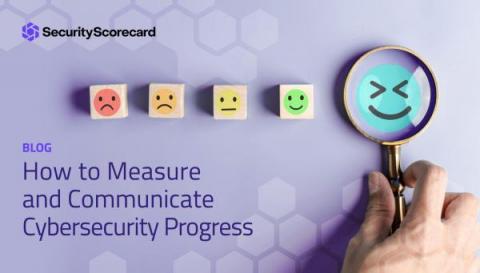
How to Measure and Communicate Cybersecurity Progress

Last week, SecurityScorecard was invited to participate in a fireside chat with Michael Daniel, President & CEO of the Cyber Threat Alliance (CTA). SecurityScorecard’s Chief Business Officer, Sachin Bansal, joined Daniel for a lively discussion regarding how to measure cyber health and clearly communicate progress against those metrics.